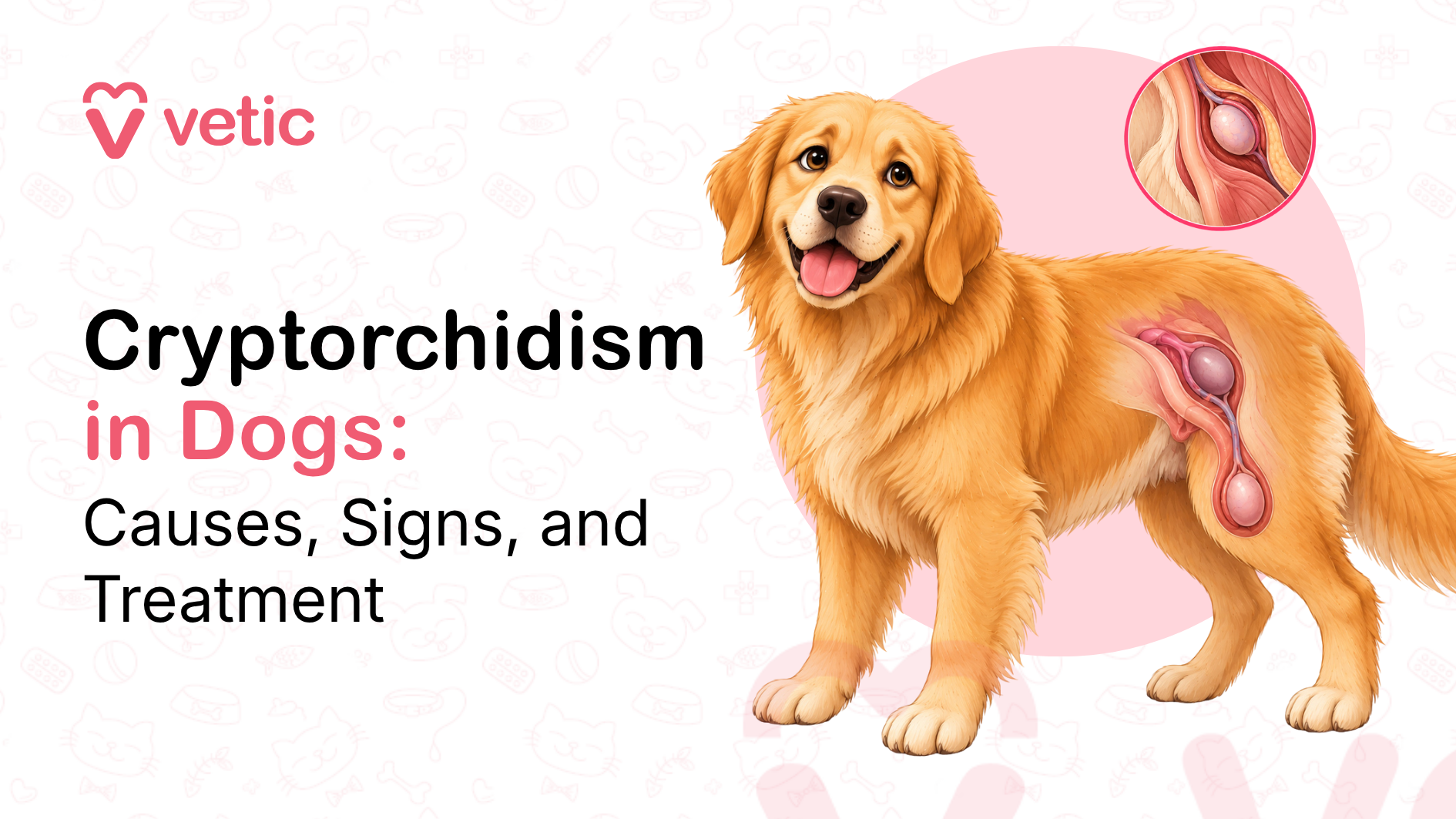
Dog cryptorchidism is a condition in which one or both testicles fail to descend into the scrotum. The retained testicle may stay in the groin or inside the abdomen. According to the MSD Veterinary Manual, it is the most common disorder of sexual development in dogs. This guide explains the signs, risks, diagnosis and treatment, including neutering.
What Is Cryptorchidism?
In male puppies, the testicles develop inside the abdomen and normally move down into the scrotum early in life. With cryptorchidism, this process is incomplete.
When Should the Testicles Descend, and What Does Retained Mean?
Testicles usually descend into the scrotum by around 6–8 weeks of age. If one or both testicles are still missing at around 6 months, a veterinarian can confirm cryptorchidism. Although later descent can occur, it is uncommon after this age.
What Are the Symptoms of Cryptorchidism in Dogs?
Many affected dogs show no discomfort. Veterinarians often notice the condition during a routine puppy check-up.
What Is the Common Sign and Which Complications Are Urgent?
The most common sign of cryptorchidism in dogs is that one or both testicles are missing from the scrotum. In some dogs, a small lump may be felt in the groin. Complications can develop later, including testicular tumours or twisting of a retained testicle (torsion), which can cause pain and swelling and require urgent veterinary care, according to the MSD Veterinary Manual.
A 2012 case report describing two dogs with retained testicles and Sertoli cell tumours also reported hormone-related changes, including hair loss and enlarged mammary glands. These tumours can sometimes cause changes usually associated with female dogs, such as enlarged nipples or attracting other male dogs.
What Causes Cryptorchidism in Dogs?
Cryptorchidism has a strong hereditary component, although genetic, epigenetic and environmental factors may all contribute.
Is It Inherited or Associated with Certain Breeds?
Cryptorchidism can occur in any breed, but according to the MSD Veterinary Manual, it is more commonly seen in:
- Toy and Miniature Poodles
- Pomeranians, Chihuahuas and Maltese
- Dachshunds and Miniature Schnauzers
- Boxers, Pekingese and English Bulldogs
- Shetland Sheepdogs
Why Does Cryptorchidism Matter?
A retained testicle is not usually painful on its own. However, it may lead to health problems over time.
Does It Increase the Risk of Cancer or Torsion?
Yes. Testicles retained inside the abdomen or groin have a higher risk of developing tumours than testicles that descend normally. A retained testicle can also twist on itself, a condition called torsion. This can cut off its blood supply and cause sudden pain and swelling, making it a veterinary emergency. If your dog develops sudden abdominal or groin pain, swelling, vomiting or marked discomfort, seek urgent veterinary care.
How Does It Affect Breeding?
According to the MSD Veterinary Manual, a dog with both testicles retained is sterile. A dog with one retained testicle can usually still mate. Because the condition is inherited, the MSD Veterinary Manual advises against using affected dogs for breeding.
How Do Vets Diagnose It?
Vets usually start diagnosing dog cryptorchidism with a physical exam of the scrotum and groin.
What Does the Physical Exam Show and When Is Imaging Needed?
A vet will feel for both testicles in the scrotum. A cryptorchid testicle may sometimes be felt under the skin in the groin. If a retained testicle cannot be felt in the groin, it may be located within the abdomen, and ultrasound can help determine its location. At Vetic, in-house diagnostics include ultrasound.
When Is Surgery Needed?
The MSD Veterinary Manual recommends surgical removal of both testicles in affected dogs because retained testes have an increased risk of tumour and torsion.
Why Is Neutering Recommended and How Does Recovery Work?
Neutering usually involves removing both testicles, including the one that has descended normally. Removing both testicles prevents breeding and removes the retained testicle’s increased risk of future tumours and torsion. If the testicle is in the abdomen, surgery may be more involved than a routine neuter. Recovery often includes rest, a cone to prevent licking and follow-up checks. Your vet will advise you on the follow-up care needed after surgery. In selected cities, Vetic’s Vet at Home treatment service lists post-operative support, including wound care, medication administration and recovery monitoring. Availability varies by location, so confirm service coverage when booking.
Vetic offers neutering and other surgical procedures at its clinics. Contact your nearest Vetic clinic to confirm whether cryptorchid neutering, including surgery for an abdominally retained testicle, is available.
Does Cryptorchidism Affect Behaviour or Hormones?
The MSD Veterinary Manual notes that retained testicles still produce male hormones. As a result, affected dogs usually show normal male behaviour and characteristics.
What Changes May Occur After Neutering?
Dog behaviour is usually similar to that of other entire male dogs. After neutering, some male-typical behaviours may reduce, although results vary between dogs. If a hormone-producing tumour was present, related signs such as hair loss may improve after surgery.
What Should Pet Parents Do Next?
If a testicle is missing from the scrotum, discuss it with your vet at the next check-up.
When Should Urgent Veterinary Care Be Sought?
Seek urgent care if your dog shows sudden pain in the belly or groin, swelling, vomiting or reluctance to move. These signs may suggest a twisted testicle and need 24/7 emergency care. Select Vetic clinics offer 24/7 emergency care.
Conclusion
Cryptorchidism in dogs is common and usually well managed with timely neutering. Early diagnosis may help prevent complications such as cancer or torsion. If your puppy has a missing testicle, book a consultation at your nearest Vetic clinic for an examination.
FAQs
Can a Dog Live with Cryptorchidism?
Many dogs live comfortably for some time. However, the retained testicle carries a higher risk of cancer and torsion, so neutering is usually recommended.
How Much Does Cryptorchid Surgery Cost for a Dog?
The cost of cryptorchid neutering depends on your dog’s size, the location of the retained testicle, and whether abdominal surgery is needed. Additional costs may include pre-anaesthetic blood tests, anaesthesia and monitoring, medication, hospitalisation, and follow-up care. Ask for an itemised estimate so you know what the quoted price covers. You can contact your nearest Vetic clinic to ask about availability and request a quote for your dog.
Is Cryptorchidism Painful for Dogs?
The condition itself is not usually painful. However, complications such as a twisted testicle can be very painful.
At What Age Should a Cryptorchid Dog Be Neutered?
Your vet decides the timing. Veterinarians may confirm persistent cryptorchidism at around 6 months, although normal testicular descent usually occurs by about 6 weeks.
At What Age Is a Dog Considered Cryptorchid?
Testicles usually descend by around 6–8 weeks of age. If one or both are still missing at around 6 months, consult your vet to confirm whether your dog has cryptorchidism.
Which Dog Breeds Are Most Prone to Cryptorchidism?
The MSD Veterinary Manual lists Toy and Miniature Poodles, Pomeranians, Chihuahuas and Dachshunds among commonly affected breeds.
References
Davidson, A. P. (2018, updated 2024, September). Reproductive disorders of male dogs. MSD Veterinary Manual. https://www.msdvetmanual.com/dog-owners/reproductive-disorders-of-dogs/reproductive-disorders-of-male-dogs
Quartuccio, M., Marino, G., Garufi, G., Cristarella, S., & Zanghì, A. (2012). Sertoli cell tumors associated with feminizing syndrome and spermatic cord torsion in two cryptorchid dogs. Journal of Veterinary Science, 13(2), 207-209. https://doi.org/10.4142/jvs.2012.13.2.207
Roberts, J. N. (2026, August). Male genital abnormalities of animals. MSD Veterinary Manual. https://www.msdvetmanual.com/veterinary/reproductive-system/congenital-and-inherited-anomalies-of-the-reproductive-system/male-genital-abnormalities-of-animals