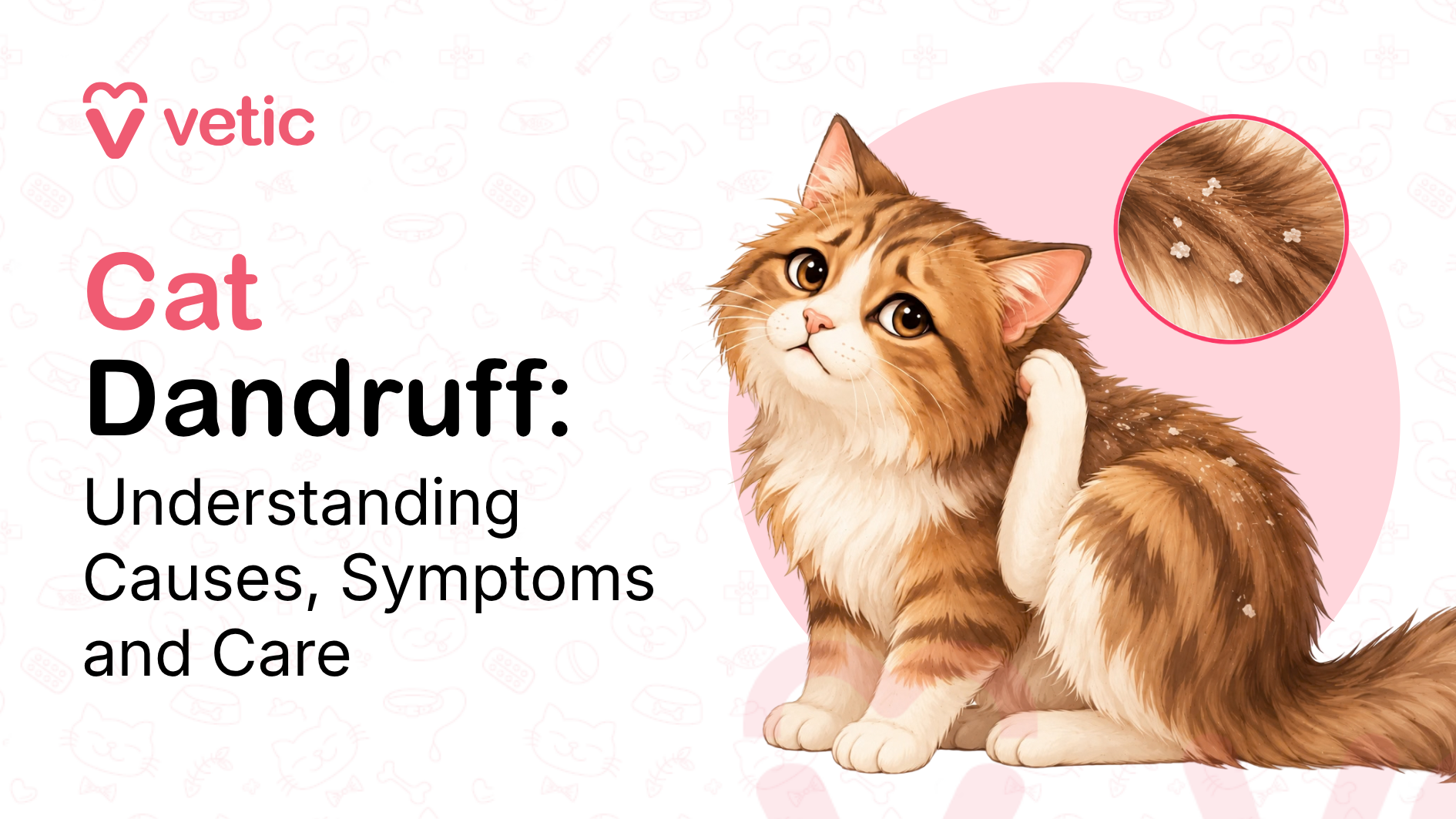
Cat dandruff refers to small flakes of dead skin in a cat’s coat. Mild flaking is common and can often be managed with gentle grooming and good coat care. Persistent or excessive scaling may be linked to parasites, allergies, skin disease, grooming difficulty or an underlying health problem. This guide explains the common causes, signs to watch for and how to care for your cat’s skin.
What Does Dandruff in a Cat’s Coat Look Like?
Dandruff usually appears as small, dry flakes on the skin or in the fur. White flakes on a cat are often easiest to see on dark coats and along the back.
How Can Dandruff Differ from Normal Shedding or Flea Dirt?
Normal shedding involves loose hairs rather than skin flakes. White dandruff on a cat is made of dry skin and may appear on bedding or furniture. Dark specks are different. What looks like black dandruff in a cat is often flea dirt. According to the MSD Veterinary Manual, flea dirt is reddish-black and comma-shaped. On a damp paper towel, it dissolves and turns reddish-brown.
Why Do Cats Get Dandruff?
Flaking can have several causes, and more than one may be involved.
Can Dry Air, Grooming Problems, Parasites, Allergies, or Diet Contribute?
Yes, each of these may play a part. Dry indoor air may contribute to skin dryness in some cats, especially in air-conditioned rooms or during dry North Indian winters. Overweight, arthritic, or unwell cats may struggle to groom hard-to-reach areas, such as the lower back. Parasites are another possible cause. The MSD Veterinary Manual notes that Cheyletiella mites cause “walking dandruff”, with scaling along the back. Allergies to fleas, food or the environment may also affect the skin. An incomplete or unbalanced diet can affect skin and coat health, although persistent scaling should not automatically be attributed to diet.
When Can an Illness Be Involved?
Ongoing dandruff may be linked to skin infections or whole-body conditions. Examples may include hyperthyroidism, diabetes, kidney disease, or other illnesses that affect a cat’s energy or grooming habits. For this reason, persistent flaking should be checked by a vet.
Which Symptoms Need Attention?
Mild flaking without other signs is often not a concern. However, some changes may suggest an underlying problem.
When Are Itching, Hair Loss, or Widespread Flakes Concerning?
Book a vet visit if you notice:
- Flaky skin with redness, scabs or sores
- Frequent scratching, licking or overgrooming
- Hair loss or thinning patches
- Flakes that seem to move, which may be a sign of walking dandruff caused by Cheyletiella mites
- Weight loss, reduced appetite or low energy
- Other pets or family members developing itchy skin
How Can You Treat Cat Dandruff at Home?
Gentle grooming may help with mild flaking, but persistent or recurrent scaling should be assessed by a veterinarian to identify the underlying cause.
How Can Brushing, Hydration, and Coat Care Help?
Vetic’s cat grooming services may include gentle brushing, de-matting and bathing with pet-safe, vet-approved products, depending on the service selected. When appropriate, bathing can help remove dirt and debris from the coat. Groomers may also flag visible skin or coat concerns for veterinary review. Since frequent bathing can dry or irritate a cat’s skin, it should be done only when needed.
Which Home Remedies Should You Avoid?
Some cat dandruff remedies may do more harm than good. Avoid human shampoos and products made for dogs, as some may not be safe for cats. Don’t apply oils and lotions without veterinary advice, since cats swallow what is on their coat when grooming. Frequent bathing may also dry the skin further.
When Is Home Care Not Enough?
If flaking continues, becomes heavy or comes with other signs, a vet visit is advisable.
When Should You Book a Vet Visit and What Might the Vet Check?
A vet will usually examine the skin and coat and ask about diet, grooming and parasite control. Depending on the suspected cause, a veterinarian may use flea combing, skin scrapings, tape tests or other skin tests to look for parasites or infection. A vet may suggest blood tests if they suspect an underlying illness. Treatment then focuses on the cause, such as parasite control, diet changes or treating a skin condition.
What About Kittens, Indoor Cats, and Seniors?
Age and lifestyle may affect a cat’s skin and grooming habits.
How Can Age and Lifestyle Affect Dandruff?
Dandruff in kittens may be linked to parasites, particularly in homes with other animals. Indoor cats may be more exposed to dry air from air conditioning or heating. Senior cats may groom less effectively because of stiffness or other health changes. This can lead to flaking along the back.
What Should You Do Next?
Keeping simple notes can help your vet find the cause more quickly.
What Information Should You Note Before the Appointment?
Before the visit, note:
- When the flaking started and where it appears
- Any itching, hair loss or skin changes
- Recent changes in diet, shampoo or home environment
- Parasite control products used and when
- Whether other pets or people have itchy skin
Conclusion
Cat dandruff is often mild, but it can sometimes signal parasites or other health problems. Regular grooming, a balanced diet and prompt veterinary care may help keep your cat’s skin healthy. If flaking persists or your cat seems itchy, book a consultation at your nearest Vetic clinic.
FAQs
Will Cat Dandruff Go Away on Its Own?
Mild flaking linked to dry air may improve with better grooming and hydration. However, persistent or worsening dandruff should be checked by a vet.
What Does It Mean If My Cat Has a Lot of Dandruff?
Heavy flaking may suggest parasites, allergies, grooming difficulty or an underlying illness. A vet check can help find the cause.
Can Cat Dandruff Affect Humans?
Dry skin flakes are not usually a cause for concern. However, the MSD Veterinary Manual notes that the mites causing walking dandruff can also affect humans. If you or a family member develops itchy red bumps, consult a doctor and have all pets in the household checked and treated as advised by your veterinarian.
Can Coconut Oil Help My Cat’s Dry Skin?
Evidence supporting this is limited. Cats may swallow oils while grooming, so ask your vet before applying anything to the coat.
What Is the Best Shampoo for Cat Dandruff?
Use only a cat-specific shampoo your vet recommends. Many cats need very little bathing, and too much may dry the skin.
What Can I Feed My Cat to Help with Dandruff?
A complete and balanced cat diet supports skin health. Your vet may suggest a fatty acid supplement if appropriate.
How Do I Tell If My Cat Has Dandruff or Flea Eggs?
Dandruff flakes are flat and irregular, while flea eggs are tiny, oval and white. Dark specks that turn reddish-brown on damp paper are likely flea dirt, which suggests fleas are present.
References
Dryden, M. W. (n.d.). Fleas of cats. MSD Veterinary Manual. Retrieved 11 October 2026, from https://www.msdvetmanual.com/cat-owners/skin-disorders-of-cats/fleas-of-cats
Dryden, M. W. (2018, August 23). Mite infestation (mange, acariasis, scabies) of cats. MSD Veterinary Manual. https://www.msdvetmanual.com/cat-owners/skin-disorders-of-cats/mite-infestation-mange-acariasis-scabies-of-cats