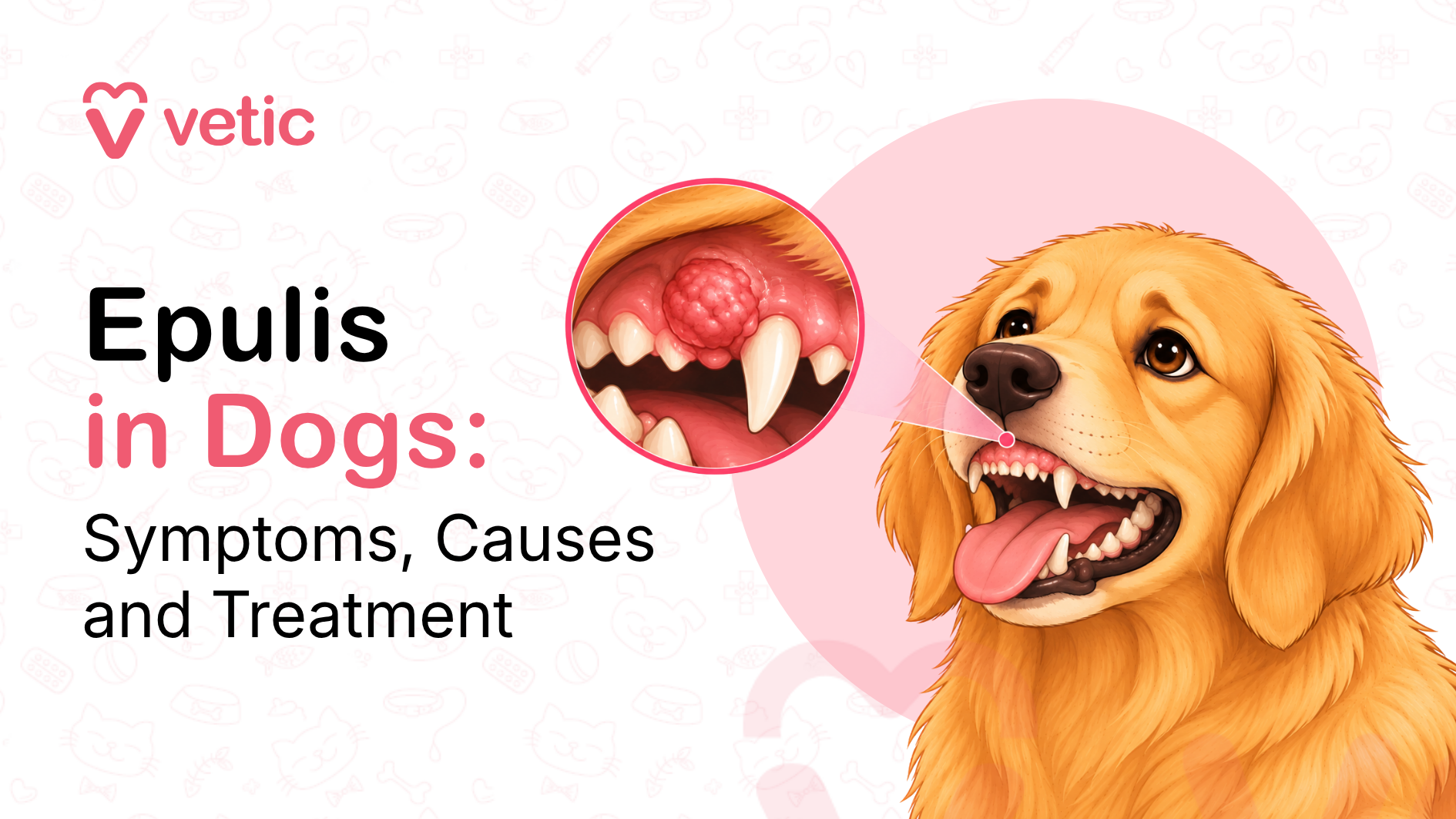
The term epulis has historically been used to describe several types of gum growths. Some are benign, while other oral tumours can be malignant or locally invasive, so a new growth should be examined by a veterinarian. This guide explains the signs, types, diagnosis and treatment options.What Is Epulis in Dogs?
Epulis is an older clinical term for a growth arising from or around the gums; it does not identify a single tumour type. According to the MSD Veterinary Manual, these growths are now given more specific names. Fibromatous and ossifying epulis are now called peripheral odontogenic fibromas. Acanthomatous epulis is now called canine acanthomatous ameloblastoma.
What Does Canine Epulis Look Like?
A peripheral odontogenic fibroma typically appears as a firm mass arising from gum tissue, although oral growths can vary in appearance. It often grows near a tooth and may be smooth or slightly bumpy. The MSD Veterinary Manual notes that peripheral odontogenic fibromas are usually single, although more than one may develop.
Could a Similar-Looking Growth Be Something Else?
Yes. According to the MSD Veterinary Manual, the appearance of mouth tumours can vary. Malignant tumours, such as melanoma, squamous cell carcinoma and fibrosarcoma, may look similar. For this reason, any growth in the mouth should be checked by a vet.
What Signs Should You Watch For?
Small growths may cause no obvious signs and are sometimes found during a dental check-up. Larger growths may affect comfort and daily habits.
What Signs Might You Notice at Home?
Signs may include:
- A visible lump on the gums
- Bleeding from the mouth, particularly after chewing
- Bad breath
- Drooling
- Difficulty chewing or dropping food
- Loose or displaced teeth
Some dogs also paw at their mouth or chew only on one side. If you notice any of these signs, book a veterinary appointment promptly so your vet can examine your dog’s mouth and determine the cause.
What Types of Epulis Can Dogs Have?
There are two main groups of epulis in dogs, and each behaves differently.
How Do the Main Types Differ and Why Does Type Matter?
According to the MSD Veterinary Manual, peripheral odontogenic fibromas are the most common benign mouth tumours in dogs. They are firm gum masses, and some develop small areas of bone inside them.
Canine acanthomatous ameloblastoma is also benign but much more locally aggressive. It often invades the surrounding soft tissue and bone, most commonly at the front of the lower jaw. The MSD Veterinary Manual notes that it does not spread to other organs.
The type matters because it guides how much tissue to remove.
What Causes Epulis in Dogs?
The exact cause is not known. These growths develop from tissues around the teeth, including the ligament that holds each tooth in place.
What Risk Factors Are Known and What Remains Uncertain?
Age appears to be a factor. The MSD Veterinary Manual reports that peripheral odontogenic fibromas are most common in dogs over 6 years old. Other possible risk factors, such as breed or gum inflammation, are less clearly established.
How Do Vets Diagnose It?
Diagnosis usually starts with a careful look inside the mouth. Your vet may then recommend further tests.
Why Are an Oral Exam and Biopsy Important?
An oral examination helps your vet assess the growth’s size and position. X-rays may show whether the underlying bone is affected. A biopsy and histopathology are needed to identify the tumour type and distinguish it from other oral growths. The MSD Veterinary Manual describes biopsy as imperative for an accurate diagnosis, as benign and malignant growths can look alike.
What Are the Treatment Options?
Treatment usually involves surgery. The approach depends on the growth type and size.
When Is Surgery Recommended, and When Is Wider Removal Needed?
For peripheral odontogenic fibromas, the MSD Veterinary Manual describes removing the gum mass and the affected tooth or teeth. The tooth socket is also cleaned. Complete removal is generally considered curative. This means surgically removing the entire growth.
For this type, MSD recommends removing a 1-cm margin of healthy soft tissue and bone around the growth. A margin is the small border of surrounding tissue removed along with the growth to help ensure it is fully removed. Your vet will advise on the most appropriate surgical approach for your dog.
What Is Recovery and Outlook Like?
The outlook is generally good when the growth is benign and fully removed. Many dogs can maintain a good quality of life after part of their jaw is removed, although recovery and adjustment vary. In a 2023 study of 45 dogs that underwent partial jaw removal for oral tumours, 71% of owners reported that their dogs could pick up food and water normally within four weeks. After their facial hair regrew, 90% of owners felt their dogs’ appearance had not changed. Some dogs may need softer food or extra time to adapt, and their appearance can change depending on how much of the jaw is removed.
How Long Does Healing Take, and Can Epulis Recur?
Healing time depends on how much tissue is removed. Your vet will schedule check-ups to monitor the surgical site. Recurrence is less likely when the growth is removed completely. It is more of a concern with canine acanthomatous ameloblastoma if clear margins are not achieved.
Can You Treat It Naturally at Home?
No home treatment can remove or shrink an epulis. Home care can, however, support comfort while you wait for veterinary treatment.
What Home Care Is Safe While Waiting for Veterinary Treatment?
Soft food may make eating easier. Avoid hard chews and toys that could irritate the growth. Do not try to cut, press or remove the lump. Contact your vet promptly if bleeding is heavy or doesn’t stop, or if your dog stops eating.
Conclusion
Epulis in dogs is often benign, but a biopsy is important to confirm the type. Early diagnosis may allow smaller, simpler surgery. If you notice a lump on your dog’s gums, book a consultation at your nearest Vetic clinic.
FAQs
How Long Can a Dog Live with Epulis?
Benign growths do not spread, and many dogs live comfortably after complete removal. The outlook depends on the type and how early it is treated.
Is Epulis Painful for Dogs?
Small growths may not cause obvious pain. Larger ones may bleed or become sore, particularly if the teeth rub against them.
Can Epulis Be Treated Without Surgery?
Surgery is the main treatment. For some large oral tumours, particularly in older dogs, radiotherapy may be considered to help minimise disfigurement.
Should Dog Epulis Be Removed?
Removal is usually recommended. A biopsy confirms the type, and some types continue to grow into the surrounding bone.
How Much Does Epulis Surgery Cost for a Dog?
The cost of surgery for an epulis depends on factors such as the size and location of the growth, the type of procedure required, and whether part of the jaw needs to be removed. At Vetic, the veterinary team can assess your dog and provide a tailored estimate. Contact your nearest Vetic clinic for current pricing and details of what the surgery package includes.
Can Epulis Be Cancerous?
Most are benign and do not spread. However, an epulis can look like a malignant growth. For this reason, an oral epulis should always be confirmed by biopsy.
References
Lundgren, B. (2025). Epulis tumor in dogs’ mouths. VIN. https://veterinarypartner.vin.com/default.aspx?pid=19239&catId=102898&id=6017279
Mulherin, B. L. (2024, November). Oral tumors in small animals. MSD Veterinary Manual. https://www.msdvetmanual.com/digestive-system/diseases-of-the-mouth-in-small-animals/oral-tumors-in-small-animals