Why Do Dogs Pull on the Leash?
Dogs pull because, from their perspective, it works. Pulling gets them to the smell, the dog, or the spot faster, so the behaviour keeps getting reinforced.
A dog pulling on a leash isn’t stubbornness or dominance. It’s simple cause and effect. How does Leash Training help?
What Is the Loose-Leash Rule?
The rule is simple: a loose leash, shaped like a J, means walking continues. A tight leash means it stops. Consistency is what makes this rule actually work.
How Do You Train a Dog to Walk on a Leash?
Search “train dog to walk on leash”, and you’ll find dozens of methods, but two techniques matter most.
Start Indoors, Then Add Distance and Distractions Gradually
Begin in a quiet room with no distractions, then move to the yard, then to a quiet street. Only add real-world distractions once your dog is reliably successful at each stage.
Stop Moving When Pulling Starts, Resume at Your Dog’s Pace
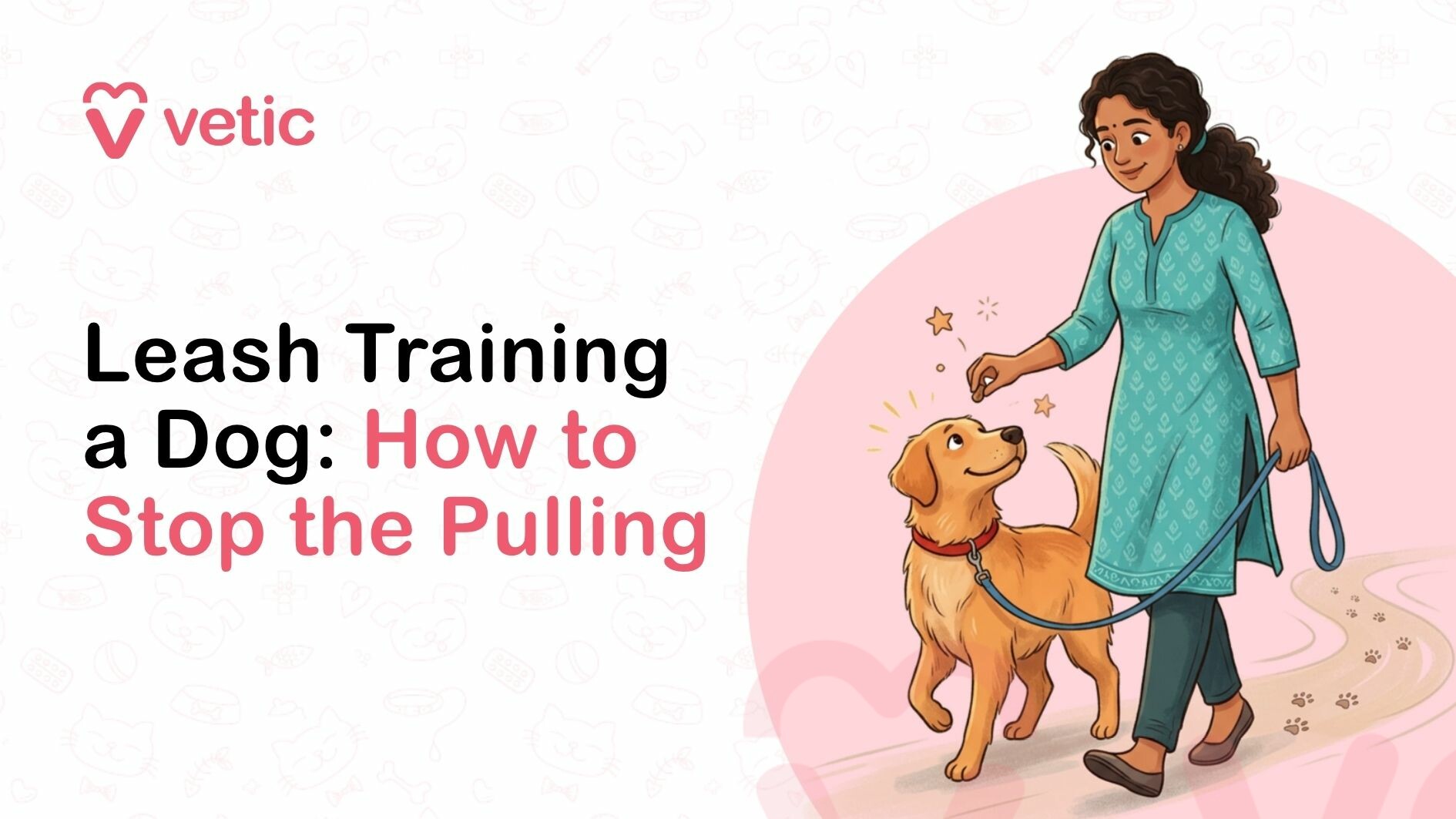
The moment the leash tightens, stop walking completely. Resume only once your dog turns back or the leash goes slack again.
Should You Train a Puppy or Adult Dog Differently?
The core method stays the same, but expectations shift with age.
Early Training for Puppies vs Resetting Habits in Adult Dogs
Puppies are learning leash manners from scratch, so progress tends to be quick. Leash training a puppy with existing pulling habits usually just takes a bit more patience and repetition.
What Gear Works Best for Leash Training?
The right gear makes leash training a dog progress noticeably faster.
Harness Options
Front-clip harnesses redirect a pulling dog back toward you. They’re a solid default choice for most breeds and sizes.
Gear to Avoid
Choke, prong, and slip collars can injure the neck and trachea, especially on a dog that pulls hard.
What Helps Leash Training Stick?
A few consistent habits make the biggest difference in whether leash-training tips for dog owners actually stick in the long term.
Short Sessions
Ten to fifteen minutes of focused practice beats a full walk spent fighting the leash.
Real-World Rewards
Letting your dog sniff or continue the walk works as a reward, not just treats. It keeps the walk itself motivating.
Consistent Cues
Everyone walking the dog should use the same word and the same rule for a tight leash.
What Mistakes Happen During Slow Leash Training?
A few common leash training dog mistakes quietly undo all the progress you’ve made. So always consult an expert vet for dogs before starting training.
Letting Pulling Earn Forward Motion
If pulling ever gets your dog closer to what they want, the lesson resets to zero. Consistency matters more than any single technique.
Relying on Corrections Over Rewards
Constant leash corrections can create tension and anxiety without teaching the dog what to do instead. Rewarding calm walking works better long-term.
When Should You Get Professional Help?
Persistent leash training dog struggles despite consistent effort are worth flagging to a professional. If pulling is accompanied by lunging, aggression, or extreme fear, a certified trainer or behaviourist can help. Some cases benefit from an expert canine vet checkup too, especially if pain might be part of the picture.
Conclusion: About Leash Training for Dogs
Leash training a dog’s behaviour takes patience, but it’s genuinely one of the most trainable habits out there. Consistency beats intensity every single time.
If pulling seems tied to discomfort, a vet can help rule out a physical cause.
FAQs: About Leash Training for Dogs
Do Dogs Grow Out of Leash Pulling?
Rarely on their own. Pulling that gets reinforced over time and tends to get stronger, not weaker, without training.
Is Leash Training Good for Dogs?
Yes. It reduces stress on walks, protects their neck and throat, and makes daily walks more enjoyable for everyone involved.
At What Age Should You Start Leash Training a Puppy?
As soon as a puppy is comfortable wearing a collar or harness, usually around 8 weeks old.
How Long Does It Take to Train a Dog to Walk on a Leash?
Most dogs show real improvement within 2 to 4 weeks of consistent, short practice. Full reliability can take a bit longer.
Why Does My Dog Pull Harder on a Harness?
Some harnesses, especially back-clip styles, can trigger an instinctive opposition reflex that makes pulling worse. A front-clip harness usually solves this.
References
Donovan, L. (2019, August 30). Leash Train Your Puppy In 5 Easy Steps. American Kennel Club. https://www.akc.org/expert-advice/training/teach-puppy-walk-leash/
Gibeault, S., MSc, Apr 26, C. U., Apr 26, M. U., & Minutes, 2024 | 5. (n.d.). How to Stop Your Dog From Pulling on Leash [Review of How to Stop Your Dog From Pulling on Leash]. American Kennel Club. Retrieved July 16, 2026, from https://www.akc.org/expert-advice/training/expert-tips-dog-leash-issues/
Purina. (2018, October 3). Learn How to Leash Train Your Puppy. https://www.purina.com/articles/dog/puppy/training/leash-training-your-puppy