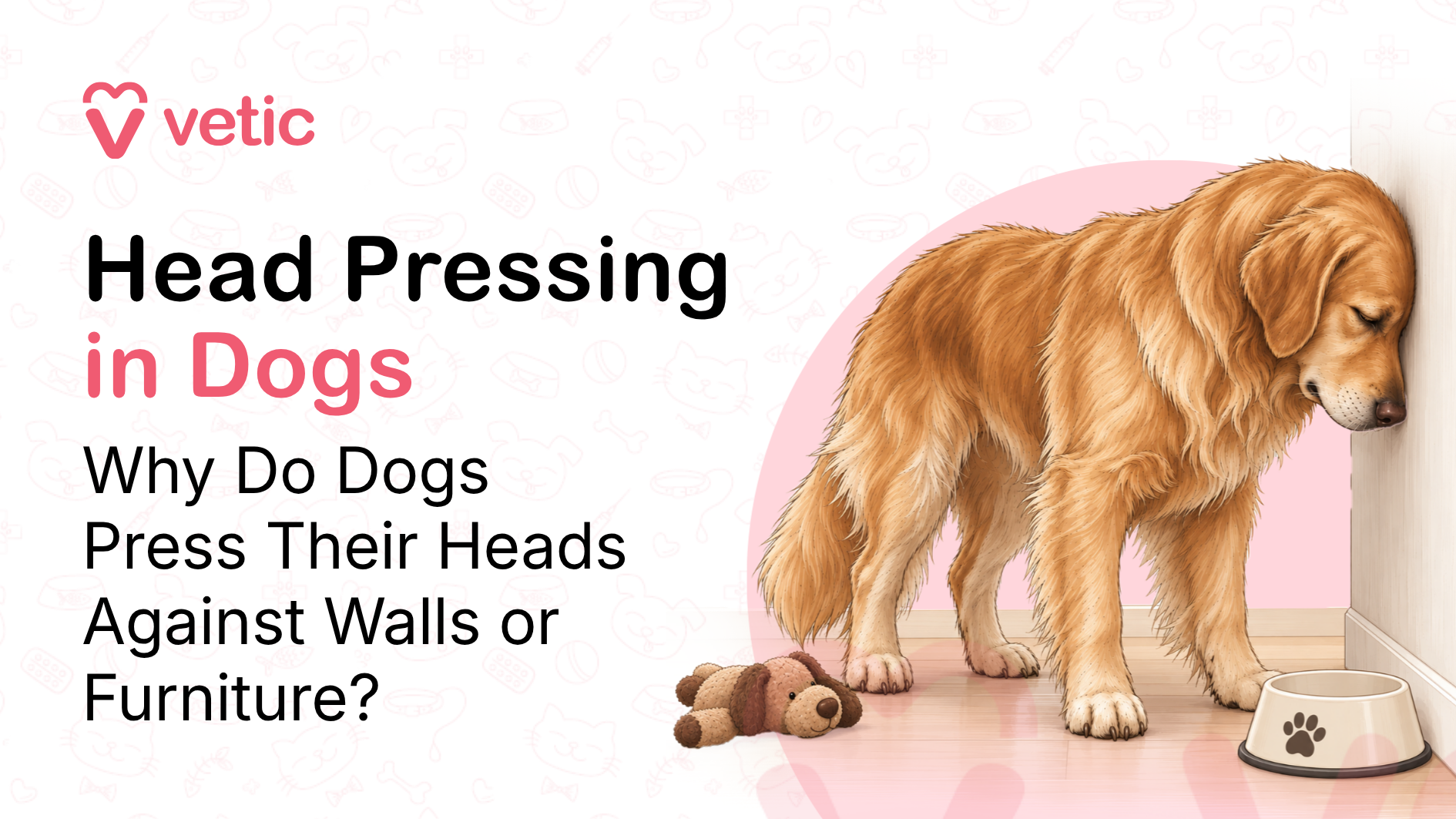
Why Is Head Pressing an Emergency Sign?
Head pressing can indicate brain dysfunction, particularly in the forebrain, or metabolic and toxic conditions that interfere with normal brain function. It doesn’t necessarily mean increased pressure inside the skull, but some underlying causes can become life-threatening quickly. Because the underlying conditions can worsen within hours, this is not a symptom to watch and wait on. If your dog presses its head against a wall or furniture, treat it with the same urgency as a collapse or seizure and seek veterinary care at the nearest dog clinic promptly.
Signs That Mean Go to the Vet Immediately
- Repeated or prolonged episodes of head pressing
- Disorientation, circling, or getting stuck in corners
- Sudden vision loss or bumping into objects
- Seizures, tremors, or extreme drowsiness
- Vomiting, drooling, or an unsteady, wobbly walk
What to Do on the Way to the Clinic
Keep your dog calm, limit loud noise and bright light, and avoid pulling them away from the wall forcefully. Skip home remedies entirely. Instead, note when the head pressing began and anything else you noticed, since these details help your vet narrow down the cause faster.
Why Does a Dog Press Its Head Against a Wall or Furniture?
A dog pressing its head against a wall is rarely caused by a single, isolated issue. It usually reflects one of a few underlying processes affecting the brain, liver, or nervous system, and pinpointing which one is at play needs veterinary examination and testing.
Brain and Nerve Disorders
Brain tumours, meningitis, encephalitis, stroke, and other disorders affecting the forebrain can disrupt normal neurological function and lead to abnormal behaviours such as head pressing. Some of these conditions can also cause increased pressure inside the skull.
Liver-Related Brain Changes
When the liver cannot filter toxins from the blood properly, hepatic encephalopathy can develop. This is an important metabolic cause of neurological signs in dogs. It occurs when substances normally processed by the liver affect brain function. It can occur with congenital or acquired liver disease and may cause confusion, altered behaviour, drooling, weakness, or seizures.
Toxins and Poisoning
Certain toxins and medications can affect brain function directly, causing disorientation and head pressing alongside other neurological signs such as tremors or seizures.
Head Trauma and Brain Swelling
A fall, an accident, or a blow to the head can cause swelling inside the skull. Because the skull cannot expand to accommodate this, even mild swelling raises pressure on the brain and can trigger head pressing.
Infections and Inflammation
Infections that reach the brain or its surrounding membranes, such as meningitis or encephalitis, can also cause a dog to press its head against furniture or walls, usually along with fever or lethargy.
Is Head Pressing Normal Dog Behaviour?
No. Head pressing should never be dismissed as a personality trait, a way of seeking comfort, or simple stubbornness.
Affectionate Leaning and Resting
Dogs often lean into their pet parents or rest their head on a cushion out of affection or tiredness. This kind of leaning is soft, relaxed, and easily interrupted, very different from canine head pressing.
Disorientation and Canine Head Pressing
True head pressing is typically repetitive or sustained and appears purposeless. Affected dogs may seem confused, less responsive, or unable to navigate normally.
What Symptoms Can Occur with Head Pressing?
Head pressing rarely shows up alone. Watching for these accompanying signs helps your vet understand the bigger picture.
Vision, Balance and Walking Changes
Dogs may bump into furniture, circle repeatedly, or appear unsteady on their feet alongside head pressing.
Seizures, Confusion and Pacing
Some dogs pace aimlessly or seem confused about familiar surroundings, and head pressing may appear before or after a seizure episode.
Appetite and Behaviour Changes
Reduced appetite, unusual clinginess, or sudden aggression can accompany head pressing, and you should share all of these details with your pet health expert.
Why Is My Dog Head Pressing After a Seizure?
Dogs recovering from a seizure pass through a postictal phase, and disorientation is one of the most commonly reported signs during this recovery period. Dog head pressing after a seizure can occur as the brain settles back into normal activity, and it is one of the more common reasons pet parents search for answers about this behaviour.
Post-Seizure Confusion vs an Emergency
Mild disorientation lasting a few minutes after a seizure may pass on its own. But if head pressing continues, repeats, or is paired with further seizures, it needs same-day veterinary evaluation rather than a wait-and-watch approach.
What Details to Tell Your Veterinarian
Share how long the seizure lasted, how long the head pressing continued afterwards, and whether your dog has had seizures before. A short video, if it is safe to record, can also help your vet a great deal.
Why Does Head Pressing Occur in Senior Dogs?
Head pressing in senior dogs is often linked to age-related conditions rather than a single, straightforward cause, which is part of why an older dog’s symptoms deserve a closer look.
Age-Related Conditions That Increase the Risk
Older dogs are more likely to develop certain neurological and systemic diseases, including brain tumours and some forms of liver disease. Cognitive dysfunction can also cause disorientation and altered behaviour, but true head pressing should not be dismissed as normal ageing.
Why Not Every Change Is Due to Ageing
Not every behaviour change in an older dog is simply “old age.” New or worsening head pressing always deserves a proper veterinary check rather than being written off as a senior quirk.
What Will the Emergency Vet Check?
An emergency visit for head pressing usually involves a structured, step-by-step evaluation to identify the underlying cause quickly.
Physical Examination, Blood Tests and Imaging
Your vet will examine your dog’s reflexes, eyes, and coordination, then may recommend blood work, liver function tests, or imaging such as an MRI or CT scan to look inside the brain.
Questions Your Veterinarian May Ask
Expect questions about when the head pressing started, any recent falls or possible toxin exposure, appetite changes, and whether your dog has had seizures.
How Is Head Pressing in Dogs Treated?
Treatment for head pressing in dogs depends entirely on the cause, so diagnosis always comes first.
Why Treatment Depends on the Underlying Cause
Depending on what your vet finds, treatment could range from dietary and medical support for liver disease to anti-seizure medication, surgery for a tumour, or supportive care to reduce brain swelling.
What Recovery May Look Like
Some dogs recover well once the underlying cause is treated, while others need ongoing management. Your vet will guide you on what to expect for your dog specifically, based on their diagnosis and overall health.
What Mistakes Do Pet Parents Make?
A few common missteps can delay the care a dog with head pressing actually needs.
Waiting to See if It Stops
Delaying a vet visit to “see if it passes” can allow the underlying cause, whether it is liver disease, poisoning, or brain swelling, to worsen.
Assuming It Is Just Odd Behaviour
Mistaking head pressing for a quirky habit can leave the real cause undiagnosed longer than it should.
Trying Home Remedies First
Home remedies do not address the root cause of head pressing and can delay the care your dog actually needs.
Conclusion: About Head Pressing in Dogs
Head pressing in dogs is a behaviour every pet parent should take seriously as soon as they notice it. Whether it is linked to liver disease, a seizure, a toxin, or a condition more common in senior dogs, prompt veterinary care gives your dog the best chance at a good outcome. If you notice your dog pressing its head against a wall or furniture, don’t wait it out at home; book a consultation with Vetic for prompt assessment, or contact Vetic’s 24/7 emergency care if your dog needs urgent attention.
FAQs: About Head Pressing in Dogs
Is Head Pressing Always Serious in Dogs?
Yes. Head pressing should always be treated as an emergency and evaluated by a vet the same day it appears.
Can a Dog Recover from Head Pressing?
Many dogs recover well once a vet identifies and treats the underlying cause, though the outlook depends on the cause.
Is Head Pressing Painful for Dogs?
It is linked to discomfort or altered brain function, so affected dogs are likely uncomfortable even if they do not show obvious signs of pain.
Can Head Pressing Stop on Its Own?
It may pause between episodes, but the underlying cause usually still needs treatment, so it can return or worsen without veterinary care.
Should I Let My Dog Sleep After Head Pressing?
Keep your dog calm and safe, but head to the vet rather than waiting it out at home, especially after a first episode.
Can Poisoning Cause Sudden Head Pressing?
Yes, certain toxins can affect brain function quickly and cause head pressing along with other neurological signs such as tremors or seizures.
References
American Animal Hospital Association. (2023). Managing cognitive dysfunction and behavioural anxiety. In 2023 AAHA senior care guidelines for dogs and cats. https://www.aaha.org/resources/2023-aaha-senior-care-guidelines-for-dogs-and-cats/managing-cognitive-dysfunction-and-behavioral-anxiety/
MSD Veterinary Manual. (2024). Disorders of the liver and gallbladder in dogs. https://www.msdvetmanual.com/dog-owners/digestive-disorders-of-dogs/disorders-of-the-liver-and-gallbladder-in-dogs
MSD Veterinary Manual. (2024). Hepatic encephalopathy in small animals. https://www.msdvetmanual.com/digestive-system/hepatic-diseases-of-small-animals/hepatic-encephalopathy-in-small-animals
MSD Veterinary Manual. (2025). Epilepsy in small animals. https://www.msdvetmanual.com/nervous-system/epilepsy-in-small-animals/epilepsy-in-small-animals