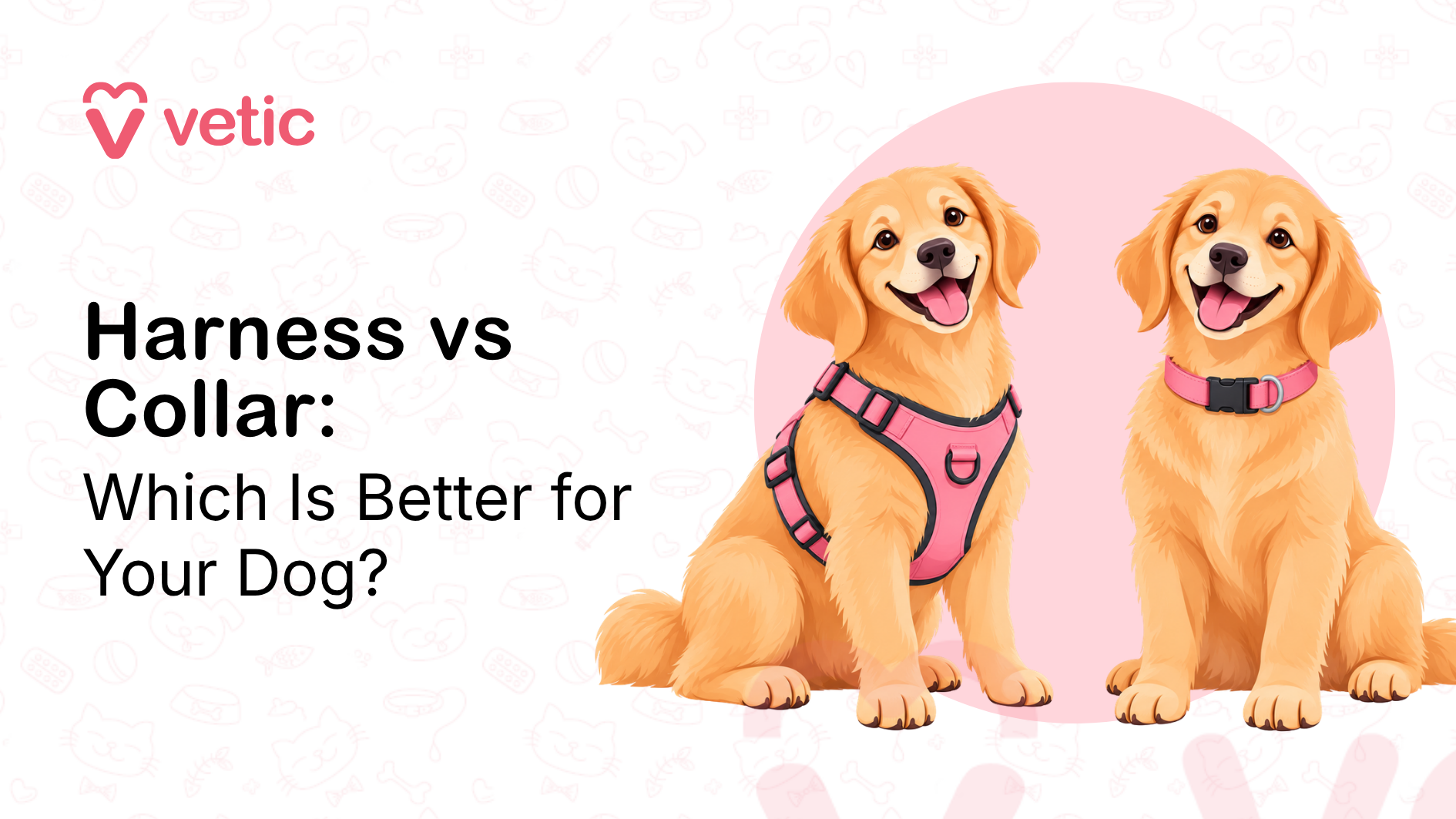
Your dog spots a street dog or a squirrel and lunges, and the lead snaps tight around the neck. Would a harness be kinder? The harness vs collar choice depends on your dog’s size, age, health and walking habits. Both have a place, and many dogs use a collar for ID tags and a harness for walks. This guide explains how to choose the right option for your dog.
Harness or Collar at a Glance?
The best walking gear depends on your dog’s behaviour, body shape and health. Use this quick comparison to decide whether a harness, collar or both may suit your dog.
| Situation | Harness | Collar | Best option |
| Dogs that pull | Helps keep lead pressure off the neck | Pulling can strain the neck | Harness |
| Calm walkers | A comfortable option for walks | Suitable for dogs that walk calmly on a loose lead | Either |
| Puppies | Supports comfortable early lead training | Useful for ID if fitted securely | Both |
| Flat-faced breeds, such as Pugs and Shih Tzus | Often preferred for walks because of their breathing concerns | Better reserved for ID if neck pressure is a concern | Both |
| Eye, airway or neck conditions | May help avoid direct neck pressure; ask your vet | May worsen certain conditions if the lead pulls against it | Vet-guided harness use |
| Everyday identification | Can be used alongside a collar | Convenient for holding an ID tag with your phone number | Both |
A quick safety tip: Keep your dog’s ID tag and phone number up to date. During Diwali fireworks and monsoon storms, frightened dogs may try to bolt, so secure walking equipment and reliable identification are especially important.
How Do You Choose for Your Dog?
Your dog’s body, age and health all affect the right choice.
Do Breed and Body Shape Matter?
Yes. Flat-faced breeds such as Pugs, Shih Tzus and French Bulldogs may benefit from a well-fitted harness, particularly if they have breathing difficulties. Narrow-headed breeds, including sighthounds such as the Indian Rajapalayam and Mudhol Hound, may slip out of collars that do not fit securely. Deep-chested breeds such as German Shepherds, Dobermans and Great Danes need a harness designed to fit their body shape without restricting movement.
Do Age and Training Stage Matter?
Puppies and dogs still learning lead manners often do well with a harness during training.
Does Health History Matter?
Yes. A study of 26 dogs found that applying pressure through a collar significantly increased the pressure inside the eyes, while pressure applied through the harness tested did not. The researchers recommended harnesses for dogs with glaucoma or weak corneas. If your dog has an eye, airway or neck condition, ask your veterinarian which walking equipment is safest. A harness may help avoid direct pressure on the neck, but the right choice depends on your dog’s individual condition and the harness fit.
Is a Harness Better Than a Collar?
Neither is best for every dog. The harness vs collar answer depends on the situation.
When Does a Collar Make Sense?
A collar may suit healthy dogs who walk calmly. It also keeps ID tags visible.
Do Many Dogs Need Both?
Using both is common: the collar holds the ID tag, while the harness takes the lead.
No-Pull Harness or Collar?
Pet parents often compare a no-pull harness vs a collar for strong pullers.
How Can a No-Pull Harness Help?
Front-clip harnesses may help reduce pulling by turning the dog towards you. They work best alongside reward-based training.
Why Do Some Trainers Dislike Harnesses?
Some trainers worry that harnesses encourage pulling. A back-clip harness can make it easier for a dog to lean into the lead, while a front-clip harness can help redirect a pulling dog. Neither replaces reward-based leash training.
Harness fit also matters. A study of nine dogs found that both restrictive and non-restrictive harnesses reduced shoulder extension compared with walking without a harness. The non-restrictive design reduced shoulder extension more in the study, showing that a Y-shaped harness does not automatically guarantee unrestricted movement.
Choose a harness that fits securely without rubbing or pressing across the shoulder joints, and check that your dog can walk comfortably and move freely.
Is a Harness Good for Puppies?
A soft, well-fitted harness for puppies can make early lead training more comfortable.
When Should You Start Leash Gear?
You can introduce lightweight gear early, using treats and short sessions.
What Features Suit Growing Puppies?
Choose an adjustable, lightweight harness. Check the fit often, as puppies grow quickly.
Can Pugs Wear Collars?
Pugs can wear a collar for ID, but a harness is often preferred for walks.
Why Does Neck Pressure Matter More?
Flat-faced breeds such as Pugs may already have breathing difficulties. Pressure on the neck may add strain.
What Is a Safer Setup for Short Walks?
Use a well-fitted harness for walks and a light collar for ID only. Avoid strenuous walks in hot or humid weather, particularly for flat-faced dogs that may be more vulnerable to heat stress.
Can Collars Cause Neck Injuries?
Strong or repeated pulling against a collar can put pressure on sensitive structures in the neck, including the windpipe (trachea) and surrounding tissues. This may cause discomfort or worsen breathing problems in dogs with existing airway conditions.
What Warning Signs Should You Watch For?
Watch for coughing, gagging, noisy breathing or neck pain during or after walks.
What Should You Stop Doing Right Away?
Avoid jerking the lead; gentle, reward-based training works better. If your dog coughs, shows changes in breathing, seems to have significant pain or displays other concerning signs, stop the activity and contact your veterinarian for an expert canine vet checkup. Your vet can advise whether a harness or another walking setup is appropriate.
Why Does Fit Matter So Much?
Poorly fitted walking gear can be uncomfortable or unsafe, whether it is a collar or harness.
Can a Loose Collar Slip Off?
Yes. A loose collar may slip over the head, particularly in dogs with narrow heads.
Can a Tight Harness Restrict Movement?
Yes. A tight harness may rub or limit shoulder movement.
What Is the Simplest Checklist?
- You should be able to fit two fingers comfortably under the collar or straps.
- The harness should not rub under the front legs.
- Your dog should be able to walk and move freely.
- Check the fit regularly, especially as your dog grows or changes weight.
Conclusion
Walks are one of the best parts of your dog’s day. The right gear helps keep them comfortable and safe. If you’re unsure what suits your dog’s breed or health, our vets are happy to help. Find your nearest Vetic clinic to get guidance.
FAQs
Do Vets Recommend Collars or Harnesses?
Vetic vets may recommend a well-fitted harness for dogs that pull or have certain eye, airway or neck conditions, depending on the individual dog’s needs.
What Are the Disadvantages of a Dog Harness?
A poorly fitted harness may rub or restrict shoulder movement, so fit and design matter.
Are Dogs Happier Without a Collar?
Some dogs may be more comfortable without a collar at home, but collars remain useful for identification outdoors.
Why Use a Dog Harness Instead of a Collar?
A harness can help keep lead pressure off the neck, particularly when a dog pulls.
References
Johnson, A. C., & Wynne, C. D. L. (2024). Comparing efficacy in reducing pulling and welfare impacts of four types of leash walking equipment. PeerJ, 12, e18131. https://doi.org/10.7717/peerj.18131
Lafuente, M. P., Provis, L., & Schmalz, E. A. (2019). Effects of restrictive and non-restrictive harnesses on shoulder extension in dogs at walk and trot. Veterinary Record, 184(2), 64. https://doi.org/10.1136/vr.104946
Pauli, A. M., Bentley, E., Diehl, K. A., & Miller, P. E. (2006). Effects of the application of neck pressure by a collar or harness on intraocular pressure in dogs. Journal of the American Animal Hospital Association, 42(3), 207–211. https://doi.org/10.5326/0420207