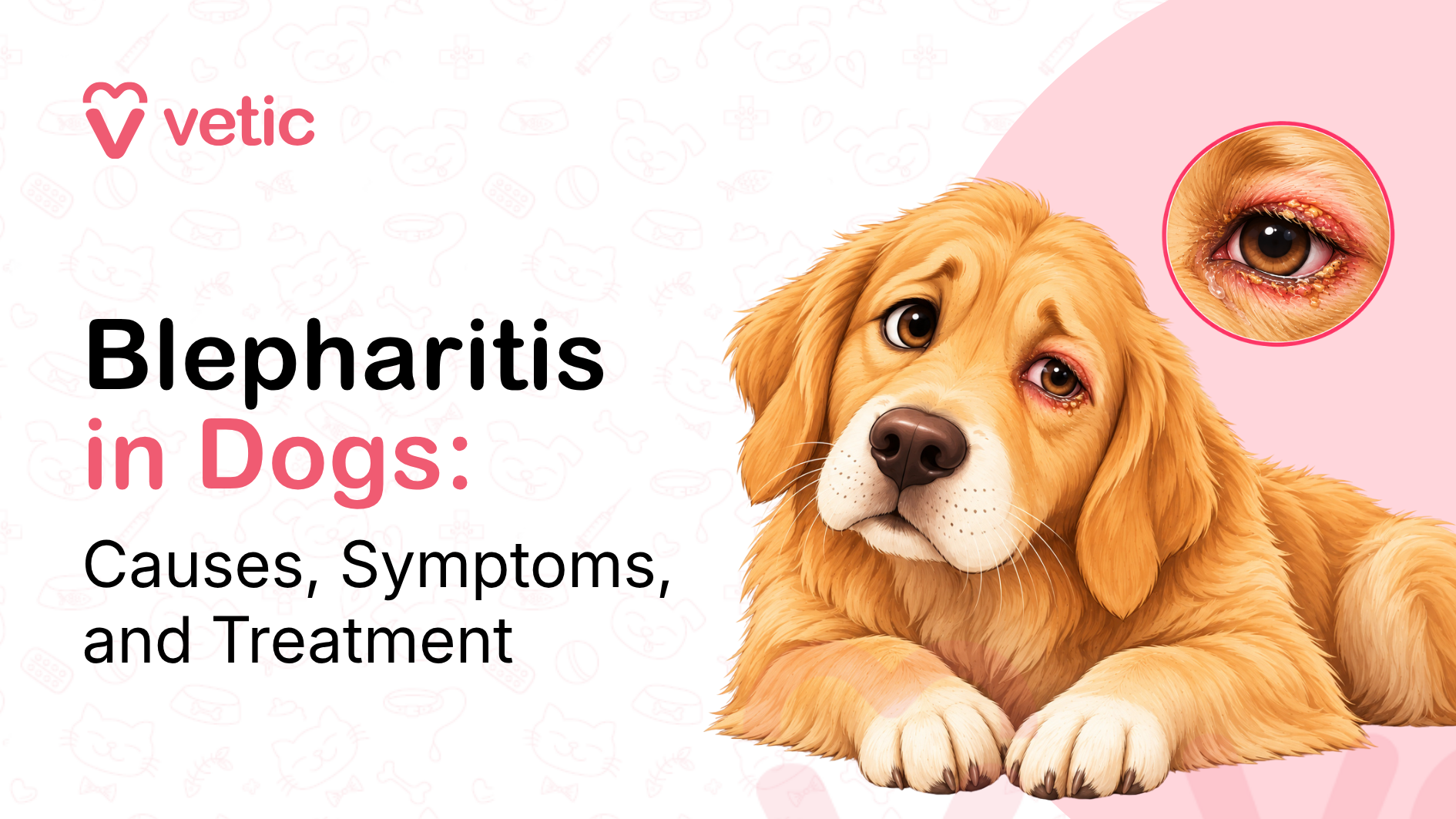
Dog blepharitis is inflammation of the eyelids. It can make the eyelids red, swollen or crusty, and it may cause itching or discomfort. Blepharitis often signals another problem, such as an allergy, infection, or eyelid shape issue. This guide explains the canine blepharitis’ causes, signs, diagnosis and treatment options.
What Does Blepharitis Look Like?
Blepharitis may affect one or both eyes. Changes can start mild and become more noticeable over time.
What Eyelid Changes and Signs of Irritation Can Appear?
Signs may include:
- Red or swollen eyelids
- Crusting or scaling along the eyelid edges
- Hair loss around the eyes
- Watery or thick discharge
- Rubbing or pawing at the eyes
- Squinting or blinking more than usual
Some dogs also develop small lumps along the eyelid edge.
What Causes Blepharitis in Dogs?
Blepharitis is usually a response to another problem. Finding the cause is an important part of treatment.
Can Allergies, Infections, Mites, Eyelid Shape, Trauma, or Immune Disease Cause It?
Blepharitis in dogs can have several causes. Identifying the underlying problem helps your vet choose the right treatment.
Common causes and contributing factors include:
- Allergies and skin disease: Inflammation affecting the skin around the eyes can spread to the eyelids.
- Infections and parasites: Common culprits include Demodex mites, ringworm (a fungal infection) and bacterial infections such as staph.
- Eyelid shape and eyelash problems: Entropion, a condition in which the eyelid rolls inward, can cause eyelashes or surrounding hair to rub against the eye. Abnormally positioned or misdirected eyelashes can also cause irritation. This rubbing may damage the conjunctiva (the pink lining of the eyelid) or the cornea (the clear front surface of the eye).
- Immune-mediated disease: Conditions such as pemphigus, in which the immune system mistakenly attacks the body’s own skin, can affect the eyelid edges.
- Injury and environmental irritation: Scratches, bites, repeated rubbing and irritants such as plant oils or sunlight may contribute to eyelid inflammation.
Because these problems can look similar, a veterinary examination is important to identify the cause and determine the right treatment.
When Do Swollen Eyelids Need Urgent Vet Care?
Contact your vet the same day if you notice:
- Squinting or keeping the eye closed
- Thick yellow or green discharge
- Sudden or significant swelling of the eyelids
Seek emergency veterinary care if your dog has a serious eye injury, severe pain, sudden vision changes, or rapidly worsening swelling around the eye.
While you wait for veterinary advice: Prevent your dog from rubbing or pawing at the eye; an Elizabethan collar (cone) can help. Do not apply human eye drops, creams or other treatments unless your vet specifically advises you to do so.
Select Vetic clinics offer 24/7 emergency care.
How Do Vets Diagnose Blepharitis?
Diagnosis usually starts with a physical examination of the eyes, eyelids and surrounding skin.
What Does the Eye Exam Check and When Are Tests Needed?
Your vet will examine your dog’s eyelids, eyelashes and the surface of the eye. They may use fluorescein staining, a quick, painless test using an orange dye that highlights scratches or ulcers on the eye’s surface. According to the MSD Veterinary Manual, skin scrapings, cultures and biopsies may also be needed to identify the cause. Skin scrapings can help detect mites, while cultures may identify bacteria or fungi. A biopsy may be considered if the eyelid changes suggest an immune-mediated disease, tumour or another condition that routine tests cannot confirm.
How Is Dog Blepharitis Treated?
Treatment for blepharitis depends on the underlying cause. Your vet will recommend a plan suited to your dog.
How Do Cleaning and Prescribed Medicines Help?
Gentle eyelid cleansing, when your veterinarian advises it, can help remove crusts and discharge. The MSD Veterinary Manual notes that warm compresses and frequent cleansing are often used in severe cases. Treatment may include targeted medication for parasites, bacteria, fungi or immune-mediated disease. Anti-inflammatory treatment may also be prescribed when appropriate, based on examination of the eyelids and eye. Blepharitis may be part of a wider skin or body condition. In these cases, the MSD Veterinary Manual notes that whole-body treatment is often needed.
When Is Surgery Needed?
Surgery may be considered when an eyelid shape problem is causing ongoing irritation. According to the MSD Veterinary Manual, established entropion usually needs surgery to correct it. Depending on the problem, a procedure may be needed to remove or destroy abnormal eyelashes, correct an eyelid abnormality or treat a persistent eyelid-gland lesion.
What Is the Recovery Timeline and How Can You Prevent Relapse?
Recovery varies with the cause and how quickly treatment begins.
How Long Can Healing Take and Why Can It Recur?
Recovery depends on the underlying cause and how well it responds to treatment. Blepharitis may return if the cause is not controlled, so follow your vet’s treatment plan and attend recommended check-ups to help reduce the risk of relapse.
Conclusion
Dog blepharitis is often manageable once the underlying cause is identified. Early assessment may help protect the eye and keep your dog comfortable. If you notice red, swollen or crusty eyelids, book a consultation at your nearest Vetic clinic for an eye examination.
FAQs
Can a Dog’s Bacterial Eye Infection Go Away on Its Own?
Mild irritation may settle, but a suspected infection should be checked by a vet. Untreated eyelid problems can sometimes affect the eye itself.
What Are the Four Stages of Blepharitis?
There is no recognised four-stage system for blepharitis in dogs. Vets usually describe it by its cause and by whether it is short-term or long-term.
What Is Commonly Mistaken for Blepharitis?
Conjunctivitis, eyelid growths, entropion and allergic skin disease can look similar. A vet exam helps distinguish these conditions.
How Can I Treat My Dog’s Blepharitis at Home?
Home care should support, not replace, veterinary treatment. There are no proven home remedies for blepharitis in dogs, so avoid applying creams or oils near the eyes. Gentle cleaning as advised by your vet may help.
Is It Normal for Puppies to Have Crusty Eyes?
A small amount of discharge after sleep can be normal. However, crusting, swelling or hair loss around the eyes should be checked by a vet.
References
Gelatt, K. N. (2018, updated 2024, September). Disorders of the eyelids in dogs. MSD Veterinary Manual. https://www.msdvetmanual.com/dog-owners/eye-disorders-of-dogs/disorders-of-the-eyelids-in-dogs
Hamor, R. E. (2026). Eyelids in animals. MSD Veterinary Manual. Retrieved 12 October 2026, from https://www.msdvetmanual.com/eye-diseases-and-disorders/ophthalmology/eyelids-in-animals