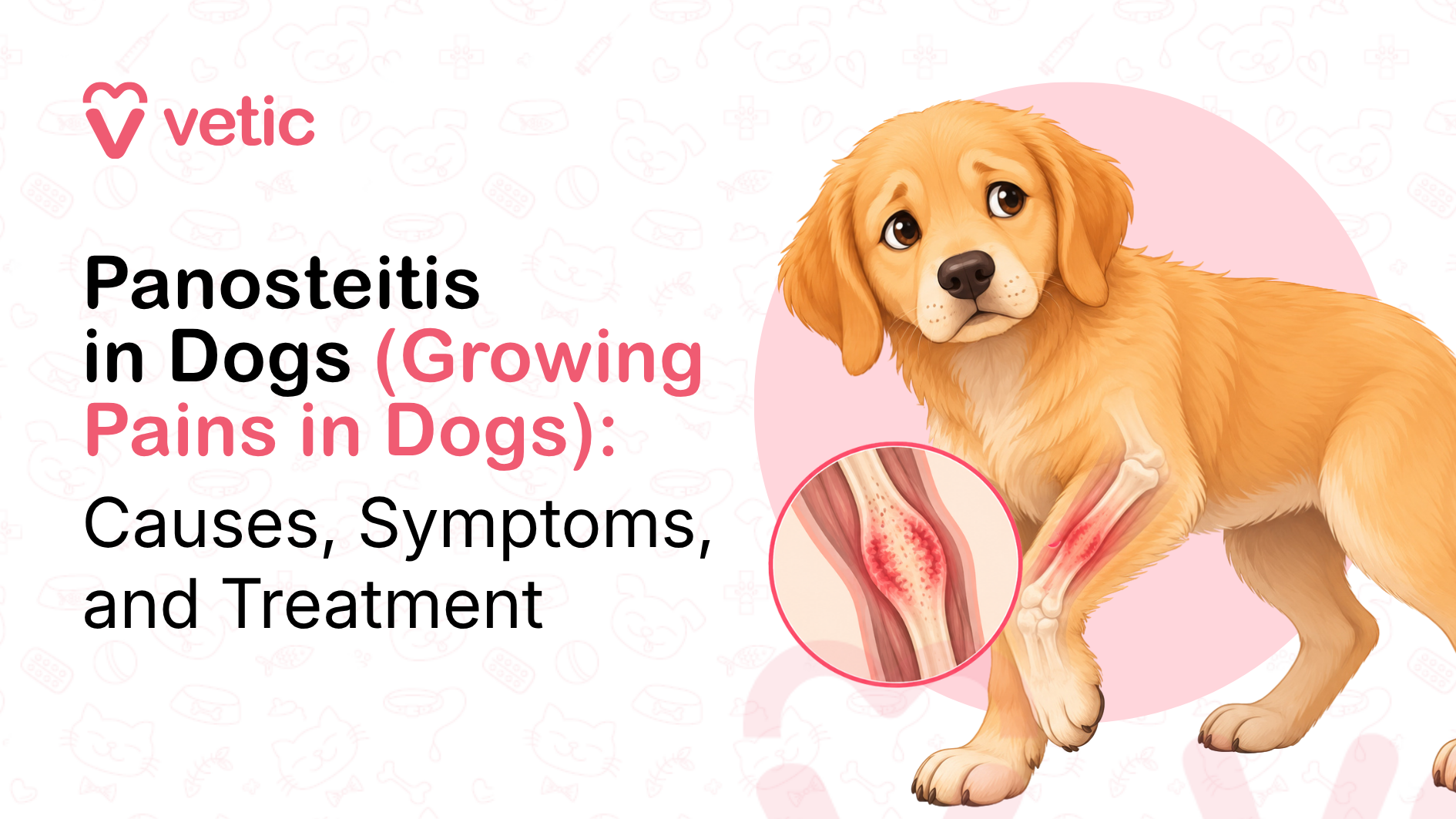
Your puppy was bounding around yesterday, but today they are limping and you cannot think of any fall or injury. One possible cause is panosteitis, a painful bone condition that affects young, growing dogs, particularly those of large breeds. It is often called growing pains, as it usually appears during periods of rapid growth. According to the MSD Veterinary Manual, panosteitis is self-limiting and usually stops once a dog finishes growing. Flare-ups can come and go until then. This guide explains the symptoms, signs of emergency, diagnosis, treatment and recovery.
What Does Dog Panosteitis Look Like?
The main sign of dog panosteitis is sudden limping, usually without any injury. Pain may be found when the affected long bone is palpated during a veterinary examination.
Why Can Limping Shift Between Legs?
Panosteitis affects the inner part of the long leg bones. One bone may be affected first, followed by another, which can cause the limp to shift between legs. A 2023 review of the condition notes that episodes may settle within a few days and later recur in a different bone. The front legs are reported to be affected more often than the hind legs.
Can Pain, Low Energy, or Fever Occur?
Panosteitis dog symptoms may include:
- Sudden limping without a known injury
- Pain when the leg is touched or pressed
- Reluctance to walk, play or climb stairs
- Reduced appetite or low energy during flare-ups
- A raised temperature in some dogs
Which Dogs Are Most Commonly Affected?
The condition mainly affects young dogs of larger breeds.
At What Age Does Panosteitis Start?
Panosteitis usually develops in young dogs between about 5 and 18 months of age, during their growth phase. The exact age can vary depending on the dog and breed. German Shepherds are the most commonly affected breed. Other commonly affected large and giant breeds include Doberman Pinschers, Golden Retrievers, Labrador Retrievers, Saint Bernards, Great Danes and Basset Hounds. German Shepherds, Labradors and Golden Retrievers are also among India’s popular dog breeds, making awareness of panosteitis particularly relevant for pet parents raising these dogs.
What Causes Panosteitis?
The exact cause of panosteitis in dogs is still unknown. However, it is most commonly seen in young, growing dogs, particularly those belonging to large and giant breeds. Researchers believe several factors may contribute to the condition.
How Do Growth and Other Factors Contribute?
Panosteitis develops during a dog’s growth phase and is associated with changes inside the affected bone, including changes in the marrow, the soft centre of the bone. However, rapid growth alone has not been established as the cause.
Possible contributing factors include genetics, physical stress, infection, and the body’s metabolic and immune responses. German Shepherds are frequently reported to be affected, which has raised questions about a possible genetic link, but more research is needed to confirm the causes.
Can Calcium Supplements Contribute to Bone Problems?
Many pet parents are advised to give growing puppies calcium syrup or tablets, sometimes on a breeder’s or pet shop’s recommendation. However, do not give your puppy calcium supplements unless your veterinarian recommends them. A complete, balanced puppy diet formulated for large-breed growth should provide the nutrients needed for healthy development. Excess calcium can interfere with normal skeletal development, particularly in large-breed puppies.
Avoid feeding growing puppies high-protein, high-calorie diets unless your veterinarian advises otherwise. Choose a complete diet suited to your puppy’s age and expected adult size, and consult your vet before adding supplements or making significant dietary changes.
How Is Panosteitis Different from Other Causes of Limping?
Several conditions can cause limping in young dogs. A vet examination helps identify the cause and distinguish panosteitis from other conditions.
What Signs May Point to a Sprain or Another Condition?
A sprain or injury often follows a known fall or rough play. Pain localised to a joint may suggest a joint disorder, but a veterinary examination is needed because several conditions can cause similar lameness. The case series lists conditions such as hip dysplasia and elbow problems among those that can look similar. Swelling around a joint, rather than pain along the bone, may also point to another cause.
Which Red Flags Need Urgent Care?
Seek urgent veterinary care if your dog:
- Will not put any weight on a leg
- Has a visible wound, deformity or marked swelling
- Has a high fever, severe lethargy or refuses food
- Shows signs of severe pain, such as crying when moving
Select Vetic clinics offer 24/7 emergency care.
How Do Vets Diagnose Panosteitis?
Diagnosis usually involves a physical examination and X-rays.
What Do the Exam and X-Rays Show?
During the examination, the vet may press along the leg bones to find painful areas. According to the case series, X-rays often show patchy, cloudy areas inside the affected bone. These changes can support the diagnosis and help distinguish panosteitis from other causes of lameness. However, the severity of X-ray changes does not always match the level of pain. At Vetic, in-house diagnostics include X-ray.
How Is Panosteitis Treated?
Panosteitis treatment for dogs focuses on keeping the dog comfortable while the condition runs its course.
How Do Rest and Prescribed Pain Relief Help?
Veterinarians commonly prescribe pain relief and anti-inflammatory medication to help manage panosteitis flare-ups. Your vet will choose the most suitable medicine and dose based on your dog’s condition, age and overall health.
Dogs may start feeling better within a few days, although a flare-up can last longer and may recur. During painful episodes, limit strenuous activity and allow your dog to rest, gradually adjusting activity as your vet advises.
Joint supplements containing glucosamine and chondroitin are unlikely to treat panosteitis because it is a bone condition rather than arthritis. Before buying joint supplements for your growing puppy, ask your vet whether they are appropriate for your dog’s needs.
What Activity and Feeding Guidance May Be Needed?
During a flare-up, keep walks short and gentle, and avoid running, jumping and rough play until your vet says it’s okay.
Feed your puppy a complete, balanced diet formulated for their age and expected adult size. Avoid adding calcium supplements unless your vet recommends them. For more details, see the section on calcium supplementation and panosteitis.
How Long Does Panosteitis Last?
Dog panosteitis is self-limiting, which means it usually resolves on its own over time.
How Long Can Flare-Ups Last and When Do Dogs Outgrow It?
According to the case series, a flare-up may last from a few days to over a month. Episodes may recur for several months and usually stop as the dog reaches skeletal maturity. Some large and giant breeds may continue growing beyond 1 year, so the age at which episodes stop can vary.
What Mistakes Do Pet Parents Make During an Episode?
Some well-meant actions may delay comfort or recovery.
Giving Human Painkillers Without Veterinary Advice
Human painkillers such as ibuprofen (found in combination products such as Combiflam), paracetamol and diclofenac can be dangerous for dogs if given or used incorrectly. Diclofenac sprays and gels can also pose a risk if your dog licks the product from your skin or fur. These medicines may cause serious harm, including stomach, kidney or liver problems. Never give your dog human pain medication or apply a pain-relief gel to them unless your vet specifically advises it.
Assuming the Limp Is Just a Sprain
Panosteitis can cause sudden limping without an obvious injury, but other conditions can cause similar signs. Do not assume the pain will pass on its own, especially if your dog cannot bear weight, seems very uncomfortable or the limp persists or worsens. Arrange a veterinary examination to identify the cause.
Starting Calcium Supplements Without Advice
Calcium syrup or tablets are not a treatment for panosteitis, and unnecessary supplementation can interfere with normal skeletal development in growing puppies. Feed a complete, balanced diet suited to your puppy’s age and expected adult size, and give supplements only if your vet recommends them.
Resuming Intense Exercise Too Soon
Your dog may seem better after a few days, but pain can recur. Avoid running, jumping and rough play during a flare-up, and increase activity gradually according to your vet’s advice.
Conclusion
Dog panosteitis can be painful, but it is usually temporary, and many dogs recover well. Prompt diagnosis and vet-guided pain relief may help your dog stay comfortable through flare-ups. If your dog develops sudden or persistent limping, book a consultation at your nearest Vetic clinic for an examination. Your vet may recommend an X-ray to help assess the affected bones and rule out other causes of pain.
FAQs
What Are the First Signs of Panosteitis?
The first sign is often sudden limping in a young dog without any known injury. The limp may later move to another leg.
What Breed of Dog Is Most Susceptible to Panosteitis?
German Shepherds are reported to be the most commonly affected breed. Other large and giant breeds can also be affected.
What Is Panosteitis and What Are Its Symptoms in German Shepherds?
Panosteitis is a painful bone condition in young, growing dogs. In German Shepherds, it usually causes sudden limping that often shifts between legs.
How Long Does Panosteitis Last in Puppies?
Each flare-up may last a few days to over a month. Episodes usually stop once growth is complete, often by about 1 to 2 years of age.
What Can I Give My Dog for Panosteitis?
Only give pain relief prescribed by your vet. Human pain medicines can harm dogs and should not be used.
What Is the Prognosis for Panosteitis in Dogs?
The outlook for panosteitis in dogs is generally good. It is self-limiting, and most dogs outgrow it once their bones stop growing.
References
Harari, J. (2018, March 14). Bone disorders in dogs. MSD Veterinary Manual. https://www.msdvetmanual.com/dog-owners/bone-joint-and-muscle-disorders-of-dogs/bone-disorders-in-dogs
Moreira, L. de P., Zocatelli, T. F., & Amaral, C. B. (2023). Canine panosteitis and preventive veterinary measures: Insights from a case series. Bulletin of the National Research Centre, 47, Article 179. https://doi.org/10.1186/s42269-023-01153-3