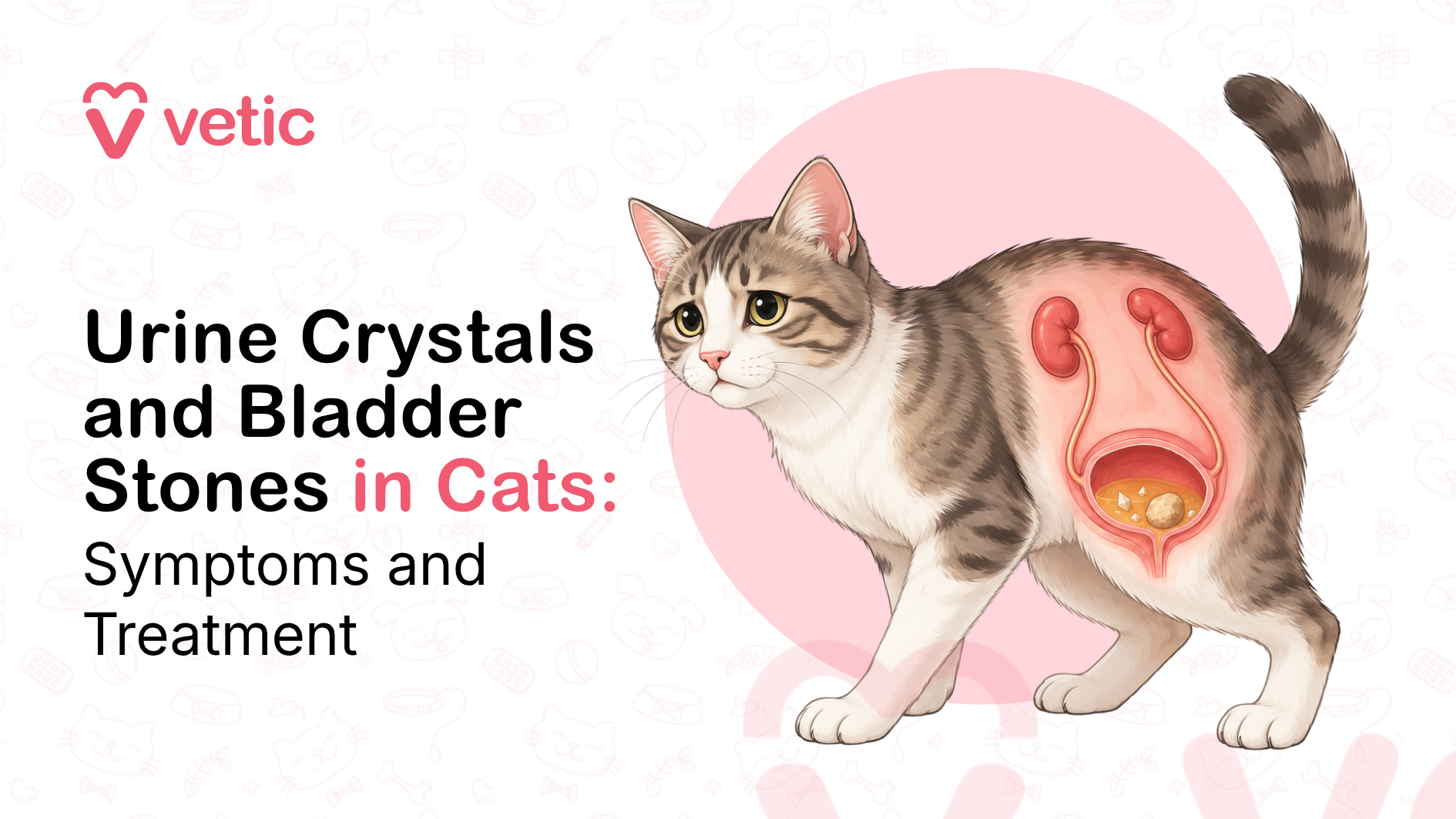
Changes in a cat’s litter box habits can worry any pet parent. In some cases, these changes are linked to cat pee crystals or bladder stones. Urine crystals can sometimes be found in cats without causing illness, while bladder stones may cause urinary signs or obstruction. A vet should assess both in context. This guide explains the signs, causes, diagnosis and treatment options.
What Are Urine Crystals and Bladder Stones in Cats?
According to the MSD Veterinary Manual, minerals that occur naturally in urine can form tiny crystals, and over time these can clump together into stones. However, finding crystals in urine does not necessarily mean a stone is present.
How Are Crystals Different from Bladder Stones?
Crystals in a cat’s urine are microscopic and are usually only seen under a microscope. They are not always a problem and may be found in some healthy cats. Stones are larger and can range from sand-like grains to sizeable masses. Depending on their size and location, stones may irritate the urinary tract or obstruct urine flow.
What Symptoms Should You Watch For?
Some cats with small stones or urine crystals show no signs. Others may show changes in their urination or behaviour.
What Urinary Changes Should Concern You?
Common signs may include:
- Straining or spending a long time in the litter box
- Passing small amounts of urine frequently
- Blood in the urine
- Urinating outside the litter box
- Crying or discomfort while urinating
- Excessive licking of the genital area
Which Signs Can Indicate a Blockage?
A blockage may be present if a cat strains repeatedly but passes little or no urine. Vomiting, lethargy, hiding and loss of appetite may also develop. The MSD Veterinary Manual notes that male cats are at greater risk of urinary blockage.
What Causes Crystals and Bladder Stones?
The exact cause is not fully understood. Feline crystals and stones can form when urine becomes supersaturated with stone-forming minerals. Urine concentration, mineral balance, pH and other factors can influence this process.
Are Bladder Stones the Same as Kidney Stones in Cats?
They are related but not the same. Bladder stones in cats form in, or move into, the bladder. Kidney stones form within the kidneys and, according to the MSD Veterinary Manual, are rare in cats.
How Do Urine Concentration, Diet, and Mineral Balance Contribute?
Concentrated urine contains more minerals in less water, which may make crystal formation more likely. Urine pH also plays a role, as some crystal types form more easily in more alkaline or more acidic urine. Diet and low water intake can influence urine concentration and stone formation. Other individual factors may also play a role.
Which Types of Stones Can Cats Develop?
MSD (May 2026) says calcium oxalate is now the most common type, and some struvite-control diets may contribute to it. Urate stones are less common. The type matters because it often guides treatment and prevention.
How Are Urine Crystals and Stones Diagnosed?
When a vet suspects urine crystals in cats, they usually consider the cat’s clinical signs, physical examination, and urinalysis.
What Do Urine Tests and Imaging Show?
Urinalysis can assess urine concentration, blood, and crystals, and may show evidence of inflammation or infection. A urine culture may be recommended when bacterial infection is suspected. X-rays or ultrasound may help identify stones and show their size and location. At Vetic, in-house diagnostics include blood work, X-ray and ultrasound.
When Is Additional Testing Needed?
Further tests may be advised if symptoms continue or keep returning. These may include a urine culture, blood tests to check kidney function, or analysis of a removed stone. In selected cities, Vetic’s Vet at Home service can collect urine and blood samples at home.
How Are Urine Crystals and Stones Treated?
Treatment depends on the type, size and location of the crystal or stone and whether it is causing urinary obstruction or other complications. Your vet will recommend a plan suited to your cat.
When Can Diet and Hydration Help?
Some struvite stones may dissolve with a vet-prescribed urinary diet. Increasing water intake may also help dilute the urine. Calcium oxalate stones, however, usually don’t dissolve with diet. Any diet change should be made under veterinary guidance.
When Are Procedures or Surgery Needed?
Stones that cannot be dissolved or that cause a blockage may need removal. Depending on the case, this may involve flushing the stones out or surgery to open the bladder. A blocked cat may also need a urinary catheter and hospital care. Vetic’s emergency teams can relieve urinary blockages.
How Can You Prevent Recurrence?
Urinary crystals and stones can return in some cats. Ongoing care may help lower this risk.
How Do Water Intake and Diet Support Urinary Health?
Encouraging your cat to drink more water may help keep the urine dilute. Helpful steps may include wet food, several water bowls and a water fountain. Your vet can recommend a diet suited to the stone type.
Why Are Follow-Up Checks Important?
Follow-up urine tests or imaging help your vet confirm that treatment is working. They may also detect new crystals or stones before symptoms return.
When Is It an Emergency?
A cat who cannot pass urine has a potential urinary obstruction and needs emergency veterinary care immediately. A urinary blockage can become life-threatening, particularly in male cats.
What Signs Require Immediate Veterinary Care?
Seek emergency care if your cat:
- Strains repeatedly with little or no urine
- Cries in pain while trying to urinate
- Vomits, becomes weak or collapses
- Stops eating and hides
Select Vetic clinics offer 24/7 emergency care. Find your nearest 24/7 Vetic emergency clinic.
Conclusion
Urine crystals and bladder stones are common, and many cats respond well to timely care. Early diagnosis, the right diet and good hydration may help reduce future problems. If you notice changes in your cat’s urination, book a consultation at your nearest Vetic clinic for a urinary check-up.
FAQs
Can Cats Pass Bladder Stones on Their Own?
Some small stones may pass naturally, but a stone can become lodged in the urethra and cause a life-threatening obstruction. Veterinary assessment is important.
How Do I Know If My Cat Has Crystals in Urine?
You usually can’t see crystals in your cat’s urine at home. A vet can confirm them through a urine test, particularly if your cat shows urinary signs.
What Dissolves Bladder Stones in Cats?
Some struvite stones may dissolve with a vet-prescribed urinary diet. Other stone types, such as calcium oxalate, usually need to be removed.
Can Wet Food Help Cats with Urinary Crystals?
Wet food increases water intake, which may help dilute the urine. Your vet can advise whether you also need a specific urinary diet.
How Long Does It Take for Bladder Stones to Go Away in Cats?
Your vet may use repeat X-rays to monitor progress during treatment. Struvite stones often dissolve within a few weeks on a prescription diet. Calcium oxalate stones don’t dissolve and need removal.
What Happens If a Cat Cannot Urinate?
A cat who cannot urinate may have a urinary blockage, which is a medical emergency. Seek veterinary care immediately.
References
American Veterinary Medical Association. (n.d.). Feline lower urinary tract disease (FLUTD). https://www.avma.org/resources-tools/pet-parents/petcare/feline-lower-urinary-tract-disease
Brown, S. A. (2026, May). Urinary stones (uroliths, calculi) in cats. MSD Veterinary Manual. https://www.msdvetmanual.com/cat-parents/kidney-and-urinary-tract-disorders-of-cats/urinary-stones-uroliths-calculi-in-cats