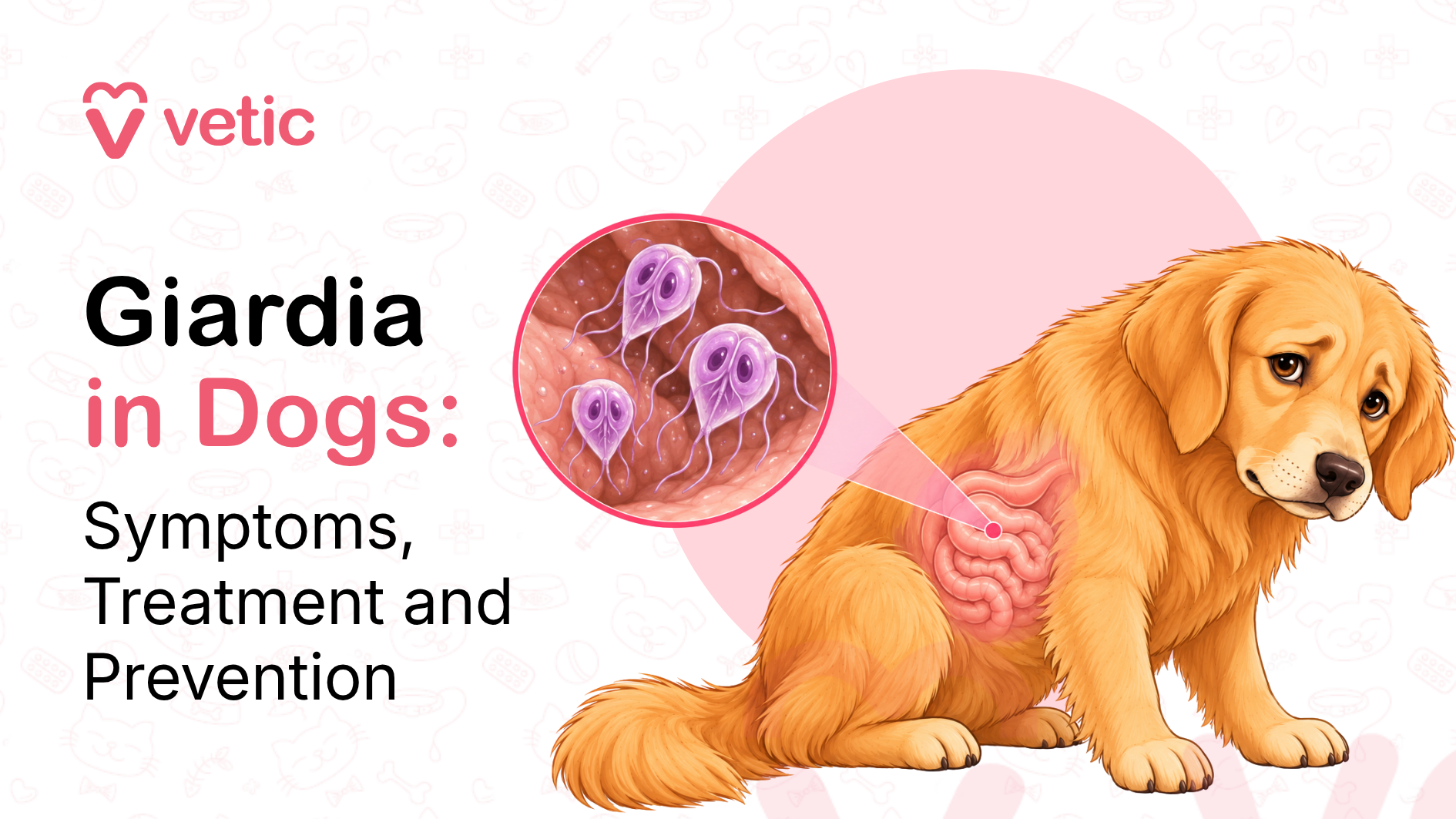
Giardia in dogs is an intestinal infection caused by a tiny parasite called Giardia. It can cause diarrhoea and other digestive signs, although many infected dogs show no clinical signs. With veterinary treatment and careful home cleaning, many dogs can be managed well. This guide explains the signs, testing, treatment and prevention.
What Are the Symptoms of Giardia in Dogs?
Signs can range from none to ongoing digestive upset. According to the MSD Veterinary Manual, dogs shedding Giardia often show no clinical signs.
What Digestive Changes and Stool Signs Can Occur?
Signs may include:
- Soft or poorly formed diarrhoea
- Pale, greasy or unusually smelly stools
- Mucus in the stool
- Stools that come and go between normal and loose
What Signs Suggest Dehydration or Weakness?
Seek prompt veterinary care if your dog shows:
- Dry or sticky gums
- Lethargy or weakness
- Vomiting alongside diarrhoea
- Refusal to eat or drink
How Do Dogs Get Giardia?
Dogs usually become infected by swallowing Giardia cysts. These cysts are passed in the stool of infected animals.
Where Can Dogs Pick Up Giardia, and Who Is Most at Risk?
Cysts may be present in contaminated water, soil or surfaces, particularly where stool has not been cleared. Dogs may swallow them while drinking from puddles, sniffing the ground or grooming. The MSD Veterinary Manual reports higher infection rates in younger animals. Dogs in kennels, shelters or other busy settings may also face greater exposure.
How Serious Is Giardia in Dogs?
Many cases are mild and respond well to treatment. However, ongoing diarrhoea can affect a dog’s health if left untreated.
When Is It Mild Versus Urgent?
A healthy adult dog with occasional soft stools may have a mild case. However, a vet visit is still advisable to confirm the cause. It becomes more urgent if diarrhoea is severe or lasts more than a day or two. Vomiting or weakness also needs prompt veterinary attention. Puppies should be checked promptly because they can become dehydrated more quickly than adult dogs. You can find a vet clinic near you or contact your vet to arrange a consultation.
How Do Vets Diagnose Giardia in Dogs?
Vets diagnose Giardia by testing a stool sample. In selected cities, Vetic’s Vet at Home service can collect stool samples at home.
What Tests Are Used and Why Can One Negative Test Be Misleading?
Vets may examine the stool under a microscope for Giardia cysts or use a test that detects Giardia proteins. Cysts are not shed in every stool, so one negative test can miss the infection. According to the MSD Veterinary Manual, your vet may ask for three stool samples collected over 3–5 days if Giardia is still suspected.
How Is Giardia in Dogs Treated?
Treatment aims to control clinical signs and manage the infection, while reducing the risk of ongoing environmental contamination through good hygiene.
What Medication May Be Prescribed?
Medication is prescribed by a vet based on the individual dog. A WSAVA review lists several medicines that have been used, with fenbendazole and metronidazole among the most common. A vet may also suggest a diet change, as added fibre or a lower-fat diet may help some dogs. Bathing your dog with a chlorhexidine shampoo, as recommended by the MSD Veterinary Manual, may help remove Giardia cysts from the coat and reduce the risk of reinfection. Ask your vet which shampoo is suitable for your dog.
When Is Retesting Needed?
Retesting may be advised if diarrhoea persists or returns after treatment. Your veterinarian can decide which test is appropriate and when to repeat it. The WSAVA review also advises against using Giardia protein tests for early rechecks because these proteins may remain detectable after successful treatment.
Fenbendazole vs Metronidazole
Both medicines are used to treat canine Giardia, but they work differently. Fenbendazole is a dewormer, while metronidazole is an antibiotic that also acts against Giardia. The MSD Veterinary Manual considers fenbendazole a first-line treatment, although the choice depends on the dog’s condition and local prescribing guidance. MSD also lists a combination product containing febantel, pyrantel and praziquantel as an effective option for dogs. Your vet will decide which treatment is most appropriate.
Why Should You Choose Medicine with a Veterinarian?
The review notes that it is not possible to predict which medicine will work for a particular infection. Your vet will consider other parasites or bacteria found in the stool, your dog’s health and any earlier treatment. If the first medicine doesn’t work, your vet may try a different type. Giving medicine without a prescription may cause side effects or delay effective care.
How Can You Prevent Reinfection at Home?
Giardia cysts can survive in the environment, and the WSAVA review on VIN notes that reinfection can occur within days. Cleaning and hygiene are an important part of treatment.
How Should You Clean Bedding, Bowls, and Outdoor Areas?
Remove your dog’s stool promptly and clean contaminated areas thoroughly. Depending on the surface, cleaning options may include steam cleaning, boiling water, or a pet-safe disinfectant recommended by your vet. Wash bedding, bowls and toys regularly, and allow surfaces to dry completely. If you use a disinfectant, follow its label instructions and rinse surfaces well where appropriate to prevent your dog from licking any residue. Keep your dog away from treated areas until they are safe to use again.
How Can You Reduce Spread to Other Pets and People?
Wash your hands after handling your dog or picking up stool. Provide clean drinking water and discourage drinking from puddles. Your vet may suggest testing or treating other dogs in the home. Bathing your dog at the end of treatment may help remove cysts from the coat.
What to Avoid While Your Dog Recovers
Some approaches may seem helpful but can delay effective care.
Why Can Unproven Remedies or Waiting Delay Treatment?
There is no proven home cure for Giardia. Home remedies are unlikely to clear the infection, and waiting may allow diarrhoea to continue. Using leftover medicines without veterinary advice may also cause side effects.
Conclusion
Many dogs respond well to prompt treatment, combined with bathing and thorough cleaning. If your dog has recurring diarrhoea, book a consultation at your nearest Vetic clinic for a stool test.
FAQs
How Long Does Giardia Take to Go Away in Dogs?
Diarrhoea may improve within days of starting treatment, but the infection may take longer to clear, and reinfection is possible. The MSD Veterinary Manual lists typical treatment courses of 3–5 days for fenbendazole and 5 days for metronidazole. The exact duration depends on the medication prescribed and your vet’s advice.
Do I Need to Disinfect My House If My Dog Has Giardia?
It’s advisable to clean areas where your dog has passed stool. Washing bedding and bowls and removing stool promptly may help prevent reinfection.
What Is the Most Effective Treatment for Giardia in Dogs?
No single treatment works for every dog. Your vet will choose a medicine and may combine it with bathing and cleaning.
Can Dogs Recover from Giardia Without Medication?
Some infected dogs show no signs. However, a dog with diarrhoea should be checked by a vet rather than left untreated.
Can Humans Catch Giardia from Dogs?
According to the MSD Veterinary Manual, spread from animals to people appears to be relatively rare. Good hand hygiene is still sensible.
Can Dogs Get Giardia from Eating Grass?
It may be possible if the grass is contaminated with infected stool. Picking up stool promptly helps reduce this risk.
References
Hunter, T., Downing, R., Panning, A., & Ward, E. (2009). Giardia in dogs. VCA. https://vcahospitals.com/know-your-pet/giardia-in-dogs
Robertson, L. J. (2026, May). Giardiasis in animals. MSD Veterinary Manual. https://www.msdvetmanual.com/digestive-system/giardiasis-giardia/giardiasis-in-animals