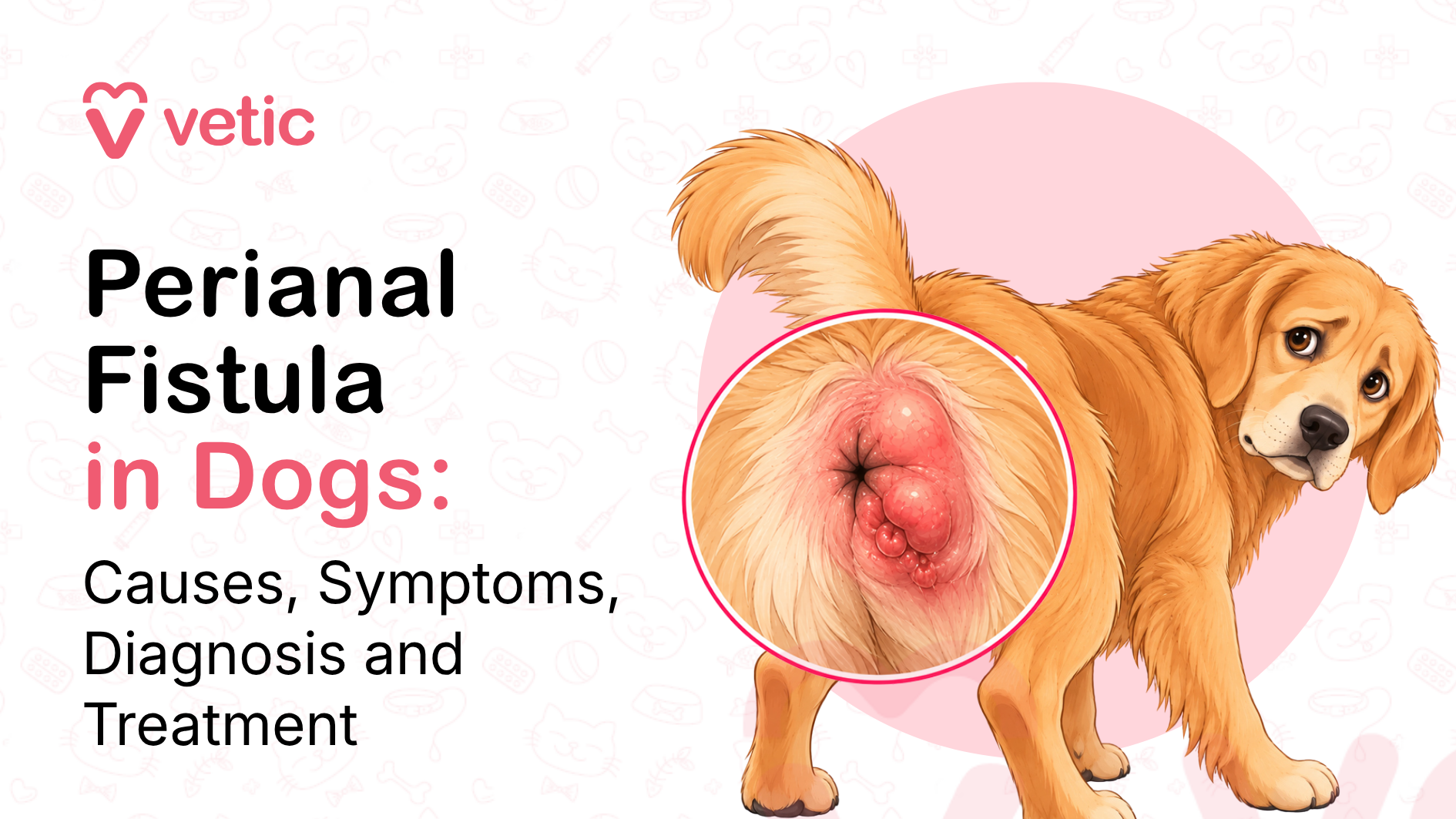
What Is Perianal Fistula in Dogs?
A canine anal fistula is also called anal furunculosis. According to the MSD Veterinary Manual, it involves long-term, foul-smelling, draining tracts around the anus. These chronic draining tracts may extend into the rectum or anus.
What Changes Around the Anus May Appear First?
Early changes may include small openings, sores or areas of discharge around the anus. The area may look red, moist or swollen. Because the tail often covers the area, these changes can be easy to miss.
How Can Pain Affect Behaviour?
The MSD Veterinary Manual notes that pain may cause low mood, a change in attitude or reduced appetite. Some dogs become reluctant to sit, lift their tail or have the area touched.
What Are the Symptoms of Perianal Fistula in Dogs?
Signs can develop gradually and may vary between dogs.
What Are the Common Signs?
Common signs include:
- Straining or pain when passing stool
- Diarrhoea or constipation
- Frequent licking or biting of the anal area
- Discharge or an unpleasant smell from the area
- Loss of appetite or lethargy
Changes in stool habits or frequent licking are sometimes mistaken for minor digestive upset.
Which Signs Need Urgent Veterinary Care?
Seek same-day veterinary care if your dog cannot pass stool or shows severe pain. Bleeding from the area or loss of bowel control also needs urgent attention.
Why Does Canine Perianal Fistula Happen?
The exact cause is not known. However, the MSD Veterinary Manual describes several contributing factors.
What Role Does Immune-Mediated Inflammation Play?
The condition is suspected to involve an abnormal immune response, with a genetic tendency in some dogs. This suspected immune-mediated process may contribute to chronic inflammation and formation of fistulous tracts around the anus.
Which Dogs May Be More at Risk?
According to the MSD Veterinary Manual, the condition is most common in German Shepherds and shepherd mixes. It is also seen in Irish Setters and Labrador Retrievers. Middle-aged dogs are more often affected. A broad-based tail carried low is considered a likely contributing factor, rather than a direct cause.
How Do Vets Confirm the Diagnosis?
Diagnosis is usually based on a physical examination and ruling out other possible causes.
What Examination and Tests Help Rule Out Similar Conditions?
Your vet will examine the area and may perform a rectal examination. Conditions such as anal sac disease and tumours need to be ruled out. A bacterial culture may be taken if infection is suspected. According to the MSD Veterinary Manual, a tissue biopsy is rarely needed.
What Are the Treatment Options?
Treatment for canine perianal fistula usually focuses on controlling inflammation and pain. The MSD Veterinary Manual describes medical management as the main approach.
How Do Medicines Like Cyclosporine Help?
Cyclosporine is considered the treatment of choice for most cases. It aims to calm the immune response behind the inflammation. According to the MSD Veterinary Manual, tacrolimus ointment may be used for mild lesions or for long-term control after healing. These medicines are available only on veterinary prescription and need regular monitoring. Antibiotics may help with secondary infection but do not treat the condition itself. Veterinarians may also prescribe stool softeners and pain relief.
When Is Surgery Considered?
Surgery is generally reserved for dogs who do not respond to medical treatment. The MSD Veterinary Manual notes possible complications, such as faecal incontinence and narrowing of the anus. Your vet will discuss the benefits and risks with you.
What Food Helps Dogs with Perianal Fistula?
Diet is not the main treatment, but it may support care in some dogs.
When Might a Diet Trial Help?
If your vet suspects a food sensitivity, they may suggest a diet trial. This usually involves feeding a single, carefully chosen diet for several weeks. Any new diet should be chosen with your vet, as diets need to be complete and balanced. A diet that keeps stools soft may also make passing stool more comfortable.
What Should You Expect During Recovery?
Recovery is often gradual and needs regular veterinary check-ups.
How Long Can Healing Take, and Why Can Flare-Ups Recur?
With appropriate medical treatment, lesions often resolve within 8–12 weeks, although response varies between dogs. Once lesions have resolved, your veterinarian may gradually reduce cyclosporine to the lowest effective dose because relapse is common after treatment is stopped. Some dogs need long-term treatment to keep the condition under control.
What Happens Without Treatment?
Without treatment, the wounds may worsen and become increasingly painful.
Why Is Veterinary Management Important?
The MSD Veterinary Manual advises prompt treatment, as infection may spread to deeper tissues. These can include the muscle that controls the anus. Long-standing cases may also narrow the anus. Regular veterinary care helps manage pain and lowers the risk of complications.
Conclusion
Perianal fistula in dogs can be painful, but many dogs respond well to medical treatment and careful follow-up. Early diagnosis may help reduce discomfort and complications. If you notice licking, straining or discharge around the anus, book a consultation at your nearest Vetic clinic.
FAQs
Can a Perianal Fistula Heal Without Surgery?
Many cases can be managed without surgery. The MSD Veterinary Manual describes medical treatment as the main approach. Surgery is generally reserved for dogs who do not respond.
What Are Some Natural Treatments for Perianal Fistula in Dogs?
There is no evidence-based natural cure. Keeping the area clean and following a vet-guided diet may support treatment, but these should not replace prescribed medication.
What Is Included in a Dog’s Perianal Fistula Surgery Package at Vetic?
Vetic’s surgery packages include the consultation, pre-surgery tests, anaesthesia, the procedure, post-operative care and follow-up visits. The exact treatment plan and cost depend on your dog’s condition and the procedure recommended by the vet. Contact your nearest Vetic clinic for a personalised estimate.
Can Tacrolimus Ointment Be Used to Treat Perianal Fistulas in Dogs?
According to the MSD Veterinary Manual, tacrolimus ointment may be used for mild lesions or long-term control. Use it only if your vet prescribes it.
Do Perianal Fistulas Go Away?
Lesions often heal with treatment, but relapse is common. Many dogs need ongoing or long-term management.
How Long Does It Take for a Perianal Fistula to Heal?
With medical treatment, lesions often resolve within about 8 to 12 weeks, according to the MSD Veterinary Manual. Healing time may vary between dogs.
References
Chaitman, J., & Gaschen, F. (2021). Fecal microbiota transplantation in dogs. Veterinary Clinics of North America: Small Animal Practice, 51(1), 219–233. https://doi.org/10.1016/j.cvsm.2020.09.012
Ferrer, L., Kimbrel, E. A., Lam, A., Falk, E. B., Zewe, C., Juopperi, T., Lanza, R., & Hoffman, A. (2015). Treatment of perianal fistulas with human embryonic stem cell-derived mesenchymal stem cells: A canine model of human fistulizing Crohn’s disease. Regenerative Medicine, 11(1), 33–43. https://www.merckvetmanual.com/digestive-system/diseases-of-the-rectum-and-anus/perianal-fistula-in-dogs
Gallagher, A. (2025, August). Perianal fistula in dogs. MSD Veterinary Manual. https://www.msdvetmanual.com/digestive-system/diseases-of-the-rectum-and-anus/perianal-fistula-in-dogs
Rubin, S. I. (2024, September). Disorders of the rectum and anus in dogs. MSD Veterinary Manual. https://www.msdvetmanual.com/dog-owners/digestive-disorders-of-dogs/disorders-of-the-rectum-and-anus-in-dogs