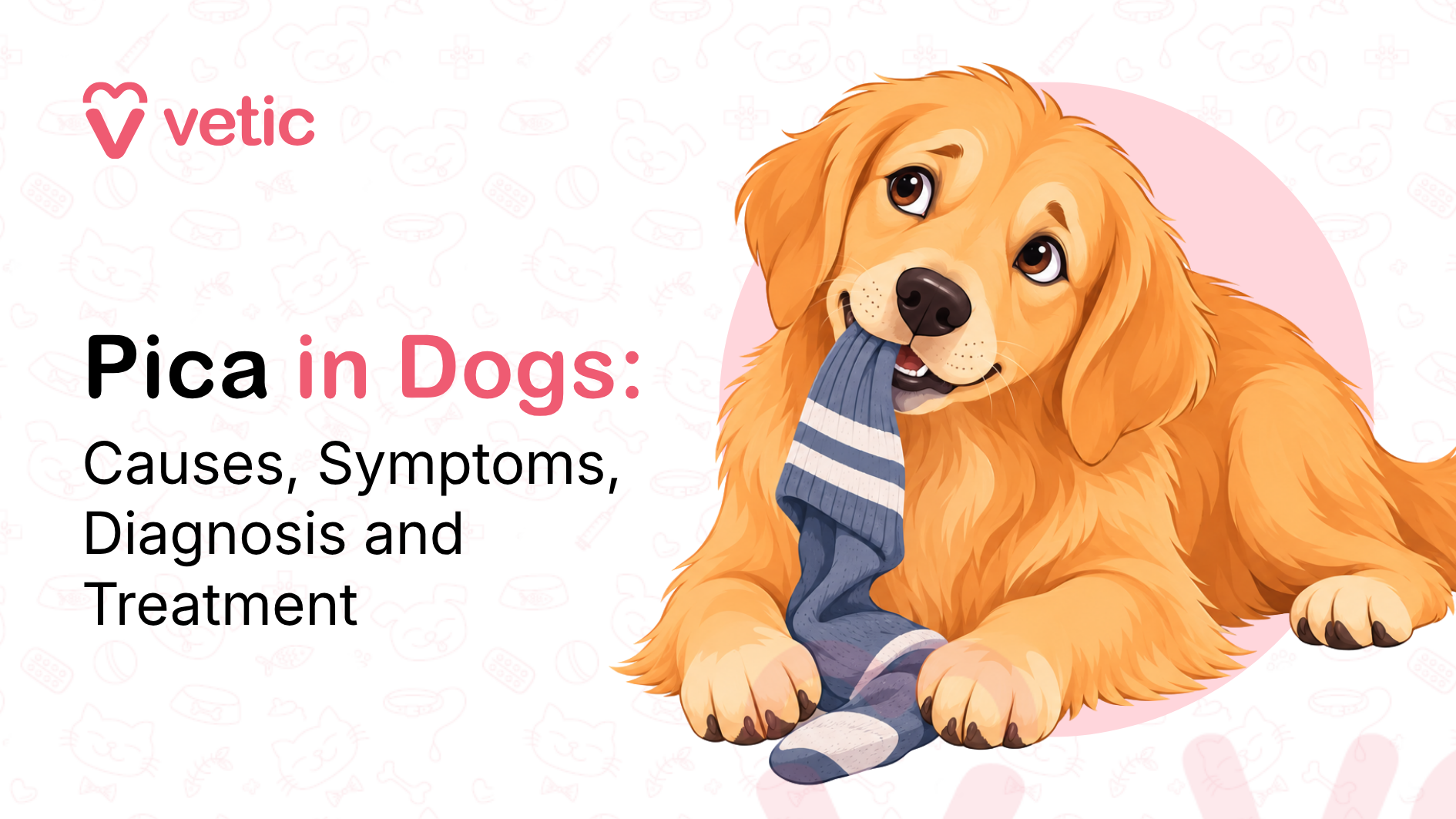
What Is Pica in Dogs?
Pica describes repeatedly swallowing non-food items and may occur alongside medical, nutritional or behavioural problems.
What Behaviours May Indicate Pica?
Dogs with pica may repeatedly swallow items such as:
- Stones, soil or sand
- Socks, fabric or tissues
- Plastic, rubber or toy pieces
- Wood, paper or cardboard
Some dogs focus on one type of item, while others swallow a wide range of objects.
How Is Pica Different From Normal Chewing Or Scavenging?
Chewing is a normal behaviour, particularly in puppies exploring their surroundings. Pica usually involves repeatedly swallowing items, not just chewing or carrying them. Occasional scavenging does not necessarily mean a dog has pica, particularly if he or she does not repeatedly swallow non-food items.
Why Do Dogs Develop Pica?
The causes of pica in dogs are not always clear, and more than one factor may be involved.
Can Diet, Parasites, Medical Conditions, Or Anxiety Contribute?
Yes, all of these may play a part. Some medical conditions, such as diabetes or Cushing’s disease, and medicines such as corticosteroids can increase appetite and may contribute to inappropriate eating. Stress and anxiety, including anxiety when left alone, may also lead some dogs to chew and swallow objects.
When Might Boredom Or Learned Behaviour Contribute?
In some dogs, limited exercise or mental enrichment may contribute to repetitive chewing or object-directed behaviour. Pica may also become a learned habit. For example, if a dog is chased when holding an item, they may swallow it quickly to keep it.
What Are the Signs and Risks of Pica?
The main sign is seeing your dog repeatedly swallow non-food items. Some dogs do this out of sight, so the first clue may be an item in the stool or vomit.
What Symptoms Suggest An Intestinal Problem Or Obstruction?
According to the MSD Veterinary Manual, signs of a gut obstruction may include:
- Vomiting
- Loss of appetite
- Diarrhoea
- Lethargy
- Abdominal pain
The MSD Veterinary Manual lists behavioural disorders such as pica as a risk factor for obstruction. It also notes that young, large-breed dogs are more likely to develop a foreign-body obstruction.
Which Swallowed Objects Are Especially Dangerous?
The following items can be especially dangerous if swallowed:
- Button batteries: Can cause severe burns and tissue damage.
- Magnets: Swallowing multiple magnets can cause them to attract across intestinal walls, leading to serious injury.
- Sharp bones, needles or pins: May puncture or damage the digestive tract.
- Corn cobs: Can cause intestinal blockage.
- Human medicines: Some medications can be toxic to dogs, even in small amounts.
If your dog swallows any of these items, contact a vet or emergency clinic immediately, even if your dog seems well. Do not induce vomiting unless a vet specifically advises you to.
How Do Vets Diagnose Pica?
No single test diagnoses pica. Diagnosis focuses on understanding the behaviour and ruling out medical causes.
What History, Examination, And Tests May Be Needed?
Your vet will ask what your dog swallows, how often and in which situations. A physical examination is usually followed by tests, which may include blood tests, faecal testing for parasites, and imaging. At Vetic, in-house diagnostics include blood work, X-ray and ultrasound.
How Is Pica Treated in Dogs?
Treatment depends on the underlying cause and may combine medical care with behaviour and environmental changes.
How Is The Underlying Cause Treated?
If a medical problem is found, treating it may reduce the behaviour. This may include deworming, adjusting the diet or managing a digestive condition. Where anxiety is involved, your vet may suggest behaviour support and, in some cases, medication.
What Training And Environmental Changes Can Help?
Training a reliable “leave it” or “drop” cue may help. Rewarding your dog for giving up an item, rather than chasing them, can reduce the urge to swallow it. More exercise, puzzle feeders and suitable chew toys may help meet your dog’s need to chew.
How Can You Prevent Your Dog From Eating Non-Food Items?
Prevention mainly involves reducing access and meeting your dog’s physical and mental needs.
How Can You Manage Access, Enrichment, And Supervision?
Keep socks, laundry, children’s toys and bins out of reach. Supervise your dog closely, particularly in new places. A properly fitted basket muzzle may be recommended for some dogs who repeatedly swallow objects outdoors, alongside training and supervision. Introduce the muzzle gradually using positive reinforcement, ideally with guidance from your vet or a qualified trainer or behaviourist. Choose chew toys too large to swallow, and replace them when worn.
When Should You See a Vet?
A vet visit is advisable if your dog repeatedly swallows non-food items, even without other signs. This helps rule out medical causes early.
Which Signs After Swallowing An Object Need Urgent Care?
Seek urgent veterinary care if your dog has swallowed a potentially dangerous object, particularly if vomiting, loss of appetite, weakness, abdominal pain or other signs of illness develop. The MSD Veterinary Manual notes that the outlook is generally good when obstruction is treated quickly. Select Vetic clinics offer 24/7 emergency care, including emergency surgery for gut obstruction.
Conclusion
Pica in dogs can range from a manageable habit to a serious health risk. Identifying the cause, reducing access to objects and providing enrichment may help protect your dog. If your dog regularly swallows non-food items, book a consultation at your nearest Vetic clinic for a thorough assessment.
FAQs
What Causes Pica In Dogs?
Pica may be linked to medical conditions, an incomplete diet, parasites, anxiety, boredom or learned behaviour. In some dogs, the cause remains unclear.
How Do I Stop My Dog From Eating Everything?
Start with a vet check to rule out medical causes. Then reduce access to objects, supervise closely, and use training, exercise and Enrichment.
Can Pica In Dogs Be Cured?
Yes, often. When a medical cause is found and treated, the behaviour may stop. Other dogs need ongoing training and management.
Are There Natural Remedies For Pica In Dogs?
There is no proven natural remedy. Exercise, enrichment, a balanced diet and consistent training may help, alongside veterinary advice.
Can Nutritional Deficiencies Contribute To Pica?
An incomplete or unbalanced diet, or conditions such as anaemia, may be considered. However, links to specific nutrient deficiencies are not well established.
What Should I Do If My Dog Ate A Non-Food Object?
Contact your vet promptly, even if your dog seems well. Do not try to make your dog vomit unless a vet advises it.
Is Pica a Sign of Anxiety in Dogs?
It can be. Some dogs swallow objects when stressed or left alone, but a vet should also check for medical causes.
References
VCA Animal Hospitals. (2025). Pica in dogs. https://vcahospitals.com/know-your-pet/pica-in-dogs
Winkler, K. P. (2025, August). Gastrointestinal obstruction in small animals. MSD Veterinary Manual. https://www.msdvetmanual.com/digestive-system/surgical-problems-of-the-gastrointestinal-tract-in-small-animals/gastrointestinal-obstruction-in-small-animals