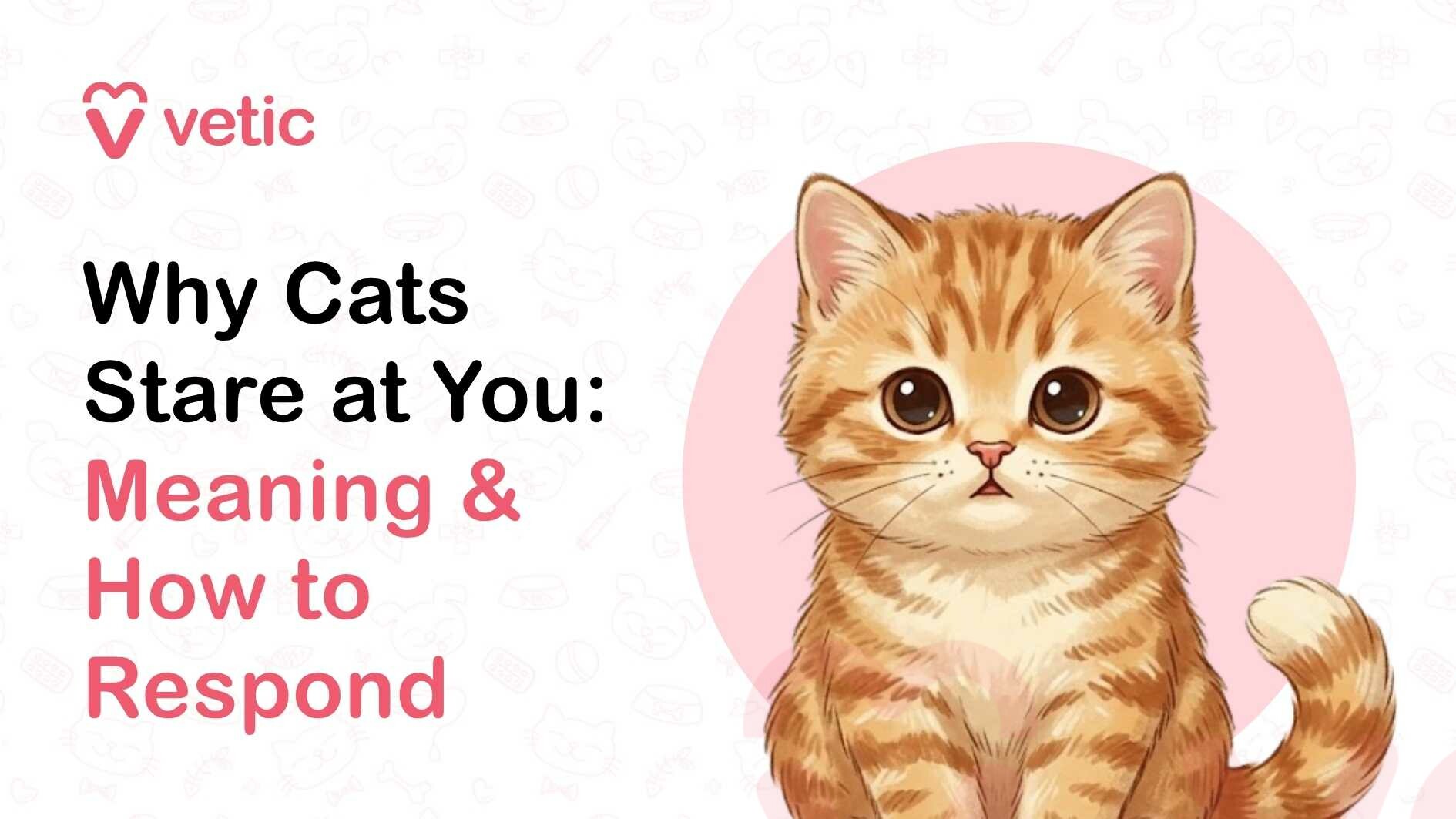
If you’ve ever looked up from your phone or laptop and found your cat silently staring straight at you, you’re not alone. Many cat parents describe this moment as confusing, funny, or even a little unsettling. Unlike dogs, cats don’t always wear their emotions openly, so a steady gaze can feel hard to interpret.
The truth is, cats stare for many reasons. From simple attention-seeking to stress in cats, that quiet stare can carry more meaning than you think. Understanding why your cat is staring, and learning how to respond appropriately, can strengthen your bond and help you spot when something might actually be wrong.
Understanding Cat Staring Behaviour: Why Cats Stare at You
Cats rely heavily on body language and eye communication. Unlike dogs, they don’t rely heavily on vocal cues. Instead, they use posture, tail movement, and ear positioning.
Staring is one of the ways they observe, communicate needs, express emotions, or assess their environment. Context matters more than the stare itself. What your cat is doing before, during, and after the stare tells the real story.
Below are the most common reasons cats stare at their humans.
Attention-Seeking: How Cats Use Staring to Get Your Focus
One of the simplest explanations is that your cat wants your attention. Cats quickly learn what works. If staring at you has previously resulted in you:
- Talking to them
- Petting them
- Getting up, or reacting
Then they’ll repeat the behaviour. Unlike vocal cats who meow loudly, quieter cats often use eye contact as a polite but persistent way of saying, “Notice me.”
This type of stare is usually relaxed. Your cat’s body may look loose, ears forward, and tail calm.
Playtime Requests: Recognising When Your Cat Wants to Play
Cats may stare at you when they’re bored and looking for interaction. This is especially common in indoor cats or young, energetic cats.
Signs the stare is play-related include:
- Dilated pupils
- A crouched or alert posture
- Tail flicking or twitching
- Sudden bursts of movement after staring
This is classic prey-drive behaviour. Cats are hardwired hunters. Your cat may be watching you the same way they’d watch prey, waiting for the moment play begins.
Suggested Read: Why Do Cats Knock Things Over? Understanding Cat Behaviour
Hunger Signals: Why Cats Stare Before Meal Time
Many cats are excellent timekeepers. If dinner is at 7:00 PM, they know it. So, if your cat starts staring at you around feeding time, there’s a good chance food is on their mind.
This stare is often:
- Fixed and patient
- Paired with sitting near the food bowl
- Followed by walking toward the kitchen when you move
Some cats will sit near their bowl and stare at you repeatedly. Others follow you around silently like a tiny, furry supervisor. If your cat only stares intensely around meal times, it’s probably a learned pattern. They’ve associated you with food delivery.
But if your cat suddenly becomes excessively food-focused, constantly staring and demanding meals, it may be worth discussing with a pet health expert, especially in older cats. Conditions such as hyperthyroidism are common in senior cats. It can dramatically increase appetite.
Fear or Anxiety: Staring as a Sign of Stress
Not all staring is friendly or neutral. In some cases, staring can signal fear, uncertainty, or anxiety.
A stressed stare may look different:
- Wide eyes with little blinking
- Ears angled sideways or backward
- Body held tense or low to the ground
- Tail wrapped tightly around the body or flicking sharply
Cats are both prey animals and predators. They are wired to monitor their environment carefully. If
- There’s a new person or pet in the home
- Your cat hears unfamiliar noises
- The environment has recently changed
Your cat may fixate visually. In these moments, your cat isn’t asking for attention. They’re assessing whether the situation is safe.
In feline communication, direct prolonged staring can be interpreted as confrontational. That’s why slow blinking works so well as reassurance.
Affection and Bonding: How Cats Show Love Through Eye Contact
One of the most misunderstood aspects of cat behaviour is that eye contact can be a sign of trust.
When a cat stares at you calmly and slowly blinks, this is often called a “cat kiss.” It’s a powerful sign of comfort and affection.
Affectionate staring is usually paired with:
- Slow blinks
- Relaxed facial muscles
- Purring
- Half-closed lids
- A loose, comfortable posture
Your cat is essentially saying, “I feel safe with you.” In such cases, you should slow blink at your cat in response to communicate trust.
Suggested Read: Bored Cat: Signs, Symptoms, and How to Tell If Your Cat Is Bored
Aggression or Warning: Understanding Intense Stares
In some cases, staring can be a warning signal. An aggressive or defensive stare is typically:
- Unblinking and intense
- Combined with a stiff body posture
- Accompanied by flattened ears, raised heckles or growling
- Followed by hissing or swatting if ignored
This type of stare is more common during territorial disputes, fear responses, or redirected aggression. It’s your cat’s way of setting boundaries.
How to Respond When Your Cat Stares at You
The right response depends on why your cat is staring. Paying attention to body language helps you choose the best reaction.
Encouraging Positive Interaction
If your cat seems relaxed and friendly:
- Try slow blinking
- Speak softly to them
- Offer gentle petting if they enjoy it
- Initiate play with a toy
- Return a slow blink to show trust
Responding calmly reinforces positive communication and strengthens your bond.
Avoiding Misinterpretation of Aggressive Stares
If your cat appears tense or defensive:
- Avoid direct staring back
- Don’t move suddenly
- Don’t punish or scold
- Give them space
- Let them retreat if they want to
Staring back aggressively can escalate fear or aggression, especially in anxious cats. If aggressive staring happens frequently, evaluate environmental stressors:
- Resource competition (litter boxes, food bowls)
- Lack of vertical space
- New household changes
Environmental enrichment can dramatically reduce stress-driven staring.
Using Body Language to Communicate Back to Your Cat
Cats are highly responsive to non-verbal cues. You can communicate reassurance by:
- Turning your body slightly sideways instead of facing directly
- Softening your gaze
- Slowly blinking
- Speaking in a calm, low voice
- Lower your body posture
- Keep movements smooth and predictable
These signals tell your cat that you are not a threat. Over time, your cat learns your “language” just as you learn theirs. It’s a two-way relationship.
Additional Cat Behaviour Insights
Staring is rarely isolated. It’s usually part of a bigger communication pattern.
Recognising Context: Staring vs Other Communication Signals
Staring rarely happens in isolation. Consider time of day (near meals or playtime), environmental changes, your cat’s energy level, and recent stressors.
A cat staring quietly on the couch is very different from a cat staring stiffly during a loud gathering. Always pair the stare with:
Tail Position
- Upright tail: friendly
- Puff tail: fear
- Twitching tip: irritation
Ear Position
- Forward: curious
- Sideways: cautious
- Flattened: defensive
Pupil Size
- Dilated: excitement or fear
- Narrowed: bright light or tension
When to Consult a Veterinarian About Behavioural Concerns
While staring itself is usually harmless, you should consider veterinary advice if staring is:
- New and sudden
- Accompanied by confusion, disorientation, pacing, or vocalisation changes
- Paired with appetite loss or lethargy
- Combined with other neurological signs (head pressing, circling)
- Directed repeatedly at walls, ceilings, or empty spaces
- Associated with dilated pupils that do not respond normally to light
- Followed by brief “zoning out” episodes or twitching
- Combined with hiding, withdrawal, or unusual sensitivity to touch
In rare cases, changes in staring behaviour can be linked to pain, vision changes, or neurological issues such as seizures in cats.
Cats are very good at masking illness. Small changes in behaviour can sometimes be the earliest clue that something needs attention.
Book a consultation with the best pet doctor today to get expert advice on your cat’s symptoms.
Final Thoughts: About Cats Staring
Cats don’t stare randomly. Whether they’re asking for food, seeking comfort, expressing affection, or assessing a situation, cats use staring to communicate. Most of the time, it’s harmless and often meaningful.
By learning to read your cat’s eyes alongside their posture, tail, and environment, you can respond in ways that support their emotional well-being and deepen your connection. The next time your cat locks eyes with you, you might just understand exactly what they’re trying to say.
Frequently Asked Questions: About Cats Staring
Is constant staring normal for cats?
Occasional staring is normal. Constant, intense staring, especially if paired with behavioural changes, may indicate stress, anxiety, or a medical issue. If your cat still eats normally, uses the litter box, plays, and sleeps comfortably, it’s likely just a matter of personality. Some cats are simply more observant.
Can staring indicate illness or discomfort?
Yes, in some cases. Pain can make cats hyper-vigilant. They may stare more because they feel vulnerable. If staring is paired with hiding, aggression, lethargy, or changes in appetite, it’s time for a check-up.
Do all cat breeds stare the same way?
Individual personality matters more than breed. Some breeds known for strong bonds with humans may engage in more eye contact. Regardless of breed, context and body language are key.
References
Humphrey, T., Proops, L., Forman, J., Spooner, R., & McComb, K. (2020). The role of cat eye narrowing movements in cat–human communication. Scientific Reports, 10(1), 16503. https://www.nature.com/articles/s41598-020-73426-0
Koyasu, H., Kikusui, T., Takagi, S., & Nagasawa, M. (2020). The Gaze Communications Between Dogs/Cats and Humans: Recent Research Review and Future Directions. Frontiers in Psychology, 11. https://pmc.ncbi.nlm.nih.gov/articles/PMC7775363/
Sandra, V. (2026). Understanding Feline Body Language. Vin.com. https://www.vin.com/apputil/project/defaultadv1.aspx?pid=11343&catid=&id=5189546&meta=VIN&authorid=
Seksel, K. (2015). Understanding Feline Communication. VIN.com. https://www.vin.com/apputil/content/defaultadv1.aspx?id=7054736&pid=12886 Zurlinden, S. (2022). Cat Body Language. Vin.com. https://veterinarypartner.vin.com/default.aspx?pid=19239&catId=102901&id=10867337