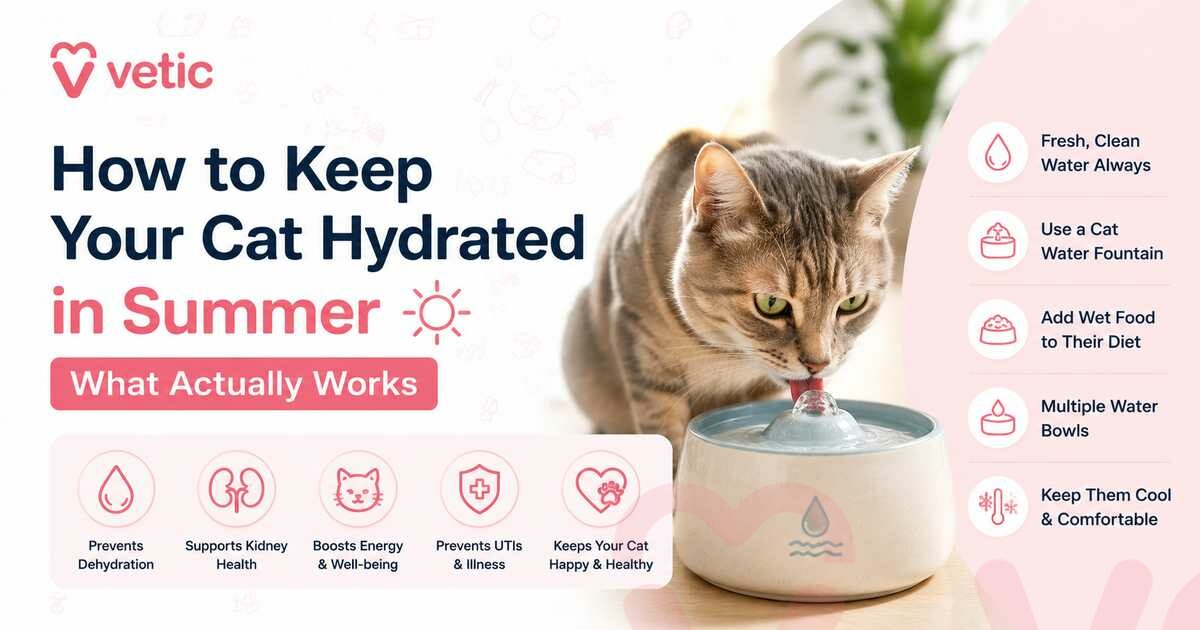
Cats are naturally low-thirst animals, so many of them do not drink enough water even in hot weather. Helping cats stay hydrated during summer is extremely important, especially for indoor cats, senior cats, kittens, and cats eating mainly dry food.
Why Is Hydration So Important for Cats During Summer?
Cats lose water through breathing, urination, grooming, and body temperature regulation. During summer, increased environmental heat leads to greater fluid loss, where cats may struggle to cool themselves effectively.
Adequate cat hydration supports kidney function, urinary tract health, digestion, temperature regulation, and blood circulation.
Poor hydration increases the risk of concentrated urine formation, which may contribute to urinary crystals or bladder irritation in susceptible cats.
What Are the Signs Your Cat May Be Dehydrated?
Common signs of dehydration in cats include dry or sticky gums, reduced appetite, lethargy, sunken eyes, reduced skin elasticity, constipation, increased sleeping, and panting during severe overheating. Some dehydrated cats may also urinate less frequently or produce darker, more concentrated urine.
How Much Water Should a Cat Drink Daily?
A healthy cat typically requires approximately 50-60 mL of water per kilogram of body weight daily from all sources combined. However, exact water intake varies depending on a cat’s diet type, weather, activity level, medical conditions, and age.
Cats fed only dry kibble usually require greater voluntary water intake to maintain proper hydration.
Why Don’t Many Cats Drink Enough Water?
Cats evolved from desert-dwelling ancestors and naturally developed a low thirst drive. In the wild, they obtained most of their moisture from prey rather than from standing water sources. Modern indoor cats often continue this behaviour. This means they may not feel strongly motivated to drink water even when mildly dehydrated.
Other reasons cats avoid drinking include dirty bowls, warm water, poor bowl placement, stress, strong smells near water stations, and a preference for moving water. Some cats also dislike bowls that repeatedly touch their whiskers while drinking.
Suggested Read: Here is Why Your Cat Doesn’t Drink Water and How You Can Ensure They Drink Enough
Does Wet Food Help With Cat Hydration?
Yes, wet food is one of the most effective ways to hydrate cats in summer because it contains significantly higher moisture content than dry food.
Many wet cat foods contain approximately 70 to 80 percent water.
Expert feline vets commonly recommend wet food diets to hydrate cats with kidney disease, urinary tract disease, chronic constipation, and reduced thirst drive.
Do Automatic Water Dispensers for Cats Really Help?
Yes, because many cats prefer moving water. They instinctively associate flowing water with freshness and safety.
Automatic water fountains for cats may encourage some cats to stay hydrated by:
- Keeping water circulating
- Maintaining fresher taste
- Producing movement and sound
- Reducing stagnation
In multi-cat homes, automatic water fountains for cats may also improve access to water because several cats can drink throughout the day.
However, water fountains for cats must be cleaned regularly because bacterial buildup and slime can discourage cats from drinking.
What Are Easy Ways to Encourage Your Cat to Drink More Water?
Helpful strategies to hydrate cats in summer include:
- Offering multiple water stations
- Using wide shallow bowls
- Providing fresh water several times daily
- Adding wet food to meals
- Offering cool water during the summer
Flavoured veterinary hydration supplements may occasionally help cats recovering from illness.
What Are the Best Bowl Placement Tips for Better Cat Hydration?
Good bowl placement strategies to hydrate cats in summer include:
- Quiet corners
- Separate rooms
- Multiple household locations
- Cool shaded areas
- Away from loud appliances
- Away from litter boxes
Glass, ceramic, or stainless steel bowls are often preferred because they retain fewer odours compared to some plastic bowls.
Many cats dislike drinking near litter trays, loud appliances, busy walkways, and food bowls.
Which Summer Hydration Tips Help Kittens and Senior Cats?
For these age groups, vets often recommend increased intake of wet food, more frequent water replacement, cooler indoor environments, and closer monitoring of appetite and urination.
Kittens may become dehydrated quickly due to their small body size, increased activity, and the risk of diarrhoea.
Senior cats commonly face reduced kidney efficiency, chronic disease, and reduced thirst sensation
When Should You Worry About Dehydration in Cats?
Veterinary attention is necessary if a cat develops refusal to drink, vomiting, severe lethargy, weakness, panting, dry gums, collapse, and reduced urination.
Dehydration is especially dangerous in cats with kidney disease, diabetes, gastrointestinal illness, and fever.
Any cat that refuses food and water for more than 24 hours should be evaluated promptly at the nearest cat hospital.
What Common Mistakes Do Cat Parents Make With Hydration?
One common mistake is assuming cats will automatically drink enough water when thirsty. Many cats remain mildly dehydrated without obvious signs.
Other common mistakes include:
- Feeding only dry food
- Leaving stale water unchanged
- Using narrow deep bowls
- Ignoring reduced drinking during the summer
- Not cleaning water fountains for cats regularly
Some pet parents also mistakenly offer milk to hydrate cats. But many adult cats are lactose intolerant and may develop diarrhoea.
Final Thoughts: About Hydrating Cats in Summers
Hydration plays a critical role in maintaining feline health during hot weather, especially because many cats naturally drink very little water.
Simple adjustments to hydrate cats often make a major difference in daily water intake. Because dehydration can worsen quickly in cats, early recognition and preventive care are extremely important during the summer months.
FAQ: About Cat Hydration
How can I hydrate my cat quickly?
Offer wet food, fresh, cool water, multiple drinking stations, and vet-approved hydration support to keep cats hydrated.
Do cats drink more water in summer?
Yes, many cats require more water during summer because heat increases fluid loss.
Are water fountains good for cats?
Yes, water fountains for cats may encourage increased water intake when properly cleaned and maintained.
Does wet food keep cats hydrated?
Yes, wet food significantly increases moisture intake because it contains a high water content.
What are the signs of dehydration in cats?
Signs include lethargy, dry gums, sunken eyes, reduced appetite, constipation, decreased urination, and poor skin elasticity.
References
Purina. (2017). Does Wet Food Hydrate Cats? https://www.purina.com/articles/cat/health/nutrition/hydrating-with-wet-cat-food
Purina. (2018). Do Cats Drink Water? Cat Hydration & Dehydration Prevention. https://www.purina.com/articles/cat/health/nutrition/guide-to-cat-hydration
Roman, N. (2025, July). Proper Nutrition for Cats. MSD Veterinary Manual. https://www.msdvetmanual.com/cat-owners/selecting-and-providing-a-home-for-a-cat/proper-nutrition-for-cats#Where-Should-I-Put-My-Cat
Schaer, M. (2015, March 30). Fluid Therapy for Critically Ill Dogs and Cats. VIN. https://www.vin.com/apputil/content/defaultadv1.aspx?pId=11196&id=3854241
WebMD. (2021, February 11). Cat Dehydration: Symptoms, Causes, and Treatments. https://www.webmd.com/pets/cats/dehydration-cats