Key takeaways:
- Cooked bones splinter more easily than raw ones, making them riskier.
- Gagging, drooling, or pawing at the mouth can mean a bone is stuck.
- Most bones move through safely within a day or two.
- Bloody stool, repeated vomiting, or severe pain need same-day vet care.
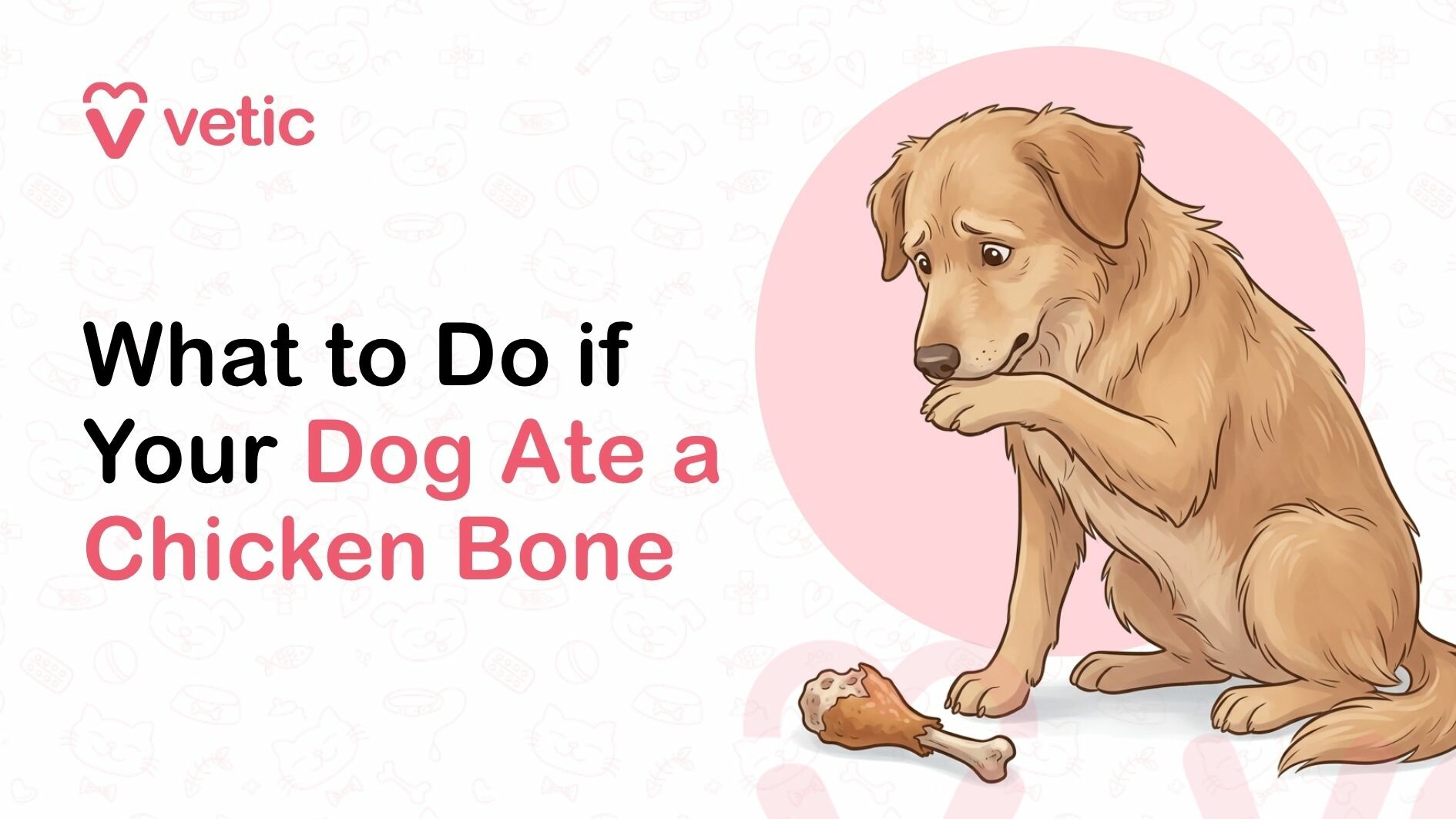
- Your dog snatched a chicken bone off the counter, or maybe from the bin, before you could stop it. Now you’re staring at your phone, wondering how worried to be.
- Dog-ate-chicken-bone searches spike every single day, and most of those dogs turn out completely fine. But bones can splinter, get stuck, or cause real damage on the way down.
- This guide covers what to watch for, signs of an emergency, what to do right now, and when it’s genuinely urgent.
When Is It an Emergency?
Choking
Pawing at the mouth, gagging, or struggling to breathe means choking, and it’s an emergency right now.
Severe Pain
Crying out, hunching, or refusing to move can signal something serious.
Collapse
Sudden weakness or collapse always warrants an immediate emergency visit.
Vomiting
Repeated vomiting in dogs, especially with visible bone fragments, needs a same-day vet checkup.
Blood
Any blood, whether vomited or in the stool, is worth calling about right away.
Breathing Distress
Laboured or noisy breathing after eating a bone is always urgent.
What Should You Do Right Away?
Check your dog’s mouth for visible fragments, then call your vet and describe the bone’s size and type. Don’t try to remove a stuck object yourself, and don’t induce vomiting without guidance.
What Symptoms Should You Watch For?
Symptoms when a dog ate chicken bones show up in a few different places.
Mouth Symptoms
Drooling, pawing at the mouth, or visible discomfort while eating are common early signs.
Throat Symptoms
Gagging, retching, or a chicken bone stuck in a dog’s throat can cause repeated attempts to swallow.
Stomach Symptoms
Vomiting, appetite loss, or a painful belly point toward a problem further down.
Delayed symptoms over 72 hours
Some complications, like perforation, don’t show up for a day or more. Keep watching even after the first 24 hours pass without incident.
Are Cooked or Raw Bones Riskier?
Cooked bones are generally riskier than raw ones.
Why cooked bones carry more risk than raw
Cooking makes bones brittle, so they splinter into sharp fragments more easily. Raw bones tend to flex and break less dangerously, though they’re not risk-free either.
What If the Bone Is Stuck?
A dog that has swallowed a chicken bone that has lodged needs prompt attention.
Repeated gulping, pawing at the throat, or refusing food can mean a bone is stuck. Get to a pet health expert promptly, and keep your dog as calm as possible on the way.
Will Your Dog Be OK?
Many dogs experience no complications, but careful monitoring is still essential.
A small, soft fragment swallowed whole is generally lower risk than a large, sharp shard. Bones that seem stuck or cause obvious distress are always at a higher risk.
How Do You Monitor at Home?
Eating
Normal appetite returning within a day is a reassuring sign.
Energy
Your dog should seem like themselves, not unusually quiet or withdrawn.
Stool Changes
Watch for straining, blood, or hard, jagged stool, as cooked chicken bones can splinter, causing blockages or punctures in a dog’s intestinal tract, requiring urgent veterinary attention.
When monitoring is no longer enough
If anything seems off, or your gut says something’s wrong, call your vet rather than waiting it out.
What Home Remedies Are Dangerous?
Bread
Feeding bread to cushion a bone doesn’t work and isn’t recommended by vets.
Milk
Milk doesn’t help move bones along and can cause stomach upset on its own.
Pumpkin or Rice
These can generally support normal digestion, but they won’t neutralise a genuinely dangerous fragment.
Making Your Dog Vomit
Never induce vomiting without your vet’s guidance, since bringing a bone back up can cause new damage.
Common Myths About Dogs Eating Chicken Bones
Stomach Acid Will Dissolve the Bone
Stomach acid softens bone somewhat, but it doesn’t dissolve sharp fragments fast enough to prevent injury.
If There Are No Symptoms, My Dog Is Fine
No symptoms yet doesn’t guarantee safety, especially within the first 72 hours. Keep watching regardless.
What Will the Vet Do?
A vet may recommend X-rays to locate any fragments, then endoscopy or surgery if needed. Many cases just need monitoring and supportive care instead. Oesophageal bone fragments should be removed promptly, as delays increase the risk of complications.
How Can You Prevent It?
Keep cooked bones out of reach, supervise chewing, and choose vet-approved chew alternatives instead. Gastric bones often pass safely, but oesophageal ones carry a real risk of complications.
Conclusion: About Dogs Eating Chicken Bones
If your dog ate chicken bone scraps and seems otherwise normal, chances are good everything will be fine. Chicken bone-eaten-by-dog situations still deserve a watchful eye for a few days.
If anything feels off, or you’re simply unsure, a Vetic vet can check things over quickly.
FAQs: About Dogs Eating Chicken Bones
How Long Does It Take for a Dog to Get Sick From a Chicken Bone?
Problems can show up within hours or take up to a few days to appear.
How Long Does It Take to Poop Out a Chicken Bone?
Most bone fragments pass through within 24 to 48 hours.
How Do I Know if My Dog Is OK After Eating Chicken Bones?
Normal eating, energy, and bathroom habits over the next few days are good signs. When in doubt, a quick vet check settles it.
What if My Dog Eats a Bone and Now Poops Blood?
Dog ate chicken bones, blood in stool situations need a same-day vet visit, not a wait-and-see approach.
Can a Dog Die From Eating a Chicken Bone?
It’s rare, but serious complications like perforation can be fatal without prompt treatment. This is exactly why watching matters closely.
References
Johnson, T. (2017). Your dog ate what? In Vin.com. https://www.vin.com/vetzinsight/default.aspx?pid=756&catId=5860&id=8139626
Malik, Z. (n.d.). Foreign bodies in the digestive tract. MSD Manual Consumer Version. Retrieved July 20, 2026, from https://www.msdmanuals.com/home/digestive-disorders/bezoars-and-foreign-bodies-of-the-digestive-tract/foreign-bodies-in-the-digestive-tract
Thomas. (2025). Gastrointestinal obstruction in Small animals. In MSD Veterinary Manual. https://www.msdvetmanual.com/digestive-system/surgical-problems-of-the-gastrointestinal-tract-in-small-animals/gastrointestinal-obstruction-in-small-animals