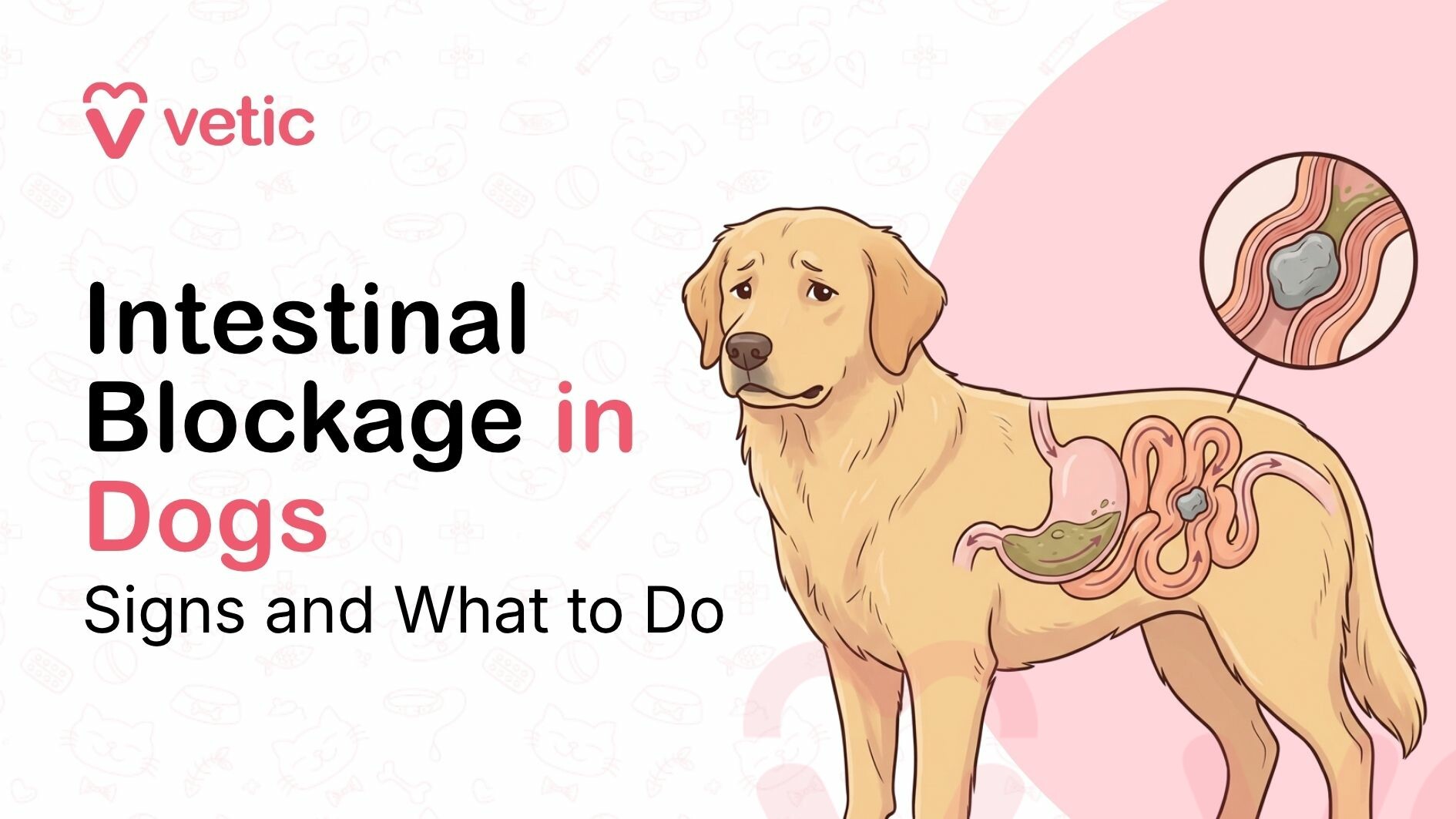
What Is Intestinal Blockage in Dogs?
Intestinal blockage in dogs occurs when something physically prevents food, fluid, or gas from moving through the gut. It can be partial or complete, and both need veterinary attention.
What Are the Signs of Intestinal Blockage in Dogs?
Signs vary depending on where the blockage is and how complete it is.
Vomiting
Repeated vomiting, especially if it won’t stop, is one of the most common signs.
Little or No Stool
A dog with a complete blockage often stops producing stool entirely.
Diarrhoea with Partial Blockage
Partial blockages can sometimes cause diarrhoea instead, which confuses the picture.
Belly Pain
A tense, painful abdomen, especially when touched, is a common finding with abdominal blockage in dogs.
Lethargy
Sudden lack of energy or interest in normal activities is another red flag.
Dehydration
Vomiting and reduced drinking quickly lead to dehydration, worsening the whole picture.
When Is Intestinal Blockage an Emergency?
It’s always considered an emergency, but urgency can still vary.
First 24 to 48 Hours
This window matters most, since delays are linked to worse surgical outcomes.
Red-Flag Signs at Any Stage
Collapse, pale gums, or a swollen, painful belly mean immediate dog emergency care, regardless of the time.
What Should You Do Right Away?
What to Do
Call your vet or an emergency clinic immediately and describe exactly what happened.
What to Avoid
Don’t induce vomiting or give any medication without first seeking veterinary guidance.
What to Tell the Vet
Mention what was swallowed if known, when symptoms started, and any changes since.
What Causes Intestinal Blockage in Dogs?
Causes range from swallowed objects to underlying medical conditions.
Swallowed Objects
Toys, socks, string, and bones are common culprits, especially in young dogs. Dogs are more likely than cats to swallow non-food objects.
Masses
Tumours or other abnormal growths can narrow or block the intestine over time.
Intussusception
Intussusception occurs when one part of the intestine slides into another section, creating a blockage. It is a common internal cause of bowel obstruction in dogs.
Hernias
A hernia in dogs can trap a loop of intestine, cutting off its normal passage.
Other Emergencies
Bowel obstruction in dogs can also result from scar tissue or prior surgery.
How Do Vets Diagnose It?
Exam
A physical exam checks for pain, a palpable mass, or a tense abdomen.
Imaging
Dog X-rays and ultrasound help locate the blockage and assess its severity.
Bloodwork Before Treatment
Bloodwork checks hydration, organ function, and overall stability before any procedure.
How Is Intestinal Blockage Treated and What Is Recovery Like?
Treatment depends on the cause, location, and how sick the dog already is.
Fluids
IV fluids correct dehydration and stabilise the dog before any procedure.
Endoscopy
Some objects in the stomach can be retrieved with endoscopy, avoiding surgery entirely.
Surgery
Surgery removes the blockage directly and is often needed for objects further along the intestine.
Home Care After Treatment
Recovery involves a bland diet, limited activity, and watching the incision for problems.
Blockage or Upset Stomach: How can You Distinguish?
An upset stomach usually improves within a day and doesn’t completely stop stool. Ongoing vomiting, no stool at all, or a painful belly point toward something more serious.
How Can You Prevent Another Blockage?
Digestive blockage in dogs is often preventable with a few consistent habits. Dog-proof your home, supervise chew toys, and avoid free access to string, bones, or small objects. Dogs who’ve had one blockage are more likely to have another.
Conclusion: About Dog Intestinal Blockage
Intestinal blockage in dogs can turn serious fast, but most dogs recover well with prompt care. The key is not waiting to see if things improve on their own.
If your dog is vomiting repeatedly or hasn’t passed stool, a Vetic vet can assess the situation right away.
FAQs: About Dog Intestinal Blockage
How Long Can a Dog Survive With a Blockage?
It varies, but complete blockages can become life-threatening within a couple of days without treatment.
Can a Dog Poop and Still Have a Blockage?
Yes. Partial blockages sometimes allow small amounts of stool to pass, which can be misleading.
Can a Bowel Obstruction Clear on Its Own in a Dog?
Occasionally, mild partial blockages resolve on their own, but this shouldn’t be assumed or waited on at home.
How Long Does It Take for a Dog to Show Symptoms of an Intestinal Blockage?
Symptoms can appear within hours or take a few days, depending on the location and size of the blockage.
What Is the Survival Rate After Blockage Surgery?
Survival rates are generally good, often well above 90 percent, though outcomes vary by case severity.
References
Gaschen, L. (2018). Intestinal Obstruction in Dogs: Get the Most from Abdominal Radiographs. Vin.Com. https://veterinarypartner.vin.com/apputil/project/defaultadv1.aspx?pid=22915&catid=&id=8896694&meta=&authorid=
Gibson, T. W. G. (2025, August). Gastrointestinal Obstruction in Small Animals. MSD Veterinary Manual. https://www.msdvetmanual.com/digestive-system/surgical-problems-of-the-gastrointestinal-tract-in-small-animals/gastrointestinal-obstruction-in-small-animals
Goethem, B. Van. (2015). Gastro-Intestinal Foreign Bodies (Do’s and Don’ts). VIN.Com. https://www.vin.com/apputil/content/defaultadv1.aspx?id=7259318&pid=14365