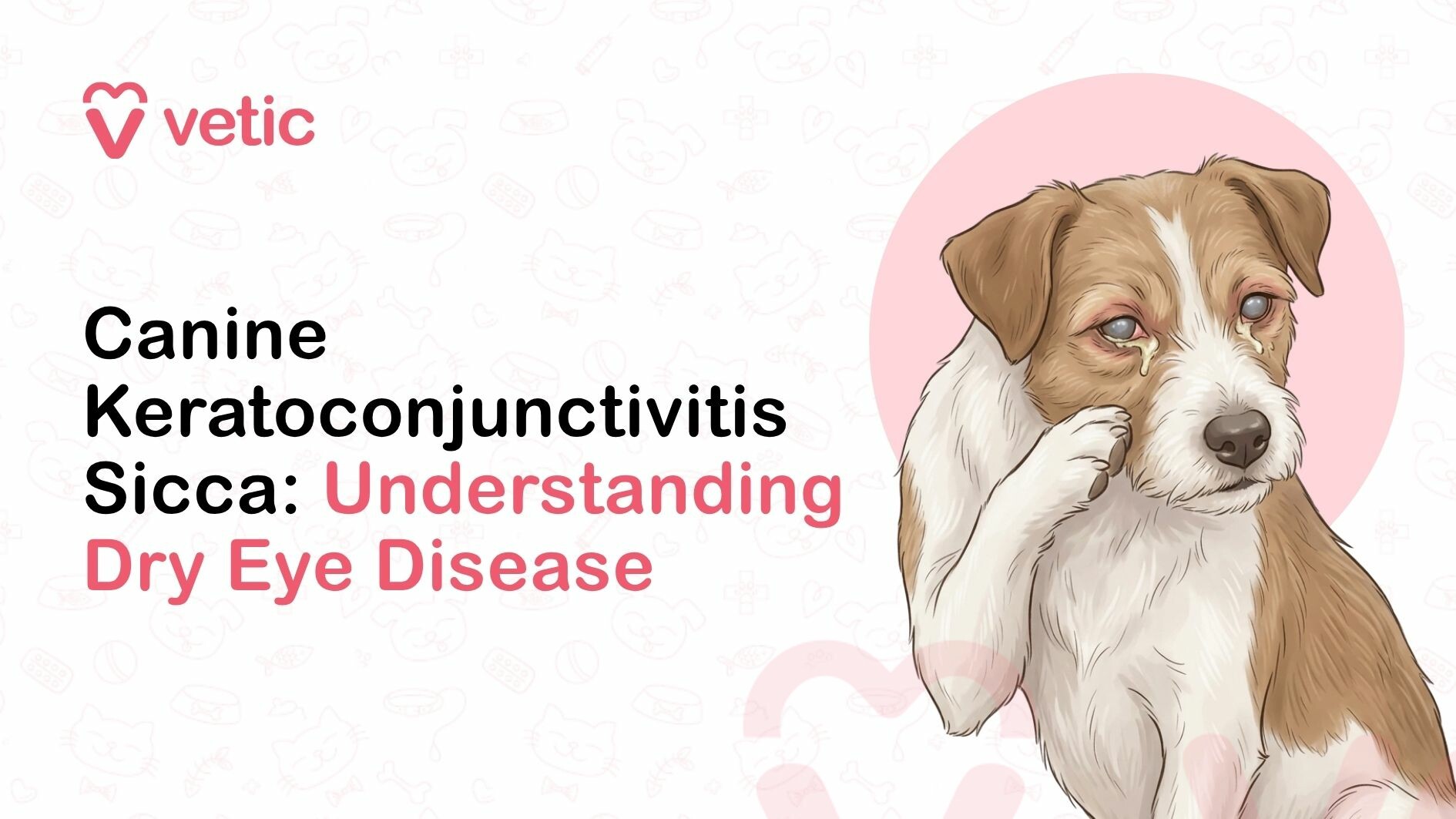
What Is KCS in Dogs?
This condition, also called dog keratoconjunctivitis sicca, is a chronic problem affecting tear production. Without enough tears, the eye’s surface dries out and becomes irritated. Over time, the eye loses the natural protection tears normally provide, leaving it vulnerable.
Why can KCS threaten vision?
Tears protect and nourish the cornea, so chronic dryness can lead to scarring, pigmentation, and vision loss over time. This is why early treatment matters so much, even when symptoms still seem mild.
What Are the Symptoms of Dry Eye in Dogs?
Symptoms of dry eye in dogs usually develop gradually rather than overnight.
Early on, you might notice redness, squinting, or thick, ropey discharge. As it progresses, the cornea can appear dull or cloudy, or develop visible scarring, especially without treatment.
What Causes Dry Eyes in Dogs?
Keratitis sicca in dogs has several possible causes, though one stands out as most common.
Immune-mediated triggers
The immune system attacking the tear glands is by far the most common cause, ahead of any other trigger.
Drug-related triggers
Certain medications, including some sulfa-based antibiotics, can reduce tear production as a side effect of otherwise routine, unrelated treatment.
Breeds with higher KCS risk
Cocker Spaniels, Bulldogs, Pugs, Shih Tzus, and West Highland White Terriers are diagnosed more often than other breeds. Genetics likely play a role.
How Do Vets Diagnose KCS in Dogs?
Diagnosis relies on a simple, quick test done by a pet health expert.
Schirmer tear test
A small paper strip measures how much tear film the eye produces in one minute. It’s quick, painless, and gives an immediate, reliable reading.
Stain tests
Special dyes highlight any scratches or ulcers on the cornea’s surface. These need separate attention alongside the main diagnosis.
How Is KCS in Dogs Treated?
Treatment for dry eyes in dogs almost always starts with prescription eye drops, not surgery.
Tear-stimulating medications
Most KCS dog treatment plans start here, since this is where the real, lasting improvement comes from. Cyclosporine and tacrolimus are the main drugs used to boost natural tear production.
Artificial tears
Lubricating drops add moisture in the meantime, but they don’t treat the underlying cause on their own. They’re a helpful add-on, not a replacement for the main treatment.
Antibiotics
These treat or prevent secondary bacterial infections that can develop on a dry, irritated eye surface. A dry eye is more vulnerable to infection than a normal, well-lubricated one.
Anti-inflammatories
These calm inflammation and discomfort alongside the main tear-stimulating treatment plan already in place.
When surgery may help
Surgery is rare and usually only considered when medication alone isn’t enough. It’s a last resort in KCS treatment dog cases that don’t respond well to drops, even after months of trying.
How Can You Treat Dry Eyes in Dogs at Home?
Pet parents often ask how to treat dry eye in dogs naturally, but nothing safely replaces prescription medication. Home care plays a supporting role at best, never a substitute one.
Giving eye drops and avoiding home care mistakes
Consistent daily drops matter more than any single technique for applying them. Don’t skip doses or stop early just because the eye looks better, since symptoms can return quickly without warning.
What Is the Long-Term Outlook for KCS in Dogs?
The outlook is genuinely good for most dogs with consistent, lifelong treatment.
KCS disease is typically managed for life, not cured outright. Less discharge, a brighter eye, and reduced squinting are all encouraging signs that the treatment plan is working well.
When Should You Call Your Veterinarian Urgently?
Sudden severe pain, a cloudy or ulcerated-looking eye, or complete stoppage of drops warrants an urgent visit to the nearest best pet clinic. Don’t wait for a routine appointment in these cases.
Conclusion: About Canine Keratoconjunctivitis Sicca (KCS)
KCS in dogs is very manageable with the right care, even though it’s a lifelong condition. You might see it written as canine keratoconjunctivitis sicca (KCS) in dogs, but the approach stays the same.
Skipping treatment, not the diagnosis itself, is what leads to real complications down the line. If your dog’s eyes seem dry, red, or uncomfortable, a vet can run a simple test to check.
FAQs: About Canine Keratoconjunctivitis Sicca (KCS)
What Is the Most Common Cause of Keratoconjunctivitis Sicca in Dogs?
Immune-mediated damage to the tear glands is by far the most common cause overall. Other causes are comparatively rare, though still worth ruling out.
Is KCS in Dogs Lifelong?
In most cases, yes, though the severity can vary and treatment can be adjusted over time as needed.
What Ointment Is Good for KCS in Dogs?
Vets typically prescribe cyclosporine or tacrolimus ointments, not over-the-counter options bought without a diagnosis.
At What Age Do Dogs Get Dry Eyes?
It can develop at any age, though middle-aged dogs are diagnosed most often overall by a clear margin.
Can KCS in Dogs Lead to Blindness?
Yes, if left untreated, chronic dryness can cause scarring severe enough to permanently affect vision.
References
Beranek, J. (2006, October 11). Keratoconjunctivitis Sicca–Introduction and Case Reports. VIN.Com. https://www.vin.com/apputil/content/defaultadv1.aspx?pId=11223&catId=31437&id=3859089
Brooks, W. (2026). Dry eye (Keratoconjunctivitis Sicca) in Dogs and cats. Vin.Com. https://veterinarypartner.vin.com/default.aspx?pid=19239&id=4951823&f5=1
MSD Veterinary Manual. (2026). Chronic keratoconjunctivitis sicca, dog. https://www.msdvetmanual.com/multimedia/image/chronic-keratoconjunctivitis-sicca-dog