What Are the Emergency Signs of Glaucoma in Dogs?
Sudden glaucoma is considered a veterinary emergency. The MSD Veterinary Manual advises lowering eye pressure as quickly as possible to limit damage.
What Signs Can Indicate Dangerously High Eye Pressure?
According to the MSD Veterinary Manual, dogs with sudden, severe glaucoma may show:
- A dilated pupil that does not respond to light
- Redness in the white of the eye
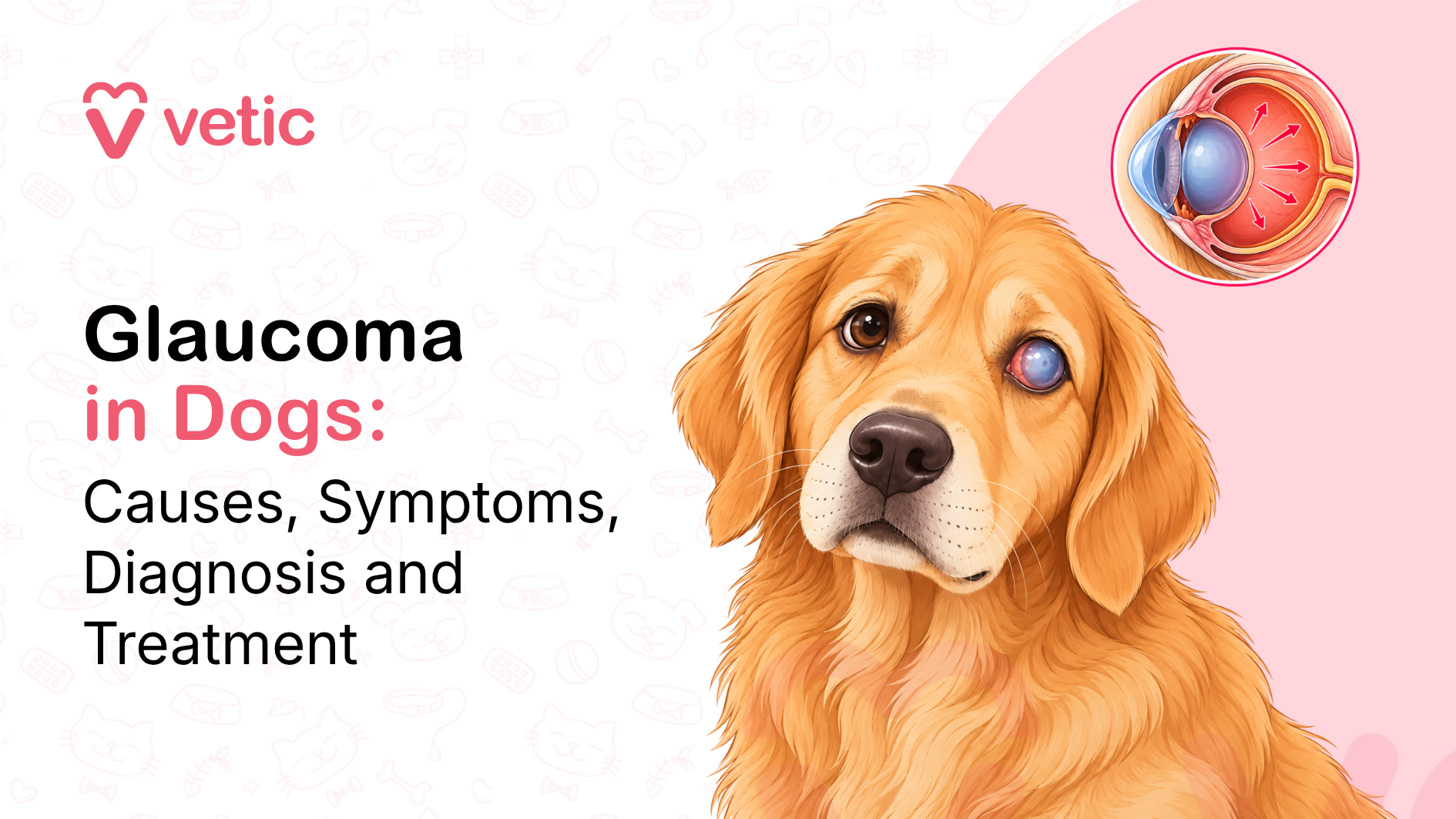
- A cloudy or bluish cornea
- An enlarged or unusually firm eye
- Sudden loss of vision
Pain may appear as changes in behaviour rather than obvious squinting.
When Should You Call an Emergency Vet?
Sudden glaucoma can cause permanent vision loss within hours to days, so do not wait until morning. Seek immediate veterinary care if your dog’s eye suddenly becomes red, cloudy or enlarged, or if your dog appears to lose vision.
Select Vetic clinics offer 24/7 emergency care. Check the Vetic clinic locator to find a nearby clinic and confirm its emergency availability.
What Causes Glaucoma in Dogs?
Glaucoma develops when fluid inside the eye cannot drain properly. The MSD Veterinary Manual estimates that glaucoma affects about 1.7% of dogs in North America.
What Is Primary Versus Secondary Glaucoma?
Primary glaucoma is inherited and is linked to certain breeds. It often affects both eyes over time. Secondary glaucoma develops as a result of another eye problem, such as inflammation, injury, or a displaced lens.
Which Dogs Are More at Risk?
Some breeds have a higher risk of developing primary glaucoma. These include Cocker Spaniels, Basset Hounds, Beagles and Siberian Huskies. Other breeds, such as Chow Chows and Samoyeds, are also at increased risk. However, glaucoma can affect dogs of any breed, including mixed-breed dogs. For example, primary open-angle glaucoma in Beagles has been associated with an ADAMTS10 gene mutation, while several other breeds are predisposed to primary glaucoma.
What Are the Signs of Glaucoma in Dogs?
Signs vary depending on whether pressure rises suddenly or gradually. Gradual glaucoma is often harder to notice at home.
What Early Signs Might Pet Parents Miss?
The MSD Veterinary Manual notes that early glaucoma symptoms in dogs are often subtle. These may include:
- A pupil that is slightly larger or slower to react
- Mild redness of the blood vessels in the white of the eye
- Slight enlargement of the eye
Because these changes are easy to overlook, many dogs are not seen by a vet until the condition has progressed.
What Happens as Vision Loss Progresses?
With prolonged high pressure, the eye may gradually enlarge. The lens may also shift out of position, and the cornea may change. Your dog may bump into objects, hesitate on stairs or seem less confident in dim light.
How Do Vets Diagnose Glaucoma?
A vet will usually examine both eyes carefully.
How Is Eye Pressure Measured?
A vet uses an instrument called a tonometer to measure the pressure inside the eye. Normal pressure in dogs is roughly 10 to 25 mm Hg, depending on the instrument used. A vet may also examine the back of the eye to check for damage to the retina and optic nerve.
Why Is the Other Eye Checked Too?
Inherited glaucoma often affects both eyes, though not always at the same time, so your vet will check the other eye for early changes. The MSD Veterinary Manual recommends regular pressure checks for high-risk breeds as part of routine examinations.
Is There a Cure for Glaucoma in Dogs?
Glaucoma is usually a long-term condition that requires ongoing management rather than a one-time cure. Treatment aims to control pressure, reduce pain and preserve vision where possible.
How Do Medicines Lower Eye Pressure?
Your vet may prescribe eye drops or other medication. Some help reduce the amount of fluid produced in the eye, while others help fluid drain.
When Is Surgery or Eye Removal Considered?
Surgery may be recommended when medication alone does not control the pressure. Depending on the type and stage of glaucoma, surgery may aim to improve aqueous outflow or reduce aqueous humour production. The MSD Veterinary Manual notes that an enlarged, blind end-stage eye may need removal to relieve pain. If eye removal is needed, Vetic’s surgical team can perform it at selected locations.
How Do You Live with a Dog with Glaucoma?
Many dogs can adapt to reduced vision, especially when their pain is controlled.
How Can You Manage Medication and Vision Loss?
Give eye medication exactly as prescribed and at the same times each day. Attend all pressure checks, as your vet may need to adjust treatment. At home, try to keep furniture in the same place, and consider stair gates to prevent falls. In selected cities, Vetic’s Vet at Home service can support follow-up checks.
What Does Quality of Life Depend On?
Quality of life often depends more on pain control than on vision alone. A comfortable dog who is eating, sleeping and enjoying daily routines may continue to live well.
What Mistakes Can Put Vision at Risk?
Some mistakes may reduce the chance of preserving vision.
Why Is Delaying Treatment or Relying on Home Remedies Risky?
The MSD Veterinary Manual advises that a dog with signs of glaucoma should be seen by a vet immediately. There is no home remedy that should be used instead of urgent veterinary treatment for suspected glaucoma. Stopping prescribed medication early, or using drops not prescribed for your dog, may also allow pressure to rise again.
Conclusion
Glaucoma in dogs can progress quickly. Early diagnosis and ongoing treatment may help control pain and protect vision for longer. If you notice a red, cloudy or painful eye, book an eye examination at your nearest Vetic clinic today.
FAQs
Can a Dog Recover from Glaucoma?
Glaucoma is usually a long-term condition, not something a dog fully recovers from. However, with ongoing treatment, pain and pressure can often be managed.
How Quickly Can Glaucoma Cause Blindness in Dogs?
This varies. Sudden, severe pressure increases may damage vision quickly, while gradual glaucoma may progress more slowly. Prompt veterinary care may give the best chance of preserving sight.
Can a Dog Live a Normal Life with Glaucoma?
Many dogs live comfortably with glaucoma, including those who lose vision, provided their pain is well controlled.
What Are the Signs of End-Stage Glaucoma in Dogs?
End-stage glaucoma may cause an enlarged, blind eye. The eye may also be painful, which may show as changes in behaviour or pain around the eye.
Does a Dog with Glaucoma Always Need Eye Removal?
Not always. Eye removal is usually considered when the eye is blind and painful, and pressure cannot be controlled with other treatment.
What Percentage of Dogs with Glaucoma Go Blind?
No single reliable figure exists, as outcomes depend on the type of glaucoma and how quickly treatment begins. Advanced glaucoma can lead to permanent vision loss, which is why early diagnosis and regular monitoring are important.
References
Gelatt, K. N. (2024, September). Glaucoma in dogs. MSD Veterinary Manual. https://www.msdvetmanual.com/dog-owners/eye-disorders-of-dogs/glaucoma-in-dogs
Hamor, R. E. (2026, August). Glaucoma in animals. MSD Veterinary Manual. https://www.msdvetmanual.com/eye-diseases-and-disorders/ophthalmology/glaucoma-in-animals