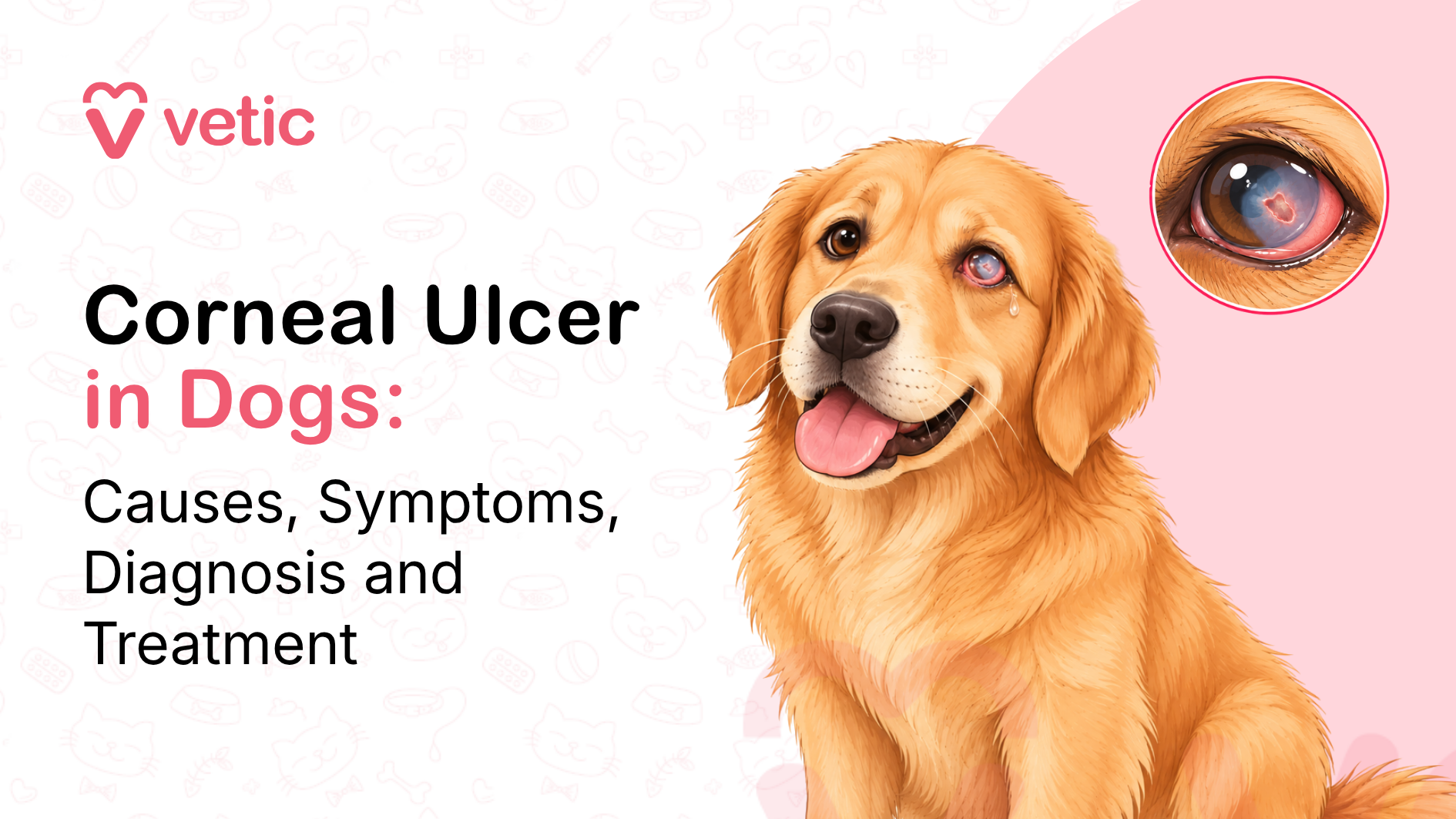
What Is a Corneal Ulcer in Dogs?
A corneal ulcer in dogs is a wound on the clear surface at the front of the eye. It can be painful and, depending on its depth and cause, may threaten vision or the eye itself. This guide explains the causes, symptoms, diagnosis, treatment and home eye care tips.
What Is a Corneal Ulcer (Eye Ulcer) in Dogs?
The cornea is the clear dome on the front of the eye. A canine corneal ulcer forms when the cornea’s outer layers are damaged or lost. Ulcers may be shallow, affecting only the surface, or deep, extending further into the cornea.
What Causes Corneal Ulcers in Dogs?
Most corneal ulcers in dogs result from mechanical injury, such as a scratch or foreign material. However, several other factors may contribute to or delay healing.
Can Trauma, Dry Eye, or Eyelid Problems Cause an Ulcer?
Yes. Trauma, inadequate tear production and eyelid or eyelash abnormalities can contribute to corneal ulceration or delay healing. A scratch from a nail, a thorn or grass seed, or contact with a chemical may damage the cornea. Dry eye can reduce the tear film that protects the eye. Eyelid problems, such as inward-rolling eyelids or misplaced lashes, may repeatedly rub the surface. Brachycephalic breeds such as Pugs and Shih Tzus may be more prone to corneal injury because of their facial and eyelid anatomy.
Can Infection or Slow Healing Make It Worse?
An ulcer may become secondarily infected, and infection or corneal tissue breakdown can deepen it. The MSD Veterinary Manual also describes slow-healing, recurring shallow ulcers, particularly in older dogs. In these cases, the corneal surface layer may not attach properly during healing.
What Are the Symptoms of a Corneal Ulcer in Dogs?
A canine eye ulcer is often painful. Behaviour changes may appear before any visible mark.
What Signs Do Pet Parents Notice First?
Early signs may include:
- Squinting or keeping the eye closed
- Watery eyes or discharge
- Redness of the eye
- Pawing at or rubbing the eye
- Sensitivity to light
What Signs Suggest the Ulcer Is Worsening?
A cloudy or bluish eye, thick yellow or green discharge, or a visible dent may suggest a deeper ulcer. Increasing pain or swelling may also need urgent attention.
When Is It an Emergency?
Eye problems can change quickly. Prompt assessment may help protect your dog’s eye and vision.
Which Eye Changes Need Same-Day Veterinary Care?
Seek same-day care if you notice:
- Sudden squinting or severe eye pain
- A cloudy, white or bluish area on the eye
- A visible depression, very thin area, or hole in the cornea
- Any eye injury, including from a cat scratch or chemical
Select Vetic clinics offer 24/7 emergency care. Find your nearest 24/7 Vetic emergency clinic.
How Do Vets Diagnose a Corneal Ulcer in Dogs?
Diagnosis usually starts with a careful eye examination and a history of any recent eye injury or eye problems.
How Do the Eye Exam and Fluorescein Stain Work?
According to the MSD Veterinary Manual, vets may use a special dye to detect small ulcers. Fluorescein highlights areas where the corneal surface is damaged or missing, helping the veterinarian assess the ulcer. Under a blue light, the ulcer usually glows green, which helps show its size and shape.
How Do Vets Identify the Underlying Cause?
A vet may check the eyelids and lashes, look for foreign material and measure tear production. In some cases, vets may test a sample from the ulcer for infection. Identifying the cause matters, as an ulcer may not heal until the cause is treated.
How Are Corneal Ulcers in Dogs Treated?
The treatment of corneal ulcers in dogs depends on the depth of the ulcer and its cause. Your vet will recommend a plan suited to your dog.
What Treatments Support Healing and Pain Control?
For shallow ulcers, the MSD Veterinary Manual notes that treatment usually includes antibiotic eye drops. Any cause, such as a splinter, is also addressed. Your vet may prescribe medication to reduce eye pain. Never use leftover or human eye drops; some contain steroids that can deepen an ulcer.
When Is Surgery Needed?
Surgery may be considered for deep, worsening or slow-healing ulcers. According to the MSD Veterinary Manual, many deep ulcers need tissue grafts to strengthen the cornea. In some cases, procedures such as temporary partial eyelid closure (tarsorrhaphy) may protect the cornea while it heals.
How Long Does Healing Take?
Healing time for a corneal ulcer in dogs varies with the depth and cause.
How Long Do Superficial Ulcers Usually Take to Heal?
Many uncomplicated superficial ulcers heal within about a week with appropriate treatment, although healing time varies. A follow-up visit at 24/7 Canine Care helps confirm that the ulcer has fully healed.
Why Do Some Ulcers Recur or Heal Slowly?
Some ulcers heal slowly because the corneal surface does not attach properly. An untreated cause, such as an eyelid problem or dry eye, may also lead to recurrence. These ulcers may need additional treatment or a minor procedure.
How Can You Care for Your Dog at Home?
Home care plays an important role in recovery.
How Do Eye Drops and an E-Collar Support Recovery?
Give all prescribed eye medications exactly as directed. Do not stop or change treatment without veterinary advice, even if the eye looks better. An e-collar helps prevent your dog from rubbing or scratching the eye. Keep it on as advised, including overnight. In selected cities, Vetic’s Vet at Home service can support follow-up checks.
Conclusion
A corneal ulcer in dogs can be painful, but many cases heal well with timely care. Early diagnosis and careful home care may help protect your dog’s eye and vision. If you notice squinting, redness or cloudiness, book a consultation at your nearest Vetic clinic for an eye examination.
FAQs
Can a Dog Recover from a Corneal Ulcer?
Many dogs recover well, particularly when treatment starts early. Deep or infected ulcers may need more intensive care and closer monitoring.
What Is the Best Medicine for a Dog Eye Ulcer?
There is no single best medicine. A vet chooses treatment based on the ulcer’s depth and cause. This often includes antibiotic eye drops and pain relief. Do not use leftover or human eye drops.
What Helps Corneal Ulcers Heal Faster?
Giving medication as prescribed, using an e-collar and treating the underlying cause may support healing.
Is a Corneal Ulcer the Same as an Eye Ulcer in Dogs?
Yes, the terms generally refer to the same condition. An eye ulcer usually refers to an ulcer on the cornea of a dog.
How Long Does It Take for an Ulcer to Heal on a Dog’s Eye?
Shallow ulcers usually heal within about a week. Deep or slow-healing ulcers may take several weeks or need surgery.
What Can Be Mistaken for Glaucoma in Dogs?
Corneal ulcers, conjunctivitis and inflammation inside the eye can all cause a red, cloudy or painful eye. A vet can measure the pressure inside the eye to help distinguish these conditions.
References
Gelatt, K. N. (2024, September). Disorders of the cornea in dogs. MSD Veterinary Manual. https://www.msdvetmanual.com/dog-owners/eye-disorders-of-dogs/disorders-of-the-cornea-in-dogs
Stanley, R. G. (2007, August 19). Management of corneal ulcers in small animals. VIN. https://www.vin.com/apputil/content/defaultadv1.aspx?id=3860707&pid=11242