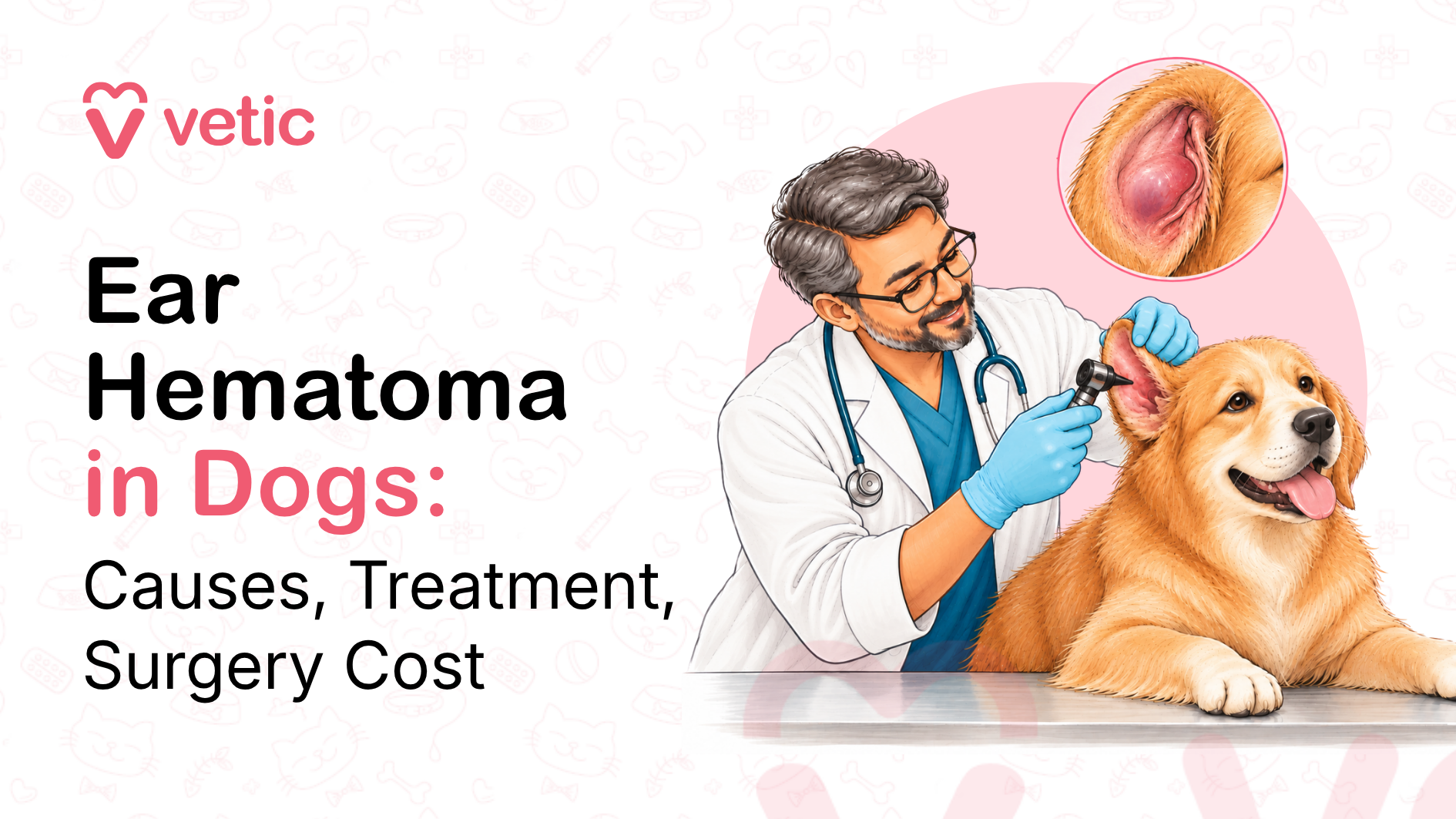
What Does an Ear Hematoma Look Like?
When a dog develops an ear hematoma, the ear flap may look puffy, thick or balloon-like. Many dogs also tilt their head or avoid having the ear touched.
Why Do Dogs Get Ear Hematomas?
According to the MSD Veterinary Manual, trauma from head shaking or ear scratching due to itching is almost always involved in dogs with aural hematomas. This repeated movement can break small blood vessels in the ear flap. Blood then collects between the skin and cartilage.
Is ‘Cauliflower Ear’ the Same as a Hematoma?
Cauliflower ear in dogs describes the thickened, crumpled ear that may remain if a hematoma heals with scar tissue. It usually results from a hematoma rather than being the same condition.
Do Ear Infections and Allergies Cause Them?
Ear infections and allergies can make the ears itchy, leading to frequent scratching and shaking. The MSD Veterinary Manual notes that aural hematomas can occur in dogs with atopic dermatitis and food allergies, particularly when these conditions cause ear inflammation and itching.
Can Head Shaking and Scratching Cause One?
Repeated head shaking and ear scratching can traumatise small blood vessels in the ear flap and contribute to an ear hematoma. Foreign material, parasites or other causes of ear irritation may also trigger scratching and head shaking, which can contribute to an ear hematoma.
Can Trauma or Rough Play Cause One?
In some cases, a knock, bite wound or rough play may injure the ear flap. Dogs with bleeding or clotting disorders may also be more prone to hematomas.
When Does Your Dog Need a Vet?
See a vet as soon as swelling appears on the ear flap. Prompt care may help reduce discomfort and the risk of permanent ear changes. Seek care the same day if your dog seems in pain, or if the ear has discharge or a bad smell.
What Are the Treatment Options?
Dog hematoma treatment usually aims to remove the blood and treat the underlying cause, such as an ear infection.
Is Needle Drainage Enough?
Needle drainage may help small or fresh hematomas. However, the swelling can return after drainage alone. In some cases, vets may combine drainage with medication injected into the ear flap, but the outcome depends on the treatment approach and the individual dog.
Can It Be Managed Medically?
Some vets may use anti-inflammatory medication, either alone or after drainage. Many vets try anti-inflammatory medication first, especially for dogs who aren’t good candidates for anaesthesia. This approach may also help achieve a better cosmetic outcome, depending on the hematoma and the treatment plan.
When Is Surgery the Better Option?
Surgery may be considered for large, recurrent or persistent hematomas, depending on the dog’s condition and the vet’s assessment. The vet drains the pocket and places stitches through the ear flap to close the space. Suturing helps eliminate the space where fluid can collect and may reduce the risk of the hematoma refilling.
Can a Dog Ear Hematoma Be Treated Without Surgery?
Yes, some ear hematomas can be treated with drainage and medication, as explained above. Your vet can recommend the best approach based on the size of the hematoma and your dog’s condition.
How Much Does Dog Ear Hematoma Surgery Cost?
The total cost can depend on the procedure, pre-operative assessment, anaesthesia, medication and follow-up care included in the treatment plan. Itemised invoices are shared in the Vetic app.
What Affects the Final Price?
The total may depend on the hematoma size and whether one or both ears require treatment. The dog’s size, general health and any ear infection treatment can also change the cost.
Are There Extra Costs Beyond the Procedure?
Some costs may fall outside the procedure itself, depending on the clinic. These can include ear swab tests, ear medication, a protective cone and extra recheck visits. Ask your vet for a written estimate before surgery so there are no surprises.
What Is Recovery After Surgery Like?
Many dogs can go home the same day after surgery, although some may need overnight monitoring depending on their condition and the procedure.
What Is the Healing Timeline?
Healing time varies by the procedure and the individual dog. Stitches usually stay in place for at least 3 weeks to help the ear flap heal properly and reduce the risk of fluid building up again. Your vet will confirm when they can be removed during a follow-up visit.
How Should You Care for Your Dog at Home?
Keep the protective cone on as advised, so your dog cannot scratch the ear. Keep the ear clean and dry, and attend all follow-up visits. In selected cities, Vetic’s Vet at Home service can also support post-surgery checks and wound care.
What Are the Signs of Recurrence or Complications?
If the swelling returns, or you notice bleeding, discharge, a bad smell or increasing pain, contact your veterinarian promptly.
What Happens If It Goes Untreated?
An untreated hematoma may slowly shrink as the body reabsorbs the blood. However, healing on its own often leaves scar tissue that causes the ear to become thickened or permanently crumpled, a change known as cauliflower ear. Prompt veterinary treatment can help reduce the risk of these lasting changes.
What Can You Do at Home, and What Mistakes Should You Avoid?
Home care should support, not replace, veterinary treatment. Helpful steps include:
- Preventing scratching with a protective cone, as advised by your veterinarian
- Keeping follow-up visits so the ear and any ear infection can be rechecked
Mistakes to avoid include:
- Draining or piercing the swelling at home
- Placing home remedies inside the ear
- Removing bandages or the cone early
Conclusion
A dog ear hematoma is a common condition that usually responds well to timely veterinary care. Treating the underlying cause is often as important as treating the swelling itself. If you notice a swollen ear flap, book a consultation at your nearest Vetic clinic for a thorough ear examination.
FAQs
How Painful Is a Hematoma for a Dog?
A hematoma can be uncomfortable, and many dogs are sensitive when you touch the affected ear.
How Much Does Dog Ear Flushing Surgery Cost?
Ear flushing is a deep ear clean, sometimes done under sedation. It is separate from hematoma surgery. At Vetic, routine ear cleaning starts at Rs. 299. If sedation is needed, additional charges may apply.
Can a Hematoma Come Back After Surgery in Dogs?
It can, although surgery may lower the risk. Ongoing ear infections or allergies are common reasons for recurrence.
How to Treat a Dog Ear Hematoma at Home?
A hematoma generally needs veterinary treatment. At home, focus on preventing scratching and following your vet’s instructions.
When Is Surgery Better Than Drainage Alone?
Surgery may be recommended for large or recurring hematomas, or when drainage has not worked.
What Should I Do If My Dog’s Ear Hematoma Popped?
If an ear hematoma bursts, keep your dog from scratching the ear and contact your veterinarian promptly. If there is active bleeding, apply gentle pressure with clean gauze while arranging veterinary care.
How Long Does Recovery from Dog Ear Hematoma Surgery Take?
Recovery time varies by the procedure and the individual dog. Many dogs need follow-up care for several weeks after surgery.
References
Hewitt, J., & Bajwa, J. (2020). Aural hematoma and its treatment: A review. The Canadian Veterinary Journal, 61(3), 313-315. https://pmc.ncbi.nlm.nih.gov/articles/PMC7020633/
Tomich, L. (2026, June). Auricular hematomas in animals. MSD Veterinary Manual. https://www.msdvetmanual.com/ear-disorders/diseases-of-the-pinna/auricular-hematomas-in-animals