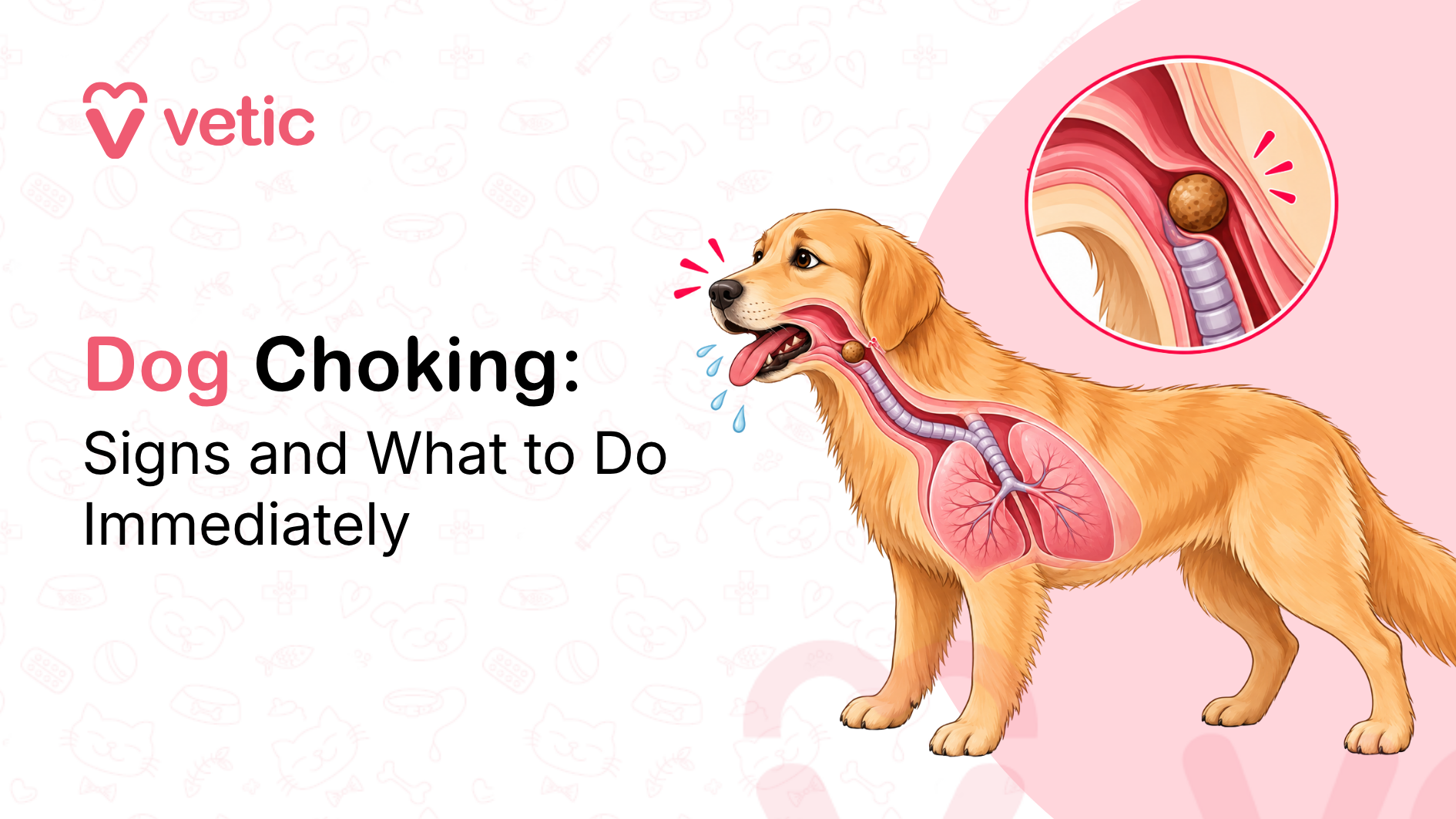
Dog choking is frightening, and knowing what to do can help you stay calm and act quickly. Choking occurs when a foreign object obstructs the airway, making it difficult for a dog to breathe. This guide explains the signs, first-aid steps and when to seek veterinary care.
Is My Dog Choking or Coughing?
Canine choking and coughing can look similar at first. The key difference is usually whether the dog can move air in and out.
What Are the Signs of Choking in Dogs?
According to the American Veterinary Medical Association (AVMA), choking symptoms in dogs may include:
- Difficulty breathing or gasping
- Pawing repeatedly at the mouth
- Choking sounds when breathing or coughing
- Blue-tinged lips or tongue
Some dogs may also drool heavily, become very distressed or collapse.
How Can Choking Differ from Coughing or Gagging?
A dog that is coughing may still be able to move air, whereas a dog with a severe airway obstruction may struggle to breathe. Canine gagging often involves retching and may bring up foam or mucus. If you are unsure whether your dog is choking, contact the nearest pet emergency care services immediately for guidance.
What Should I Do Immediately?
Stay as calm as possible. If your dog is breathing, avoid interfering and take them to a vet straight away. If your dog cannot breathe, first aid may be needed while help is arranged.
What Should You Do While Contacting an Emergency Vet?
If possible, ask someone else to call the vet while you attend to your dog. Vetic provides emergency care at selected locations; check the Vetic website or app for the nearest available emergency service. Find your nearest Vetic emergency clinic in the app or call +91 89290 43121. Keep your dog still, and avoid giving food or water.
When Should You Attempt to Remove a Visible Object?
The AVMA advises looking inside the mouth only if you can do so without risking injury. If an object is clearly visible, use two hands to open the mouth and gently grasp it with your fingers. A frightened dog may bite, so be careful when opening the mouth. Take care not to push it further down the throat. If you can’t remove the object easily, don’t keep trying or delay emergency veterinary care.
How Do I Do the Heimlich on a Dog?
An abdominal-thrust manoeuvre may help dislodge an airway obstruction in a dog that cannot breathe when the object cannot be removed manually. Where possible, follow guidance from a vet over the phone.
When May an Abdominal Thrust Be Appropriate?
Consider an abdominal-thrust manoeuvre if the dog cannot breathe or the object cannot be removed. Do not use it on a dog that is coughing and still breathing. Practising on a healthy dog is not recommended, as it may cause injury.
How Does the Technique Differ for Small and Large Dogs?
The Heimlich manoeuvre for dogs is generally adjusted to the dog’s size:
- Small dogs: lift by the thighs and gently swing side to side, then apply forward pressure to the belly just behind the ribcage.
- Large dogs: place your fist on the soft spot just under the ribcage, then push up and forward.
After each attempt, check the mouth for the object. If the object does not clear, seek immediate veterinary care. Do not delay transport.
What Mistakes Make Choking Worse?
Well-intentioned actions can sometimes make dog choking worse. Knowing what to avoid may help protect both you and your dog.
Why Should You Avoid Blind Finger Sweeps or Delays?
A blind finger sweep means reaching into the throat without seeing the object. This may push the object deeper, and a frightened dog may bite. Delaying veterinary care is also risky, as a blocked airway can become life-threatening quickly.
When Should I See a Vet After Choking?
A vet examination is advisable after any choking episode, even if your dog seems normal again. Throat or airway injuries may not be obvious at home, so a vet may still recommend an exam even if the object has been removed.
Why Can a Dog Need an Examination Even After the Object Is Removed?
The object may have scratched or swollen the throat. The canine Heimlich may also bruise the chest or abdomen. A vet may recommend imaging, such as X-rays, depending on the suspected object and clinical signs. Vetic’s clinics in [city] offer in-house diagnostics, including X-rays and ultrasound, alongside emergency critical care. Emergency service availability and hours vary by location, so check the Vetic app to find a clinic that can treat your dog.
What Choking Risks Do Pet Parents Miss?
Many dog choking incidents involve everyday items that seem harmless.
Which Foods, Toys, and Eating Habits Increase Risk?
Common risks include:
- Balls or toys that are too small for the dog’s size
- Cooked bones, rawhide or large chews
- Sticks, stones and small household items
- Eating very quickly or swallowing large pieces of food or treats
Choosing toys of a suitable size and supervising chew time may lower the risk. A slow-feeder bowl may help some dogs that eat too quickly, when appropriate for the individual dog.
Conclusion
Dog choking needs quick, calm action and prompt veterinary care. First aid may help in an emergency, but a vet check afterwards is still advisable. If your dog is choking or has recently choked, contact your nearest Vetic clinic for emergency care.
FAQs
How Do I Know If My Dog Is Okay After Choking?
A dog who is breathing normally, eating and behaving as usual may be recovering. However, a vet check is still advisable, as throat injuries may not be obvious. See a vet if your dog keeps coughing or gagging, breathes noisily, won’t eat, or has blood in their saliva.
How Can I Check If My Dog Has Something Stuck in His Throat?
Common symptoms of a dog choking include gagging, pawing at the mouth, drooling or difficulty swallowing. Only look inside the mouth if it is safe to do so, and seek veterinary care promptly.
Why Is My Dog Gagging Like Something Is Stuck in His Throat?
Gagging may be linked to a foreign object, kennel cough or throat irritation. A vet should assess persistent gagging.
How to Help a Dog Clear Their Throat?
If the dog is breathing and coughing, let them cough and keep them calm. Avoid reaching into the throat, and contact your vet if the problem continues.
What Does a Choking Dog Sound Like?
A choking dog may gasp, wheeze or make a high-pitched sound when breathing. With a complete blockage, some dogs make little or no sound. Treat any unusual choking noise with breathing difficulty as an emergency.
How Long Can a Dog Survive While Choking?
There is no safe time limit. A complete blockage can become life-threatening quickly, so act and seek help immediately.
Can a Leash Damage a Dog’s Throat?
Strong or repeated pulling against a collar may put pressure on the throat. For dogs who pull, a well-fitted harness may be a gentler option. Your vet can advise if coughing occurs during walks.
References
American Veterinary Medical Association. (2025). Pet first aid [Client brochure]. https://ebusiness.avma.org/files/ProductDownloads/mcm-client-brochures-pet-first-aid-2025.pdf
Gfeller, R. (2023). Choking: First aid. VIN. https://veterinarypartner.vin.com/default.aspx?pid=19239&id=4951320&f5=1