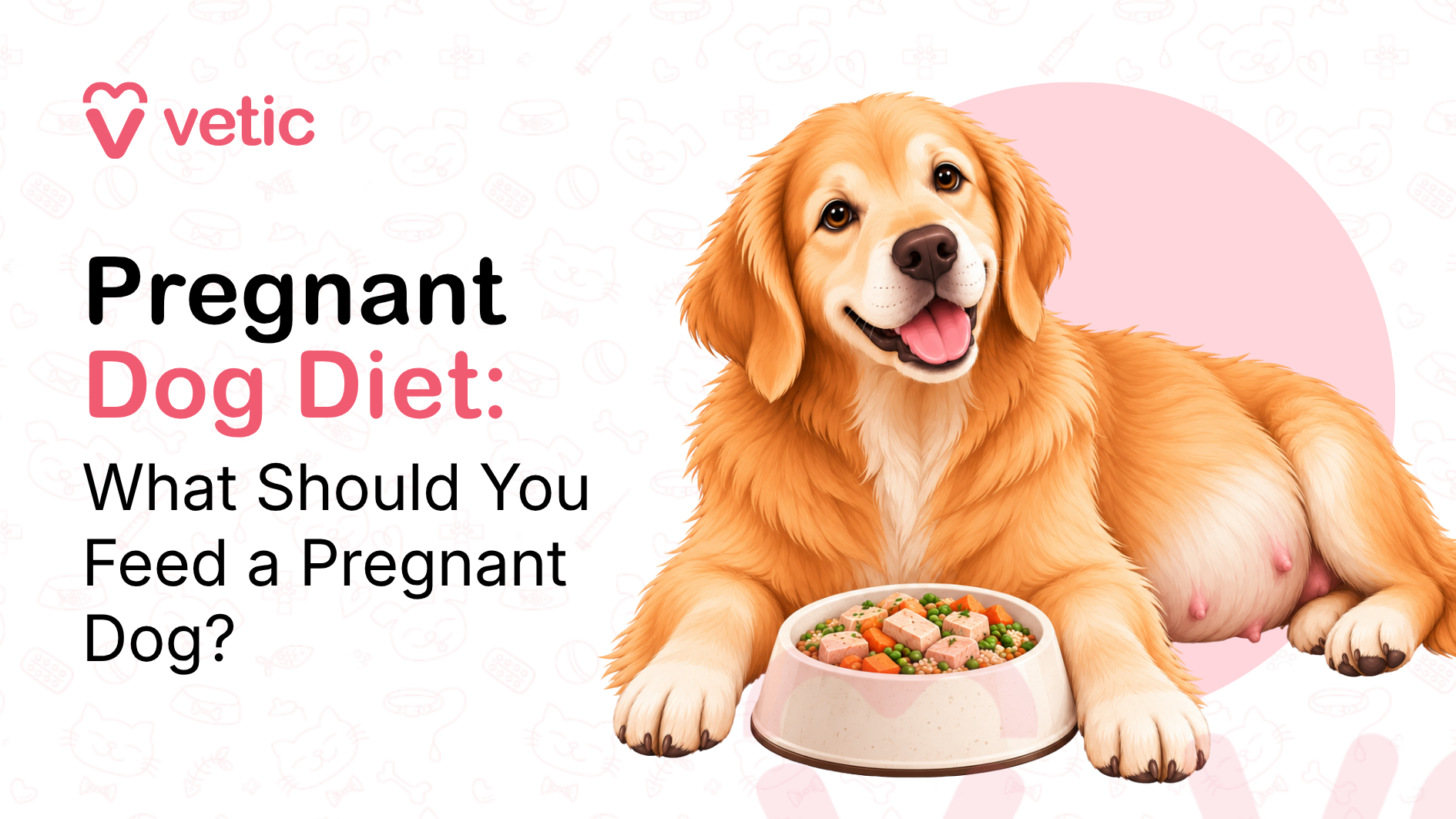
A litter on the way is exciting, and what your dog eats over the next nine weeks helps support her health and her puppies’ development. The short answer: a complete and balanced growth (puppy) diet is generally recommended from the start of pregnancy, with food intake increasing during the final three weeks. Your vet can help you choose the right food and adjust portions to your pregnant dog’s needs. This guide explains what to feed, how much to offer and when to seek veterinary advice.
What Should You Feed a Pregnant Dog?
A complete and balanced growth (puppy) diet is generally recommended during pregnancy because it provides the nutrients needed to support the mother and her developing puppies. Choose a food labelled as complete and balanced for growth or all life stages, and ask your vet when to transition if your dog is already eating a suitable diet.
Why Choose a Puppy (Growth) Food?
Growth diets are designed to meet the higher nutrient demands of developing puppies and can also support a pregnant dog’s changing needs. They are generally more nutrient-dense than adult maintenance diets, helping her get the nutrients she needs without having to eat a much larger volume of food.
Which Nutrients Matter Most?
A pregnant dog’s needs for energy, protein and other nutrients change as pregnancy progresses, particularly during the final third when the puppies grow rapidly. A complete and balanced growth diet should supply these nutrients in appropriate proportions. With a suitable diet, extra calcium, phosphorus or vitamin D is rarely needed. Keep fresh water available at all times.
How Should You Transition to the New Food?
If your vet recommends changing your dog’s food, transition gradually over about seven days by mixing increasing amounts of the new food with her current diet. This may help reduce digestive upset. Your vet can advise on the timing and pace of the transition based on her current food, health and stage of pregnancy.
How Should You Feed a Dog During Pregnancy?
A good pregnant dog diet changes gradually with each stage of pregnancy.
When Should Food Be Changed and Why Are Smaller Meals Useful Later?
Pregnancy in dogs lasts about 63 days, according to the MSD Veterinary Manual. The puppies grow very little during the first two-thirds of pregnancy. Most of their growth happens in the final third. As the puppies grow, the stomach has less room. Offering smaller, more frequent meals may help her eat comfortably in late pregnancy.
How Much Should a Pregnant Dog Eat?
Portions should match your dog’s stage of pregnancy and body condition. Your vet can help you adjust food intake as her needs change.
How Should Portions Change and What If Appetite Drops?
According to the MSD Veterinary Manual, energy needs generally remain close to maintenance levels during the first two-thirds of pregnancy. During the final third, food intake may need to increase by at least 20–30% above maintenance, depending on your dog’s needs. Increase portions gradually and monitor her body condition with guidance from your vet.
Overfeeding in early pregnancy is a common mistake. Some dogs may briefly eat less during pregnancy. Contact your nearest dog clinic promptly if her appetite is markedly reduced or remains poor, especially if she has vomiting, weakness, weight loss or other unusual signs.
What Foods and Supplements Should You Avoid?
Some foods and supplements do not belong in a pregnant dog diet and may do more harm than good.
Why Can Extra Calcium or Unplanned Supplements Be Harmful?
According to the MSD Veterinary Manual, giving calcium during pregnancy may increase the risk of eclampsia during peak milk production. Eclampsia is a dangerous drop in blood calcium. Extra calcium during pregnancy may reduce the body’s ability to manage calcium when demand rises. The MSD Veterinary Manual also notes that supplements are not usually needed with a complete diet and may be harmful. Avoid raw meat, raw eggs, cooked bones and foods known to be unsafe for dogs.
What Should You Feed a Lactating Dog?
A lactating dog diet needs to support milk production as well as the mother’s own health.
How Do Calorie and Water Needs Change After Delivery?
Many pet parents are told to give calcium syrups or tablets to a pregnant dog. It may feel like a caring way to support her and her puppies, but calcium supplementation during pregnancy can backfire.
The MSD Veterinary Manual states that “oral calcium supplementation during gestation is not indicated” and warns that it may increase the risk of eclampsia after birth. Eclampsia is a potentially life-threatening condition caused by dangerously low blood calcium levels. It most often occurs when a nursing mother is producing the most milk, typically around 2–3 weeks after giving birth.
The safer approach is to feed a complete and balanced diet formulated for growth and avoid calcium or other supplements unless your vet specifically recommends them. If your dog develops panting, restlessness, trembling, muscle twitching, weakness or difficulty walking after giving birth, seek urgent veterinary care, as these may be signs of eclampsia.
Also avoid raw meat, raw eggs, cooked bones and foods known to be unsafe for dogs, such as grapes, onions and chocolate.
When Should You Call Your Veterinarian?
Regular veterinary check-ups during pregnancy help monitor the mother’s health and prepare for the puppies’ arrival. Your vet may recommend ultrasound or X-rays at different stages of pregnancy, depending on your dog’s needs and the information required.
Which Changes Need Veterinary Attention?
Call your vet promptly if you notice:
- Poor appetite that persists or is accompanied by other symptoms
- Vomiting, diarrhoea or unexplained weight loss
- Unusual vaginal discharge during pregnancy
Go to an emergency vet immediately if your nursing dog develops:
- Panting or unusual restlessness
- Trembling, muscle stiffness or twitching
- Difficulty walking, weakness or seizures
These can be signs of eclampsia, a potentially life-threatening drop in blood calcium. It often occurs around 2–3 weeks after birth, when milk production is high. Do not wait for symptoms to pass; seek emergency veterinary care immediately.
When Can Ultrasound and X-Rays Help During Pregnancy?
Ultrasound can often help confirm pregnancy from around 25–30 days after mating, while an X-ray later in pregnancy can help estimate the number of puppies. Knowing the expected litter size can help your vet advise you on what to expect during delivery and whether all puppies appear to have been delivered.
Ask your vet for a pregnancy check-up schedule tailored to your dog. You can find your nearest Vetic clinic to discuss pregnancy monitoring and delivery preparation.
Conclusion
A well-planned pregnant dog diet supports a healthy mother and her growing puppies. A complete and balanced growth diet, gradual portion adjustments and avoiding unplanned supplements are key steps throughout pregnancy and nursing. To plan your dog’s pregnancy care, book a consultation at your nearest Vetic clinic. Good nutrition now is the first gift you give her puppies.
FAQs
Can a Pregnant Dog Eat Eggs?
Yes. A plain, fully cooked egg can be offered as an occasional extra, but it should not replace a complete and balanced growth diet. Avoid raw eggs, and account for treats and extras in her daily food intake.
Is Milk Good for Pregnant or Nursing Dogs?
Many Indian families offer extra doodh (milk) to pregnant or nursing dogs, hoping it will help them produce more milk. It’s an understandable thought, but cow’s milk is not necessary for milk production and may cause digestive upset in dogs that don’t tolerate lactose well. Fresh water and a complete, balanced diet suited to pregnancy or nursing are more important. Ask your vet before adding milk or supplements to her diet.
Can I Feed My Pregnant Dog Rice or Dal-Chawal?
Plain, cooked rice may be included in small amounts alongside a complete and balanced growth diet, but rice and dal-chawal alone do not provide all the nutrients a pregnant dog needs. Ask your vet how to fit these foods into your dog’s daily meals.
What Homemade Food Can I Feed My Pregnant Dog?
If you prefer home-cooked food, ask your veterinarian to review your dog’s current diet and help you plan a nutritionally complete recipe for pregnancy and nursing. Ordinary home recipes may not provide the right balance of energy, protein, vitamins and minerals for this stage. If needed, your vet can advise whether a veterinary nutrition specialist should formulate the diet.
What Should Pregnant Dogs Avoid?
Avoid calcium or other supplements unless your vet specifically recommends them. Also avoid raw meat, raw eggs, cooked bones and foods toxic to dogs, including grapes, onions and chocolate. Feed a complete and balanced growth diet and check with your vet before making major dietary changes.
References
Cline, M. G., Burns, K. M., Coe, J. B., Downing, R., Durzi, T., Murphy, M., & Parker, V. (2021). 2021 AAHA nutrition and weight management guidelines for dogs and cats. Journal of the American Animal Hospital Association, 57(4), 153–178. https://www.aaha.org/wp-content/uploads/globalassets/02-guidelines/2021-nutrition-and-weight-management/resourcepdfs/new-2021-aaha-nutrition-and-weight-management-guidelines-with-ref.pdf
Hall, J. A. (2022, July; updated 2025, December). Eclampsia in small animals. MSD Veterinary Manual. https://www.msdvetmanual.com/metabolic-disorders/disorders-of-calcium-metabolism/puerperal-hypocalcemia-in-small-animals
Sanderson, S. L. (2023, updated 2024, October). Feeding practices in small animals. MSD Veterinary Manual. https://www.msdvetmanual.com/management-and-nutrition/nutrition-small-animals/feeding-practices-in-small-animals