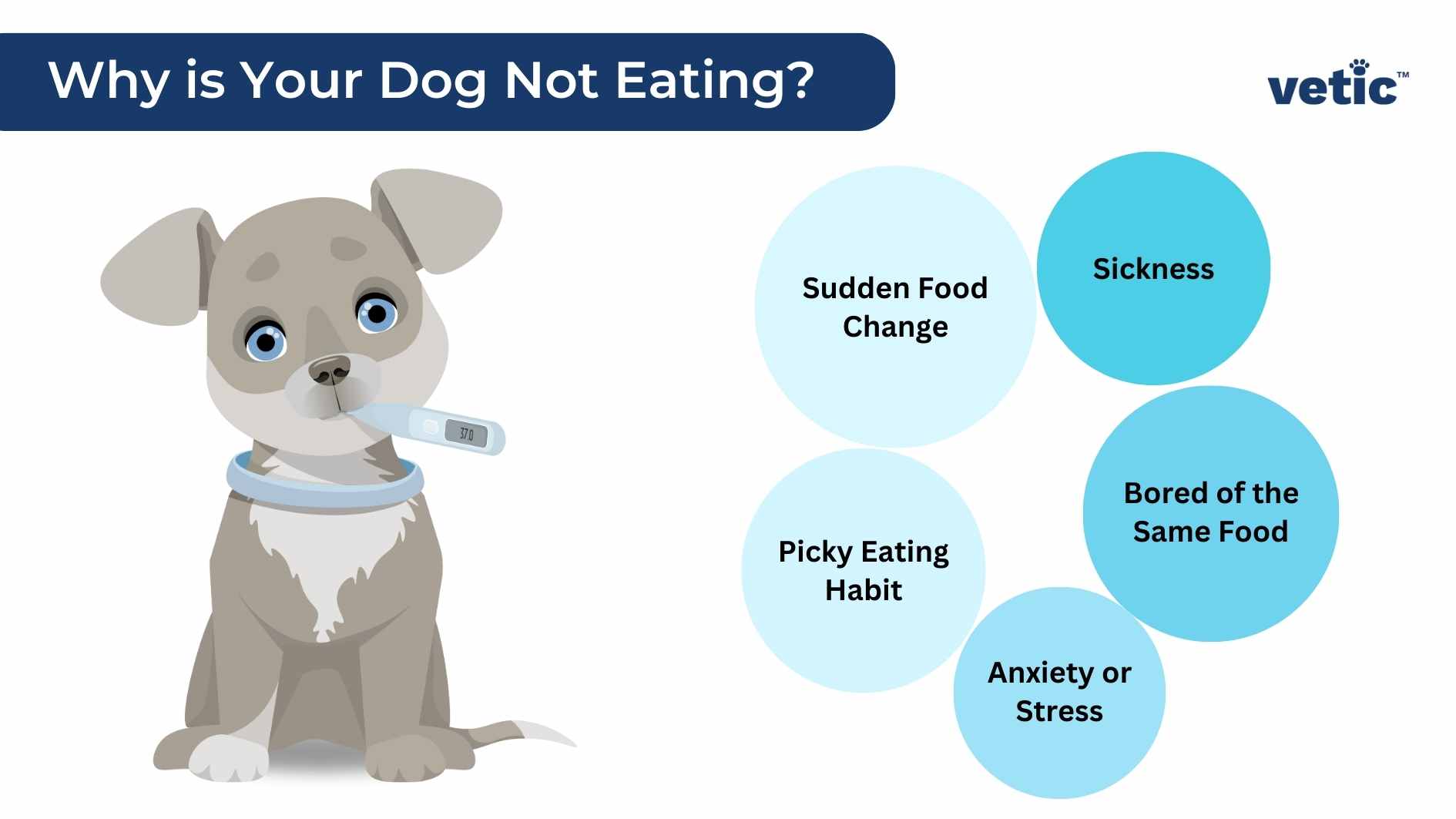
If you’re asking yourself why your dog isn’t eating, you’re not alone. Many pet parents panic the first time they see their dog refuse food, and for good reason. While humans sometimes skip meals, a dog not eating is usually a sign that something isn’t right.
Before you assume it’s “just a phase,” here’s what you need to understand.
Dog not eating: Why is it a serious issue?
A dog’s appetite is controlled by a complex system of hormones, hunger signals and stomach distension. So yes, if they’ve been munching on treats all day and skip dinner, it may be explainable.
But a dog not eating food for 24 hours is never normal.
Loss of appetite (anorexia in dogs) almost always signals discomfort, illness, stress, fever or pain. If your dog hasn’t eaten in a full day, call your vet.
Why is your dog not eating?
There are many reasons behind a sudden appetite drop. Your veterinarian is the best person to diagnose the exact cause, but here are the most common possibilities.
They are sick
Illness can range from something mild — like acidity or gas — to serious conditions like:
- CIRDC (Canine Infectious Respiratory Disease Complex)
- Dental pain or gum infection
- Severe gastric irritation
- Vomiting or diarrhoea
- Bloat
- Abdominal discomfort
- Dry heaving, coughing, sneezing, or lethargy
If your dog shows any of these symptoms along with not eating food, do not wait 24 hours — contact your vet immediately.
They do not like the new food
Dogs dislike sudden diet changes. A full switch from homemade chicken-rice to dry kibble can easily lead to refusal.
Try:
- Mixing old food gradually with the new food
- Transitioning over 5–7 days
- Asking your vet for a diet plan suited for your dog’s age and condition
If they still refuse, it might not be the food — it might be an underlying illness.
They are experiencing anxiety or stress
Dogs often stop eating when they feel overwhelmed. Common emotional triggers include:
- A new pet or family member
- A family member moving away
- Fireworks, construction noise, or large gatherings
- A change in environment (moving houses, travel, visitors)
If your dog isn’t eating due to noise or stress, let things calm down and offer their favourite treats or warm food.
They are picky eaters and don’t like the same food every day
Some breeds are naturally choosy, like Shih Tzus, Pomeranians, Indian Spitz, Dachshunds, Poodles, and French Bulldogs.
If your dog is otherwise active and healthy:
- Add a tasty topper
- Mix in some warm water or broth
- Offer wet food for variety
- Ask your vet about safe food rotations
Your dog has been vaccinated today/yesterday
After a vaccination, it’s common for dogs to feel:
- Lethargic
- Mildly warm
- Low on energy
But if your dog does not eat food for longer than 24 hours, contact your vet.
What can you do about your dog not eating?
When you realise my dog is not eating food, try these steps:
- Offer their favourite treats
- Try simple boiled chicken with no spices
- Warm the food slightly to increase aroma
- Add a teaspoon of dog-safe broth
- Reduce distractions and create a calm eating space
If none of this works and they still won’t eat, it’s time to visit the veterinarian.
Do NOT:
- Force-feed
- Wait endlessly assuming “they’ll eat when hungry”
- Keep starving them hoping they’ll give in
Dogs can dehydrate quickly, and refusing food can worsen medical conditions rapidly.
How to make sure your dog keeps eating regularly
Keeping a dog on a good eating pattern requires consistency:
- Avoid giving too many treats between meals
- Maintain fixed mealtimes
- Put food down for 20–30 minutes, then remove
- Take them for a walk before feeding
- Don’t change food brands suddenly
- Avoid replacing old bowls abruptly — some dogs react badly
- Add toppers or wet food to make kibble more appealing
- Stop feeding table scraps
Can you stimulate your dog’s appetite?
Most healthy dogs will eat when hungry, but if they’re stressed or irregular with meals, appetite can dip.
Establishing a Consistent Feeding Routine and Comfortable Eating Environment for Your Dog
Try:
- Feeding at the same time daily
- Using a quiet feeding corner
- Slightly warming their food
- Reducing treats
- Offering interactive feeders for stimulation
- Adding aroma boosters like a spoon of wet food
For medical appetite loss, veterinarians may prescribe safe stimulants — never give these on your own. These medicines are reserved for chronic conditions like:
- Addison’s disease
- Cancers
- Post-treatment loss of appetite
Always follow your vet’s guidance.
Your puppy isn’t eating: What should you do?
With puppies, the rules are very different.
If your puppy skips even ONE meal — call your veterinarian immediately.
Puppies dehydrate much faster, get weaker quicker, and have lower energy reserves than adult dogs.
Appetite loss in puppies can be life-threatening.
Is it normal for dogs to not eat periodically?
In short, NO. Healthy dogs should eat regularly and consistently.
Occasionally skipping a single meal once in months might be behavioral, but frequent food refusal is not normal and often signals:
- Stress
- Pain
- Dental disease
- GI issues
- Underlying health conditions
Tip: If your dog skips meals often but looks okay otherwise, it may still indicate discomfort. Keep a log — and discuss it with your veterinarian.
Conclusion: Should you worry if your dog is not eating?
A dog not eating food is never something to ignore. Whether it’s stress, pickiness, illness, or a sudden dietary change, loss of appetite is a sign that your dog needs attention — and sometimes immediate veterinary care.
When in doubt, always choose the safer route.
Don’t wait — book your dog’s wellness exam with Vetic today.