
• DCM is a heart muscle disease causing the heart to enlarge and pump inefficiently – large breeds like Dobermanns, Great Danes, and Irish Wolfhounds are genetically predisposed.
• Signs include exercise intolerance, coughing, breathlessness, fainting, and abdominal fluid accumulation – early stages are often asymptomatic.
• Dobermanns can develop DCM silently – annual Holter monitoring and echocardiography is recommended for at-risk breeds; consult a Vetic cardiologist for a screening plan.
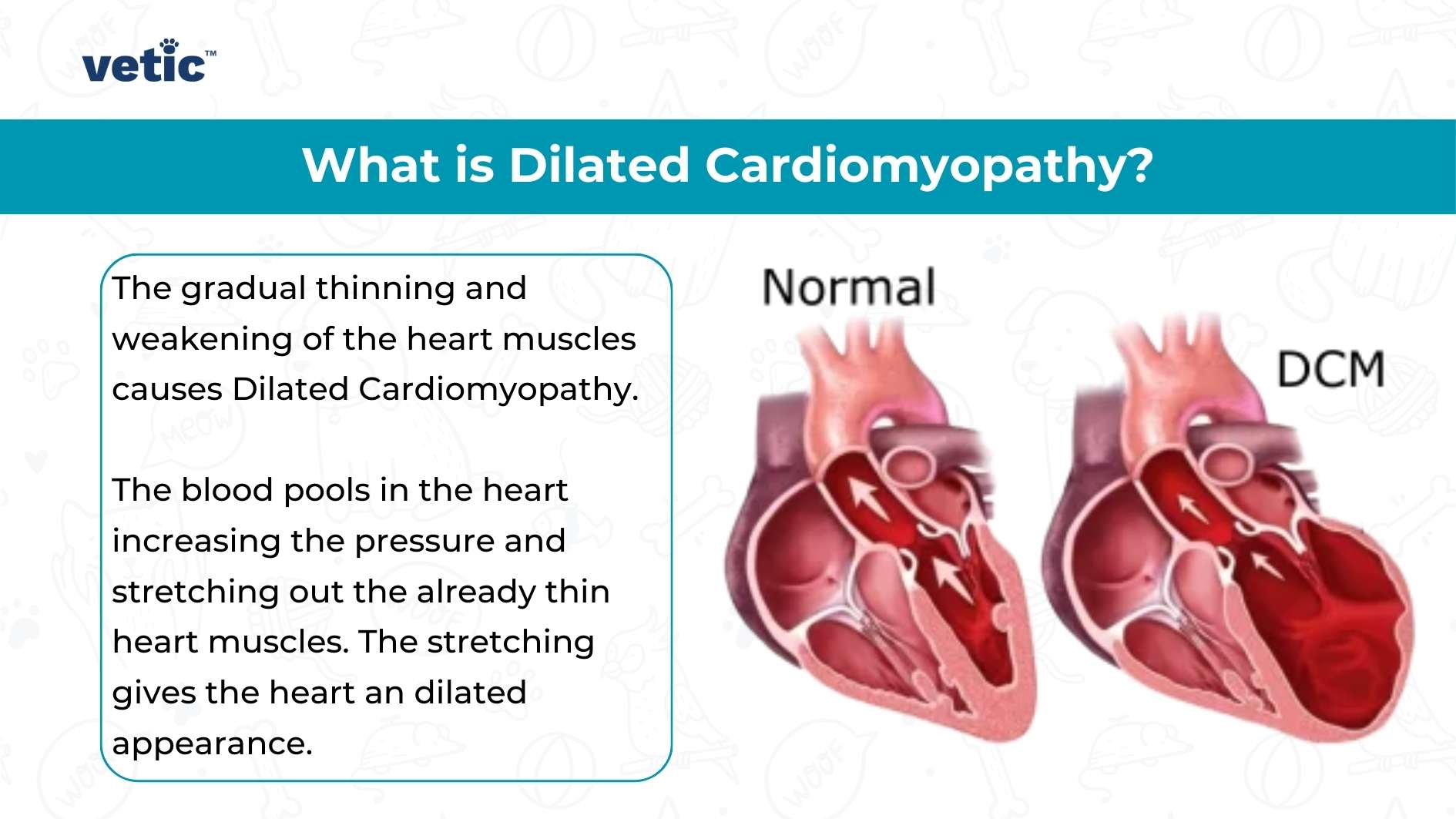
Dilated cardiomyopathy in dogs is caused by the gradual thinning and weakening of the heart muscles. As the cardiac muscles become weaker and thinner, the heart is unable to pump blood efficiently.
The blood pools in the heart increasing the pressure and stretching out the already thin heart muscles. The stretching gives the heart an enlarged appearance which is called dilated cardiomyopathy (DCM).
Is Degenerative Mitral Valve Disease Related to Dilated Cardiomyopathy in Dogs?
DCM and Degenerative Mitral Valve Disease (DMVD) have similar presentations in dogs, but they are two distinct disorders.
Many dogs in advanced stages of Dilated Cardiomyopathy (DCM) may have mitral regurgitation and heart murmur.
Both the diseases have strong genetic links. DMVD mostly affects senior dogs belonging to smaller breeds. Whereas DCM is common in larger dog breeds.
Which Dog Breeds are Predisposed to Dilated Cardiomyopathy?
Typically large dog breeds are predisposed to dilated cardiomyopathy. In fact, it is a leading cause of heart failure among large breed dogs!
However, there have been records of medium-large breeds developing DCM as well.
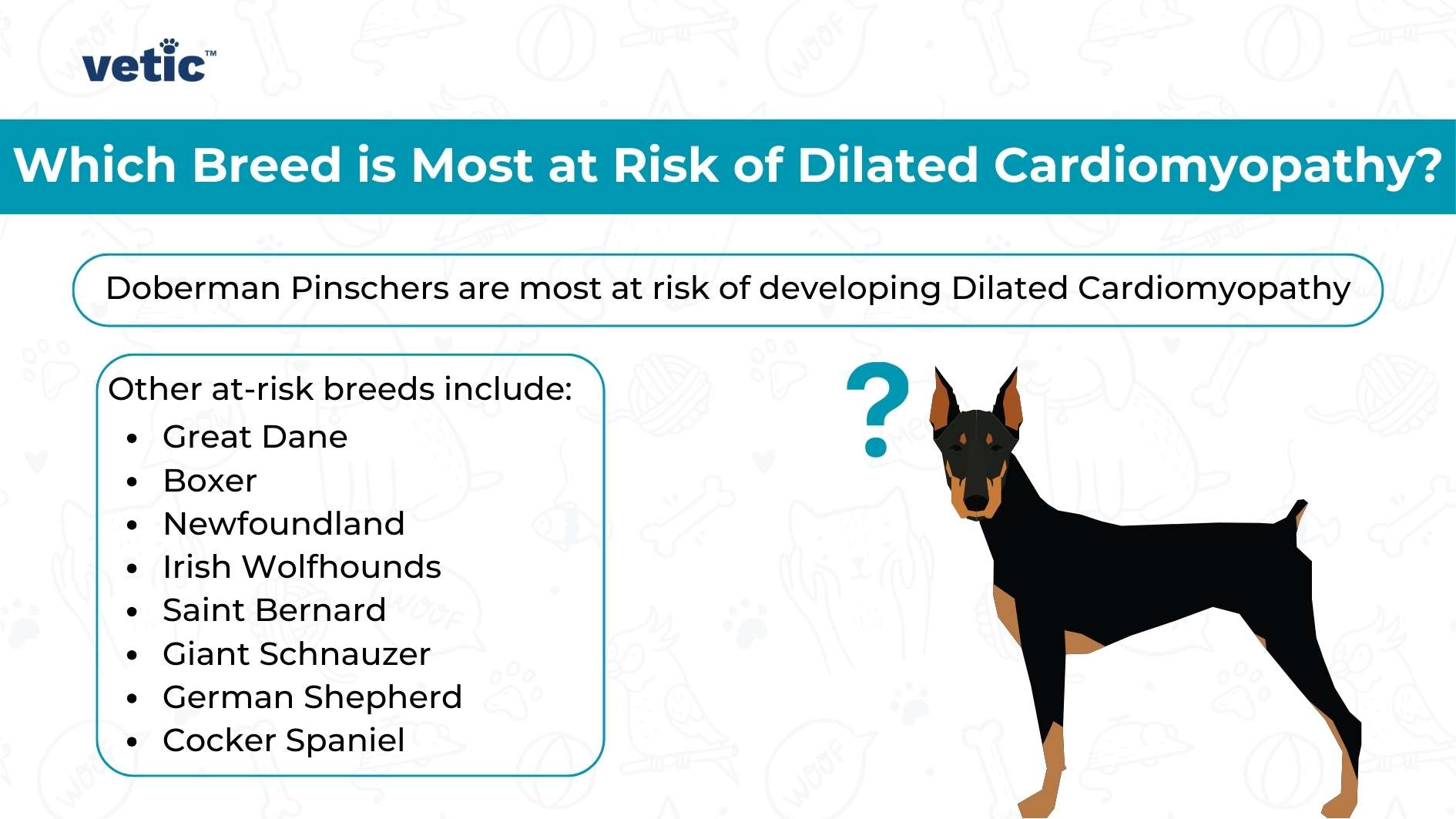
Some breeds that are most predisposed to dilated cardiomyopathy include –
- Doberman Pinscher
- Great Dane
- Boxer
- Newfoundland
- Irish Wolfhounds
- Saint Bernard
- Giant Schnauzer
- German Shepherd
- Cocker Spaniel
If you have a puppy or dog belonging to any of these breeds, take them for bi-annual health checkups. Paying attention to their cardiac health from puppyhood can delay the onset of the signs and give you time to prepare for the management of the disease should it manifest.
Although uncommon, some small breeds can develop dilated cardiomyopathy.
What are the Signs of Dilated Cardiomyopathy in Dogs?
Signs of dilated cardiomyopathy aren’t always prominent in the early stages. Regular check-ups are the only way to early diagnosis of DCM before the clinical signs become prominent.
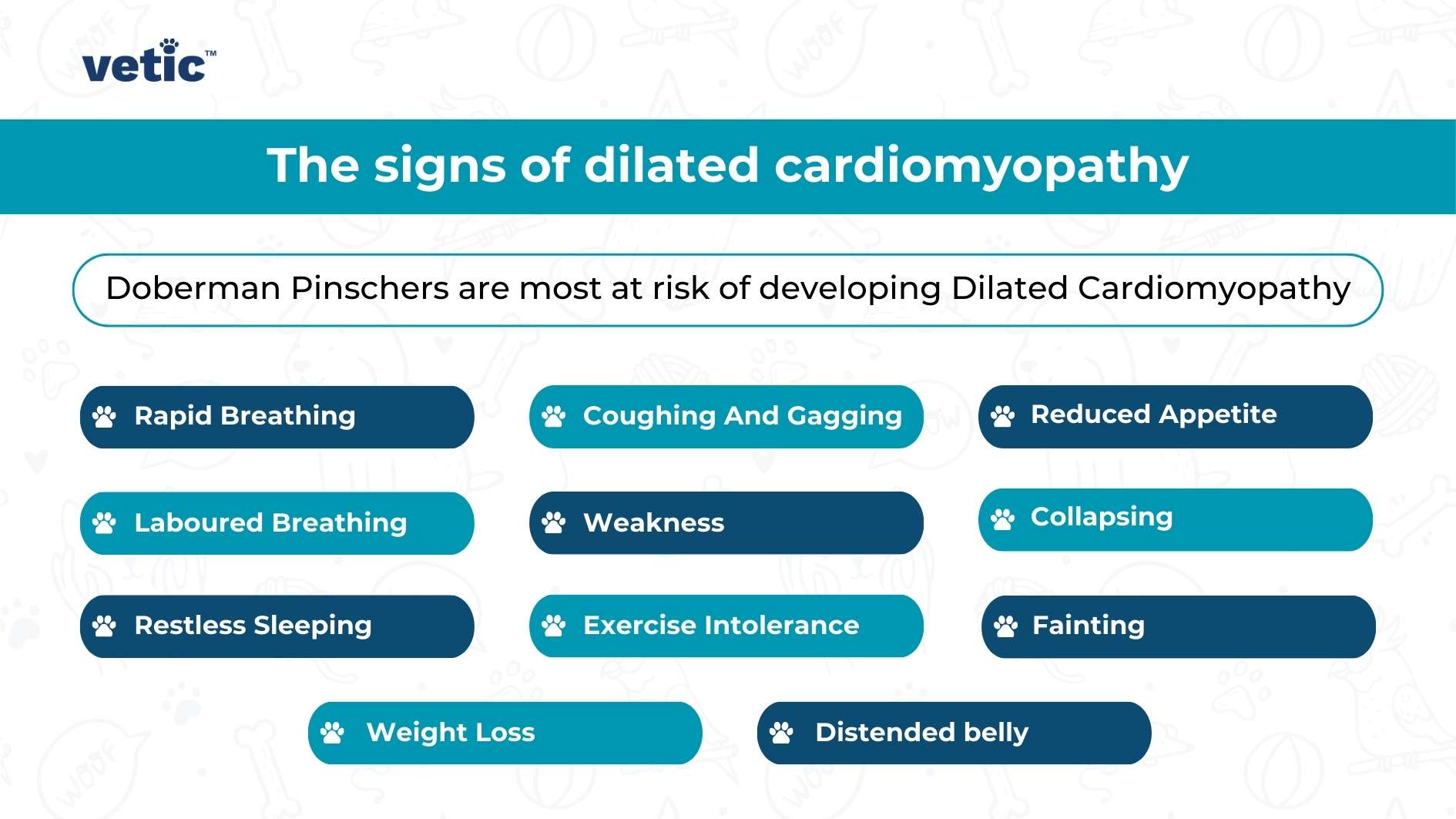
The signs of dilated cardiomyopathy include –
- Rapid and laboured breathing when resting
- Restless sleeping
- Coughing and gagging
- Weakness
- Exercise intolerance
- Reduced appetite
- Collapse/fainting
- Weight loss
- Swollen (distended) belly
Sudden collapse and death is not uncommon in large dogs with DCM. It can happen even without other clinical signs that typically accompany dilated cardiomyopathy.
How is Dilated Cardiomyopathy Diagnosed?
The diagnosis of cardiomyopathy is given after multiple tests. These tests generally evaluate the heart function along with other indicators of heart health.
Tests involved in the diagnosis of dilated cardiomyopathy include –
Physical examination
Auscultation using a stethoscope is the oldest and most reliable method to determine if your pet has a heart murmur. The location and intensity of the murmur can help the veterinarian determine its importance and significance.
Blood and Biochemistry Tests
Liver function test and kidney function test can indicate the progress of DCM since these organs are often impacted by cardiomyopathy.
Cardiac Troponin and ProBNP
These are specific biomarkers of heart disease including DCM. If your pet tests positive for the biomarkers of heart diseases, your veterinarian might be able to give you a better understanding of your pet’s heart health.
Electrocardiogram (ECG)
An ECG allows the veterinarian to determine if the heart rhythm is normal. It is crucial in determining arrhythmias in dogs.
Ultrasound Examination (Echocardiogram)
It creates a 3D image of the heart that shows each chamber’s size, thickness of the valves and heart walls.
What’s the Treatment for Dilated Cardiomyopathy in Dogs?
Multiple medications and supplements are present in the market for treating dilated cardiomyopathy. Nonetheless, not each medication is suitable for each dog. DCM demands personalised treatment plans as per the patient’s overall health, liver and kidney health, body weight, age and appetite.
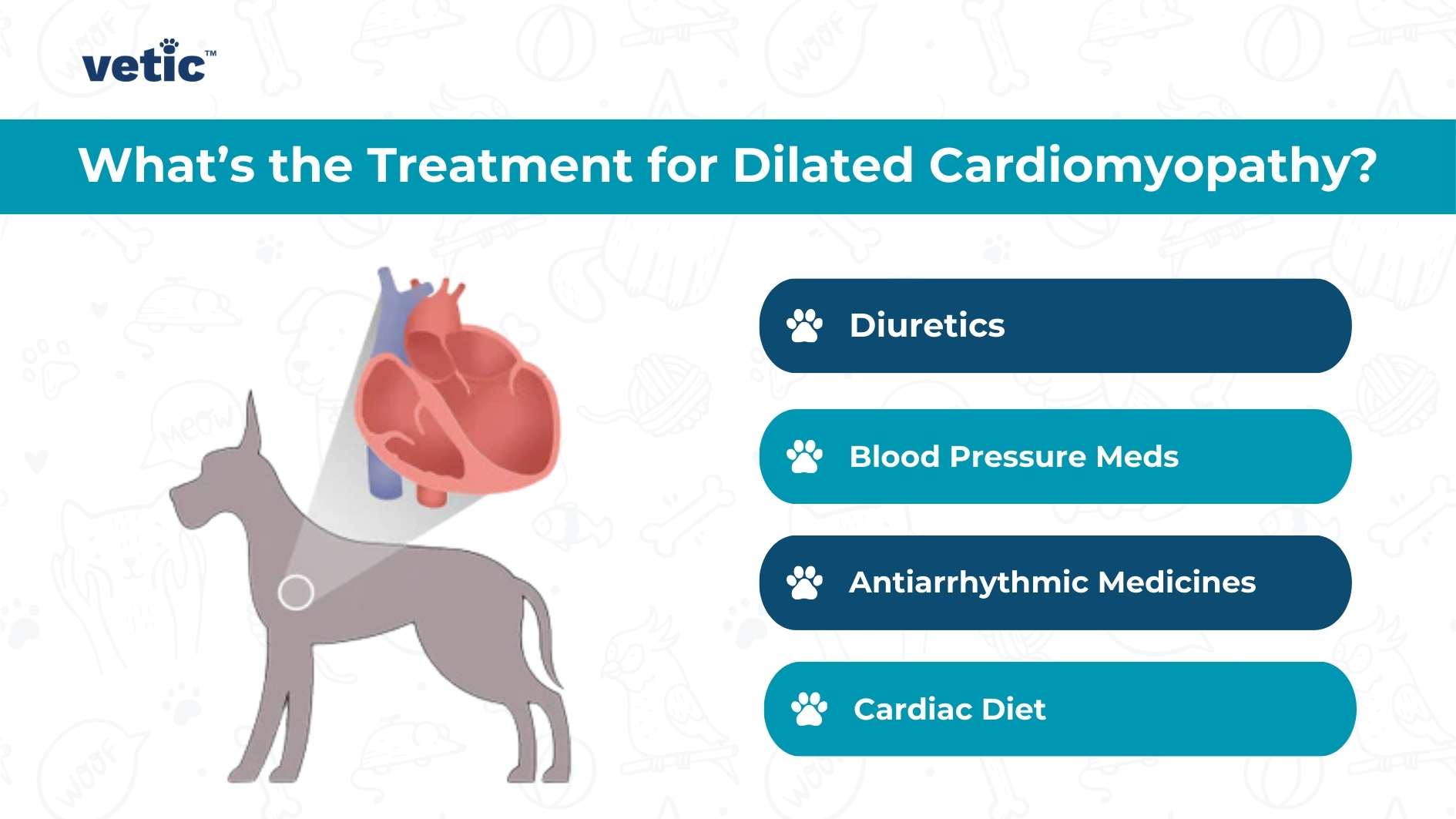
Some of the common medicines used in the treatment of dilated cardiomyopathy in dogs include –
Diuretics
These remove excess fluid from the body. Fluid retention in the abdominal and thoracic cavity are very common effects of cardiomyopathy leading to heart failure.
Blood Pressure Meds
Yes! Even dogs require specific medication that can lower blood pressure. It can reduce the pressure on the heart walls.
Antiarrhythmic Medicines
A huge percentage of dogs with dilated cardiomyopathy have arrhythmias. Your veterinarian will consider all the factors mentioned in the beginning of this section before including a beta-blocker and calcium-channel blocker for your dog.
Heart Diet
Prescription food can help maintain heart health and complement the action of the medicines. If your veterinarian has recommended a heart diet for your dog who has been diagnosed with DCM, you should continue the prescription diet until your vet says otherwise.
Can Dilated Cardiomyopathy Develop Suddenly in Older Dogs?
Dilated cardiomyopathy signs develop over a prolonged period. In older dogs, when the heart muscles become very weak and there is fluid accumulation in the chest or abdominal cavity the signs of dilated cardiomyopathy become suddenly prominent.
The signs do not develop overnight. However, a dog’s health can deteriorate overnight resulting in sudden collapse and death.
This is more frequently seen in dogs whose dilated cardiomyopathy has not been diagnosed early and treated properly.
How Long Can a Dog with Dilated Cardiomyopathy Live?
Some dogs with Dilated Cardiomyopathy live between 6 months and 2 years after the diagnosis, and treatment begins.
However, most Doberman Pinschers do not have a good prognosis. They can live as little as 3-6 months after their diagnosis.
Dogs that have been diagnosed with DCM at a later stage share a worse prognosis than those who have received early diagnosis and treatment.