Home Dog and Cat ParasitesWhat is Babesia in Cats: Signs, Causes, Treatment and Outcome of Feline Babesiosis

What is Babesia in Cats: Signs, Causes, Treatment and Outcome of Feline Babesiosis

by Vetic Editorial
Published: Updated: 5.2K views
Share

Babesiosis is a serious tick-borne disease in cats. It is caused when the infected tick bites a cat and transmits a protozoan called Babesia felis or B. felis. Babesia in cats has become quite common in India due to the prevalence of ticks and the lack of preventive measures. 

The tick ingests the parasite during the feeding stage and once the tick bites the cat B. felis is released into the cat’s bloodstream. Once the protozoan is inside, the parasites can attach to the RBC and replicate. The signs of B. felis in cats can develop within a week. 

What are the Signs of Babesia in Cats?
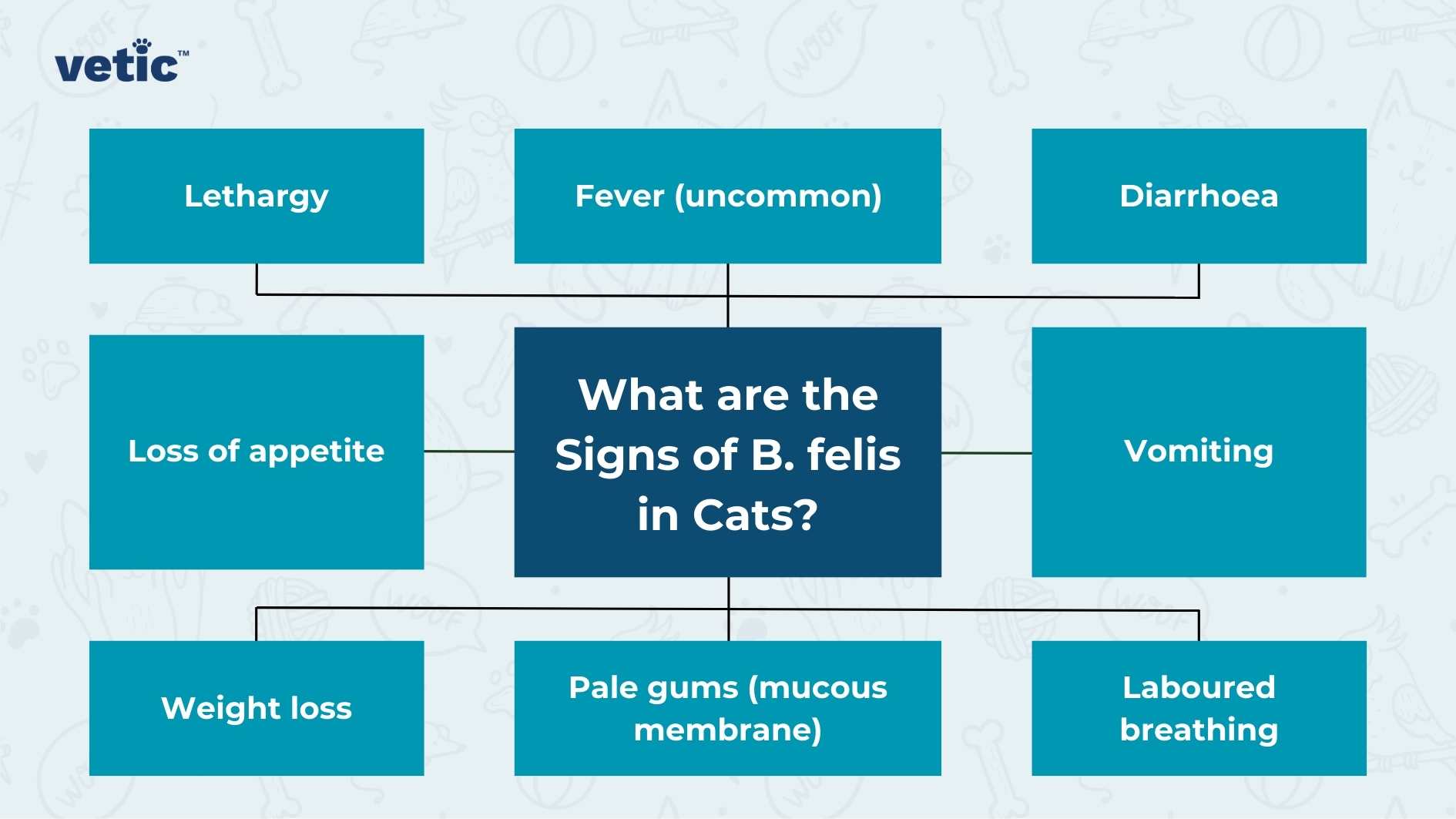
The image presents a graphical representation of the symptoms associated with B. felis in cats, likely referring to a bacterial infection such as Babesia in cats. The background transitions from light blue at the top to darker blue at the bottom. A prominent white title, “What are the Signs of B. felis in Cats?,” is centered within a dark blue rectangle with rounded corners. Around the title, eight smaller rectangles contain individual symptoms, each written in white text on a lighter blue background: Lethargy Fever (uncommon) Diarrhea Vomiting Labored breathing Pale gums (mucous membrane) Weight loss Loss of appetite The layout is clean and organized, making it easy to read and understand. This visual aid could be relevant for cat owners or veterinary professionals who need to quickly identify potential signs of B. felis infection in felines.

Tick-borne diseases such as babesiosis caused by B. felis can become prominent 1-2 weeks after the initial bite. Signs of B. felis infection in cats can include –

  • Lethargy
  • Loss of appetite (anorexia)
  • Weight loss
  • Pale gums (mucous membrane)
  • Laboured breathing
  • Vomiting
  • Diarrhoea
  • Fever (uncommon)

All cats do not show all 8 signs of babesiosis in cats. Some cats will only show minute loss of appetite and weight loss along with mild anaemia

However, if your cat is showing more than one of the above-mentioned signs, you need to consult a veterinarian.

What Causes Babseiosis in Cats?

Babesia in cats spreads through tick-bites. Bites, scratches and blood transfusions from an infected cat can spread B. felis to a healthy cat. 

How is Babesia Diagnosed in Cats?

It is difficult to diagnose B. felis without diagnostic testing. However, it is crucial that your veterinarian examines your cat’s overall health to assess the seriousness of the situation. They will take a thorough medical history including your cat’s vaccination status, blood transfusion history and recent bites/scratches. 
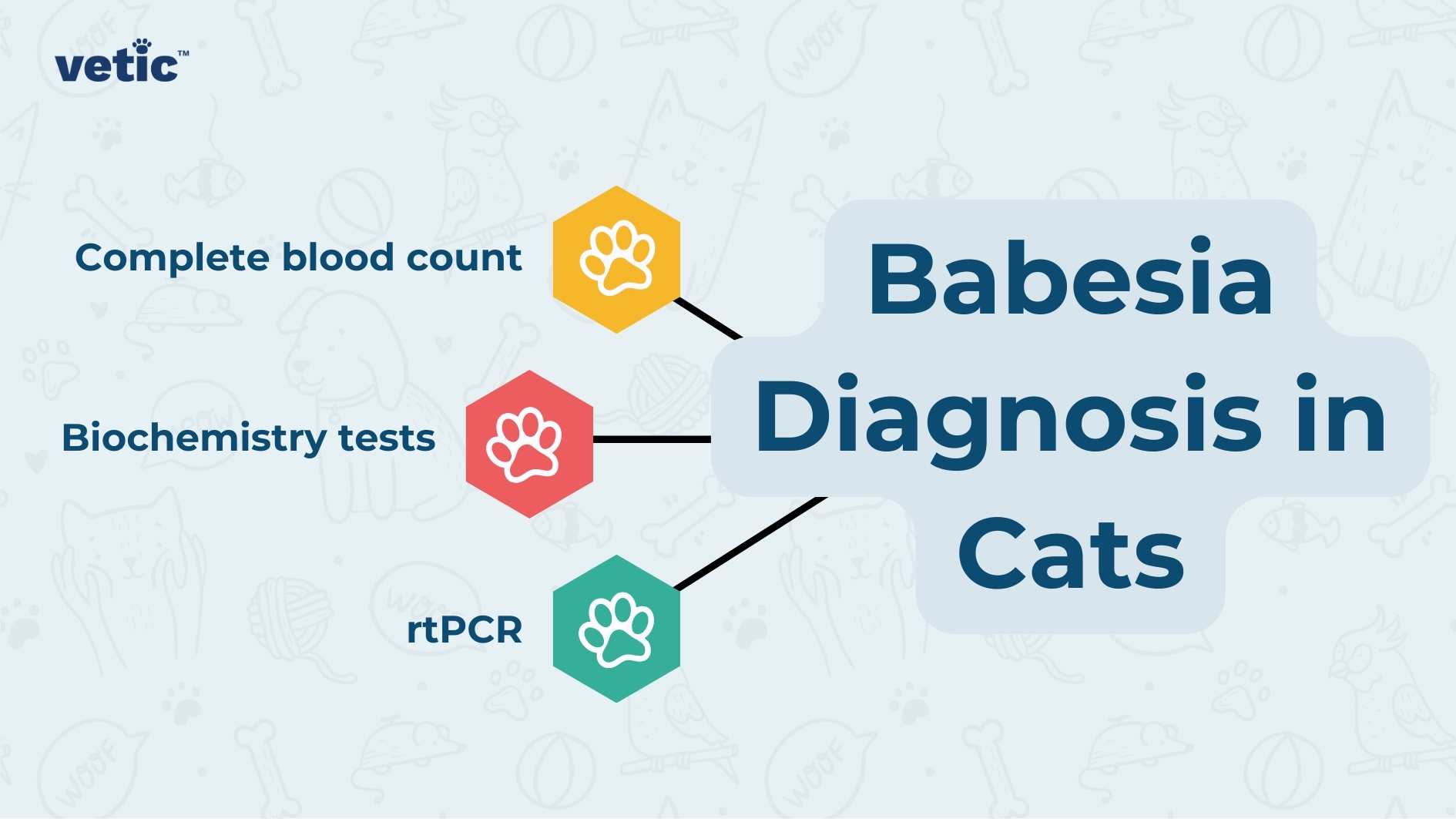
The image presents an informative graphic titled “Babesia Diagnosis in Cats.” The central title, displayed in bold and large font, reads “Babesia Diagnosis in Cats.” Surrounding the title are three hexagons, each connected by lines. Here’s what each hexagon contains: Complete Blood Count (CBC): The top-left hexagon features an icon representing a blood drop. This diagnostic method involves analyzing blood samples to assess red blood cells, white blood cells, and platelets. Biochemistry Tests: The hexagon on the bottom left contains an icon that likely represents laboratory equipment. Biochemistry tests evaluate various blood parameters, such as liver enzymes, kidney function, and electrolyte levels. rtPCR (Reverse Transcription Polymerase Chain Reaction): The right-side hexagon displays a DNA double helix icon. rtPCR is a molecular technique used to detect specific genetic material, including pathogens like Babesia. The light blue background of the graphic includes subtle doodles related to veterinary care, such as syringes, stethoscopes, pet food bowls, bones, paw prints, and pills. These illustrations reinforce the context of animal health care.

Typically, a veterinarian will also recommend the following tests –

  • Complete blood count
  • Biochemistry tests
  • rtPCR

Completing all tests is necessary since a blood-borne disease such as babesiosis can also affect the liver and kidney function of a cat. The doctor will recommend the proper course of action after considering your cat’s overall health as per the recent test reports. 

What’s the Treatment of Babesiosis in Cats?
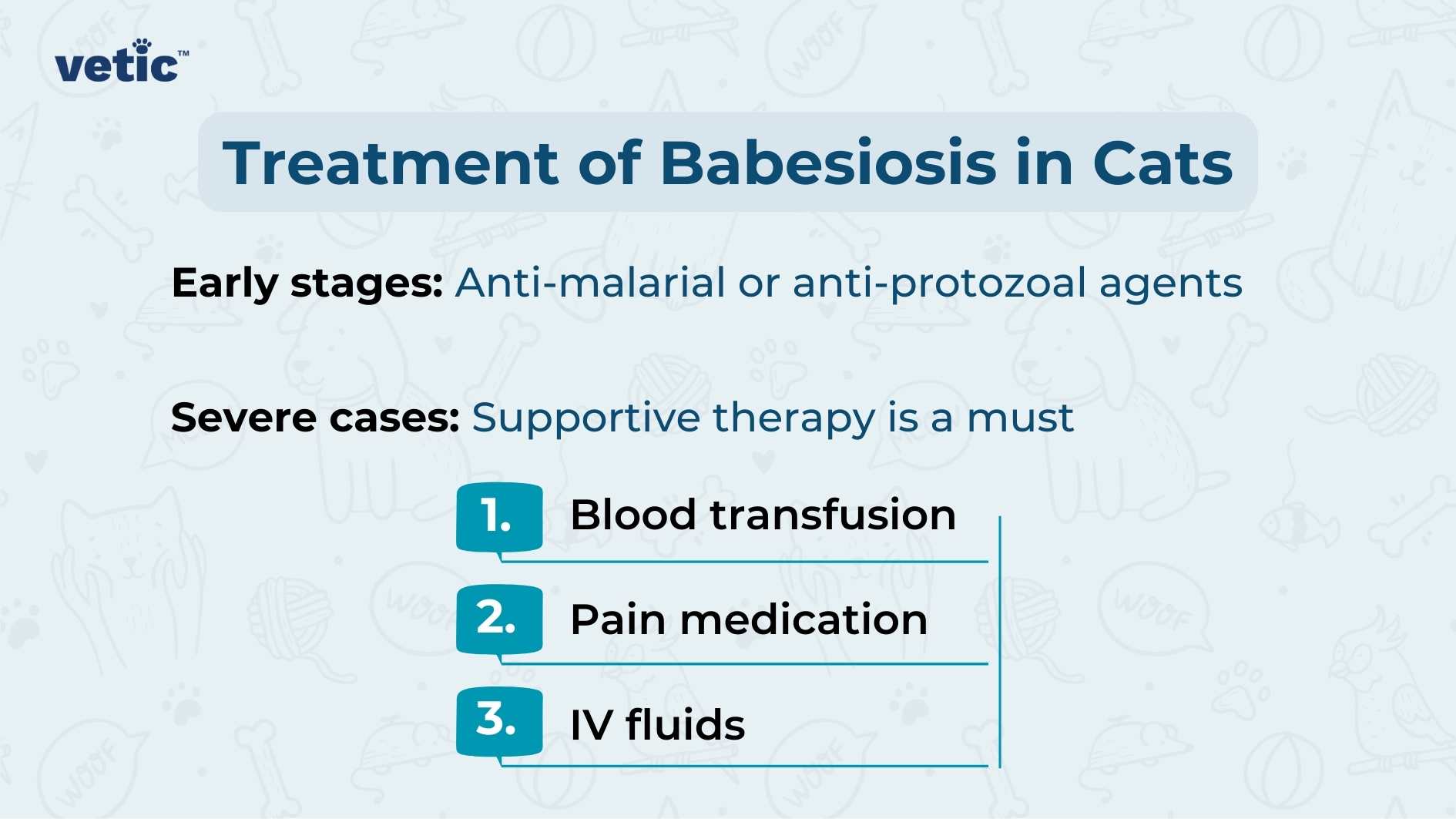
The image is an informative graphic related to veterinary medicine, specifically focusing on the treatment of Babesiosis in cats. Here are the key elements: Title: “Treatment of Babesiosis in Cats” The title appears in white bold text against a blue background at the top of the image. Treatment Categories: “Early stages: Anti-malarial or anti-protozoal agents” (white text on a lighter blue background). “Severe cases: Supportive therapy is a must” (white text on the same background). Essential Treatments for Severe Cases: Blood transfusion (represented by a droplet icon). Pain medication (shown with a pill icon). IV fluids (depicted by an IV bag icon). These treatments are listed with numbers (1, 2, 3) in teal circles.

Babesia in cats is usually a stubborn infection and it requires a carefully tailored protocol. The treatment consists of a mix of anti-malarial or antiprotozoal agents with necessary supplements to keep the cat’s haemoglobin level normal.

In more serious cases, supportive therapy is a must. That may include blood transfusions, pain medication, and IV fluids. 

The anti-malarial or antiprotozoal medication used to treat Babesia felis infection in cats is highly toxic. It should be given in the prescribed dose at the recommended frequency. If you miss a dose or accidentally administer more than one dose, you should call your veterinarian immediately.

How Can You Manage B. felis infection in Cats?

The duration of recovery depends on the case. Most cases require multiple doses of medication given several weeks apart. 

rtPCR reports can tell you about the level of infection in the cat’s blood. Many of the cats who receive timely treatment live a healthy and long life. 

Without treatment, a cat can experience complications such as kidney and liver issues, respiratory distress and other long-term effects of anaemia. 

All cats who recover from babesiosis will carry the protozoa throughout their lives. They require constant monitoring and biannual blood tests to ensure the disease is in control. 

How Can You Prevent Babesia in Cats?
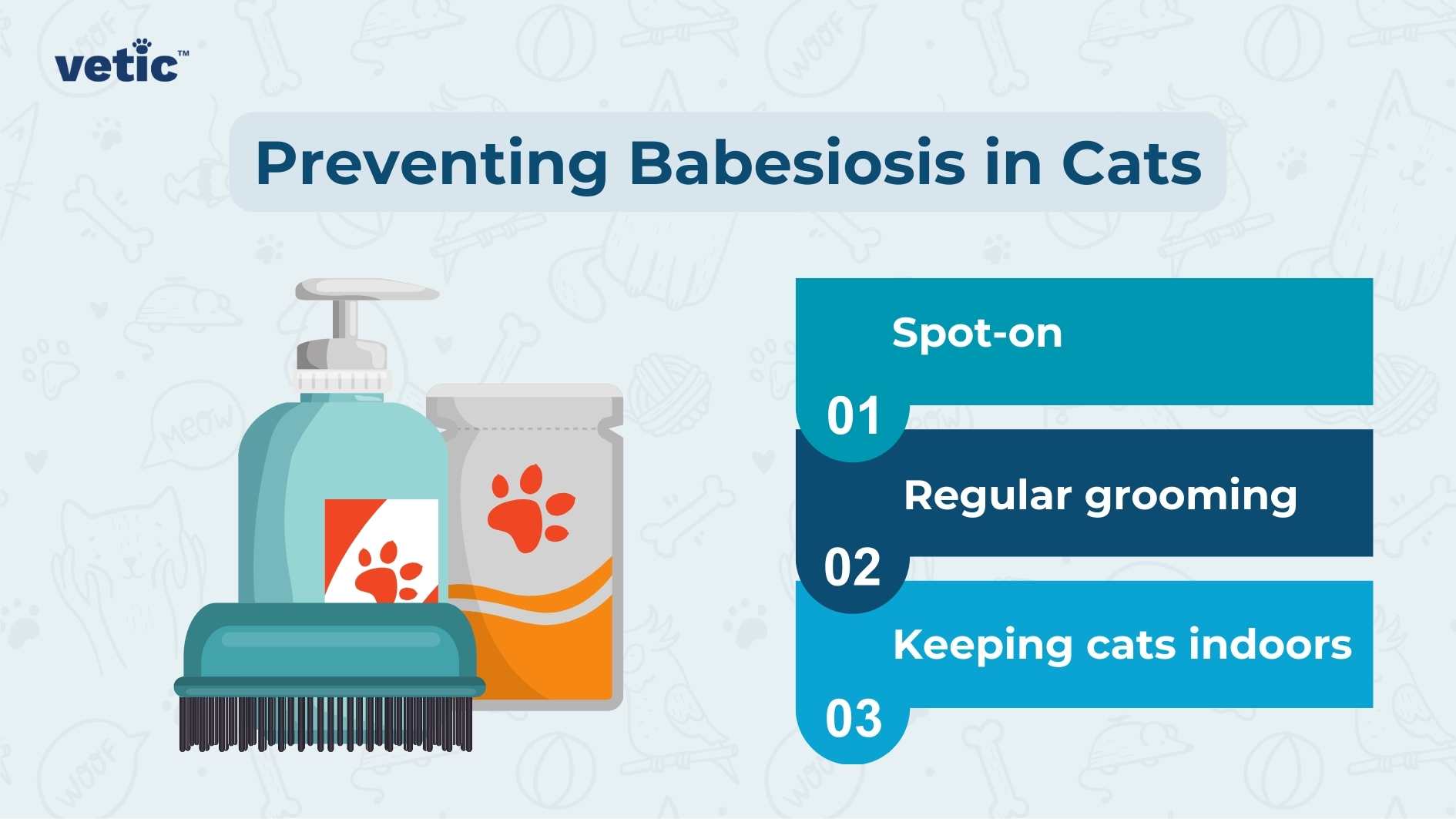
The image is a graphical representation with a title “Preventing Babesiosis in Cats” at the top, suggesting it’s an educational piece about safeguarding cats against a specific disease. On the left side of the image, there is an illustration of a pet grooming brush and a bottle with a pump dispenser, which has paw prints and what appears to be leaves on its label, indicating it might be some pet care product. The right side features three numbered recommendations listed next to a blue vertical bar and bullet points: “01 Regular grooming,” “02 Keeping cats indoors,” and “03 Spot-on.” These points are likely methods recommended for preventing Babesiosis in cats. The background color is light blue, and there’s also the logo ‘vetic’ in the upper left corner.

The only way to prevent babesiosis in cats is by keeping ticks away from your cats. Apply spot-ons every month even if your cat doesn’t step outside. If you have dogs, give them tick-preventives as well. 

When you take your cat out or visit the clinic, ensure the environment is tick-free. 

Do not let your cat roam outside if they are an indoor kitty. Preventing bites and scratches from infected cats can protect your cat from B. felis.

Want to know more about pets?

Popular Searches

Consultation for Dog Near Me | About Us | Grooming for Dog Near Me | Vaccination for Dog Near Me | Surgery for Dog Near Me | Emergency Care for Dog Near Me | Consultation for Cat Near Me | Grooming for Cat Near Me | Vaccination for Cat Near Me | Surgery for Cat Near Me | Emergency Care for Cat Near Me | Pet Clinic in Gurgaon | Pet Clinic in Delhi | Pet Clinic in Hyderabad | Pet Clinic in Mumbai | Pet Clinic in Chennai | Pet Clinic in Noida | Pet Clinic in Ghaziabad | Pet Clinic in Bangalore | Pet Clinic in Pune | Pet Clinic in Faridabad | Pet Clinic in Kolkata | Pet Consultation in Gurgaon | Pet Consultation in Bangalore | Pet Consultation in Chennai | Pet Consultation in Delhi | Pet Consultation in Hyderabad | Pet Consultation in Mumbai | Pet Consultation in Ghaziabad | Pet Consultation in Pune | Pet Consultation in Faridabad | Pet Consultation in Noida | Pet Consultation in Kolkata | Pet Grooming in Bangalore | Pet Diagnostics in Bangalore | Pet Surgery in Delhi | Pet Emergency Care in Mumbai | Pet Clinic in Golf Course Road, Gurgaon | Pet Clinic in Sector 45, Gurgaon | Pet Clinic in Sohna Road, Gurgaon | Pet Clinic in Galleria Market, Gurgaon | Pet Clinic in Sector 57, Gurgaon | Pet Clinic in Sector 82, Gurgaon | Pet Clinic in Greater Kailash, Delhi | Pet Clinic in Pitampura, Delhi | Pet Clinic in Sector 11, Delhi | Pet Clinic in Defence Colony, Delhi | Pet Clinic in Malviya Nagar, Delhi | Pet Clinic in Anand Vihar, Delhi | Pet Clinic in Vasant Kunj, Delhi | Pet Clinic in Hitec City, Hyderabad | Pet Clinic in Secunderabad, Hyderabad | Pet Clinic in Manikonda, Hyderabad | Pet Clinic in Banjara Hills, Hyderabad | Pet Clinic in Kukatpally, Hyderabad | Pet Clinic in Kandivali, Mumbai | Pet Clinic in Thane West, Mumbai | Pet Clinic in Andheri West, Mumbai | Pet Clinic in Chembur, Mumbai | Pet Clinic in Sanpada, Mumbai | Pet Clinic in Mira Road, Mumbai | Pet Clinic in Borivali, Mumbai | Pet Clinic in Powai, Mumbai | Pet Clinic in Banerghatta, Bangalore | Pet Clinic in HSR Layout, Bangalore | Pet Clinic in Domlur, Bangalore | Pet Clinic in Kalyan Nagar, Bangalore | Pet Clinic in Whitefield, Bangalore | Pet Clinic in Sadashiva Nagar, Bangalore | Pet Clinic in Nagarbhavi, Bangalore | Pet Clinic in Electronic City, Bangalore | Pet Clinic in Banashankari, Bangalore | Pet Clinic in Yelahanka, Bangalore | Pet Clinic in Sarjapur Road, Bangalore | Pet Clinic in Koramangala, Bangalore | Pet Clinic in Aundh, Pune | Pet Clinic in Kalyani Nagar, Pune | Pet Clinic in NIBM, Pune | Pet Clinic in Wakad, Pune | Pet Clinic in Sector 20, Noida | Pet Clinic in Sector 49, Noida | Pet Clinic in Indirapuram, Ghaziabad | Pet Clinic in Sector 14, Faridabad | Pet Clinic in Salt Lake, Kolkata | Pet Clinic in Anna Nagar, Chennai | Veterinary Hospital Near Me | Pet Clinic Near Me | Vet Near Me | Pet Grooming Clinic Near Me | Pet Cancer Treatment Near Me | Pet Grooming in Chennai | Pet Grooming in Delhi | Pet Grooming in Gurgaon | Pet Grooming in Hyderabad | Pet Grooming in Mumbai | Pet Grooming in Ghaziabad | Pet Grooming in Pune | Pet Grooming in Faridabad | Pet Grooming in Noida | Pet Grooming in Kolkata | Pet Diagnostics in Chennai | Pet Diagnostics in Delhi | Pet Diagnostics in Gurgaon | Pet Diagnostics in Hyderabad | Pet Diagnostics in Mumbai | Pet Diagnostics in Ghaziabad | Pet Diagnostics in Pune | Pet Diagnostics in Faridabad | Pet Diagnostics in Noida | Pet Diagnostics in Kolkata | Pet Surgery in Bangalore | Pet Surgery in Chennai | Pet Surgery in Gurgaon | Pet Surgery in Hyderabad | Pet Surgery in Mumbai | Pet Surgery in Ghaziabad | Pet Surgery in Pune | Pet Surgery in Faridabad | Pet Surgery in Noida | Pet Surgery in Kolkata | Pet Emergency Care in Bangalore | Pet Emergency Care in Chennai | Pet Emergency Care in Gurgaon | Pet Emergency Care in Hyderabad | Pet Emergency Care in Ghaziabad | Pet Emergency Care in Pune | Pet Emergency Care in Faridabad | Pet Emergency Care in Noida | Pet Emergency Care in Kolkata

    Consult A Vet

    Book An Appointment


    image
    Call A Vet
    ×

      Consult A Vet

      Book An Appointment